

What Is the Relationship Between PulseRoller, Senergy Motor, and CACRSC-EXT ?
These products can be understood through a clear system relationship:
Brand/System → Motor Product → Motor Interface → Matching Extension Cable
The relationship is:
PulseRoller
↓ Brand / Conveyor Automation System
Senergy Motor / Motor Roller
↓ Uses
9-Pin JST Motor Connector
↓ Extended by
CACRSC-EXT-xxx Motor Extension Cable
↓ Premier Cable Compatible Development
PCM-1009
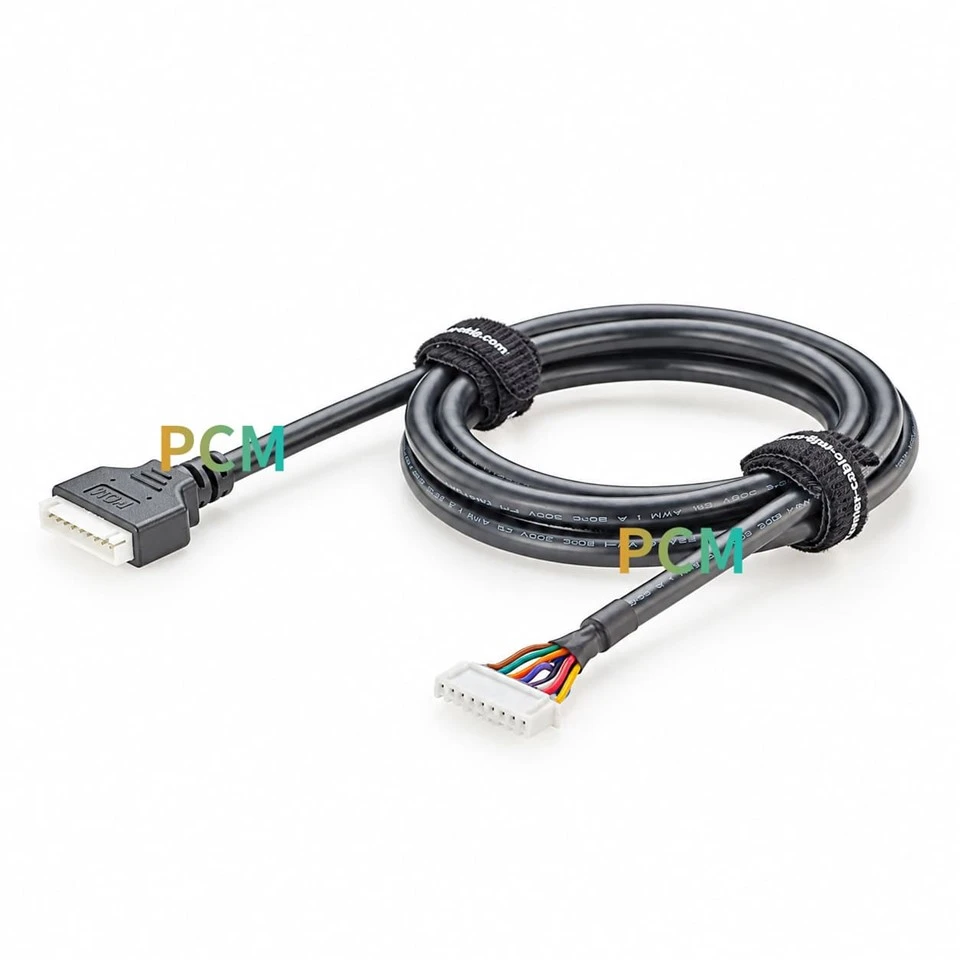
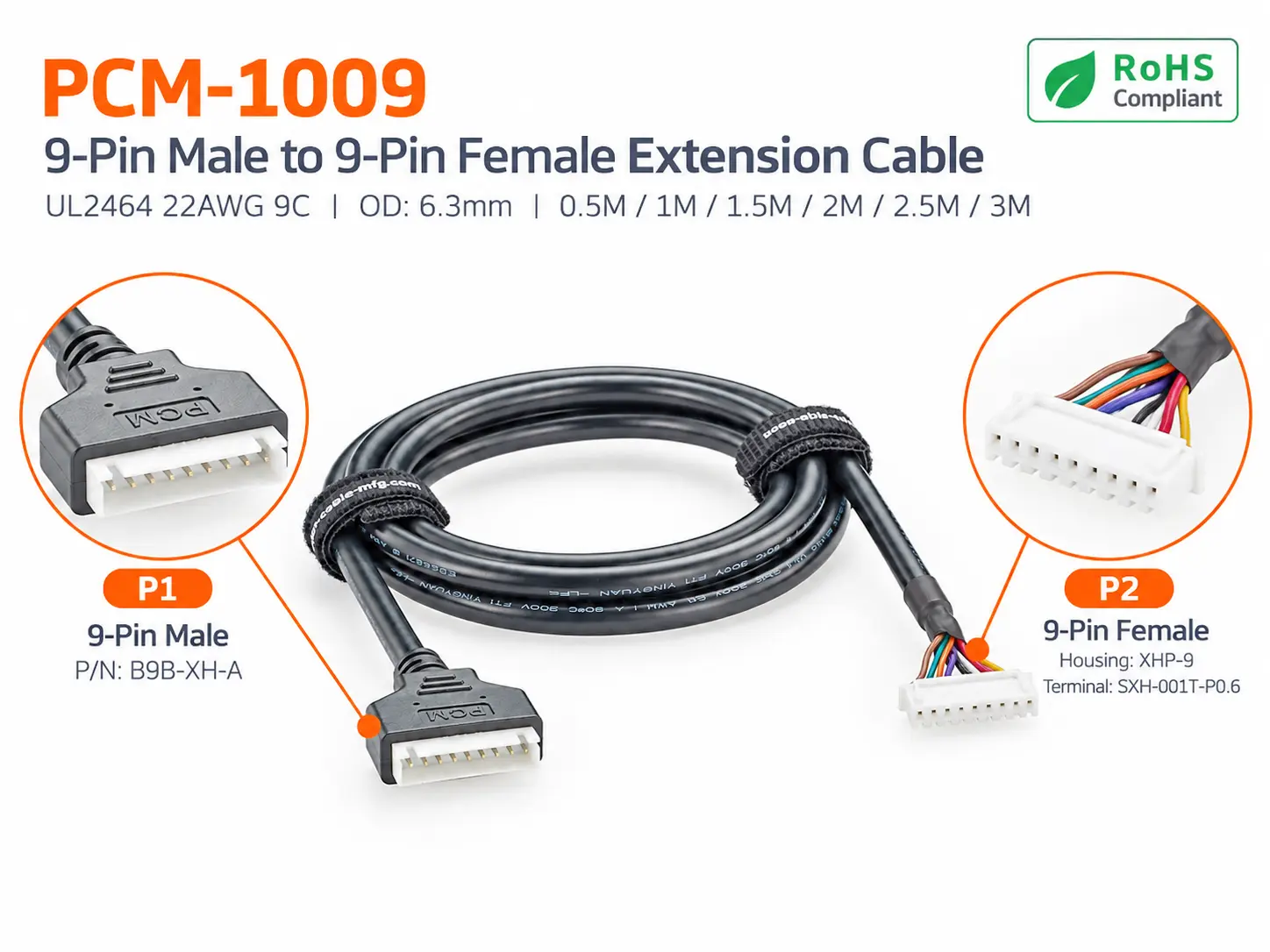
The Senergy/Legacy JST extension cable adopts a 9-pin female JST to 9-pin male JST structure, with a length range of 0.5–3 meters, primarily used for extending the Senergy or legacy PulseRoller motor connections.
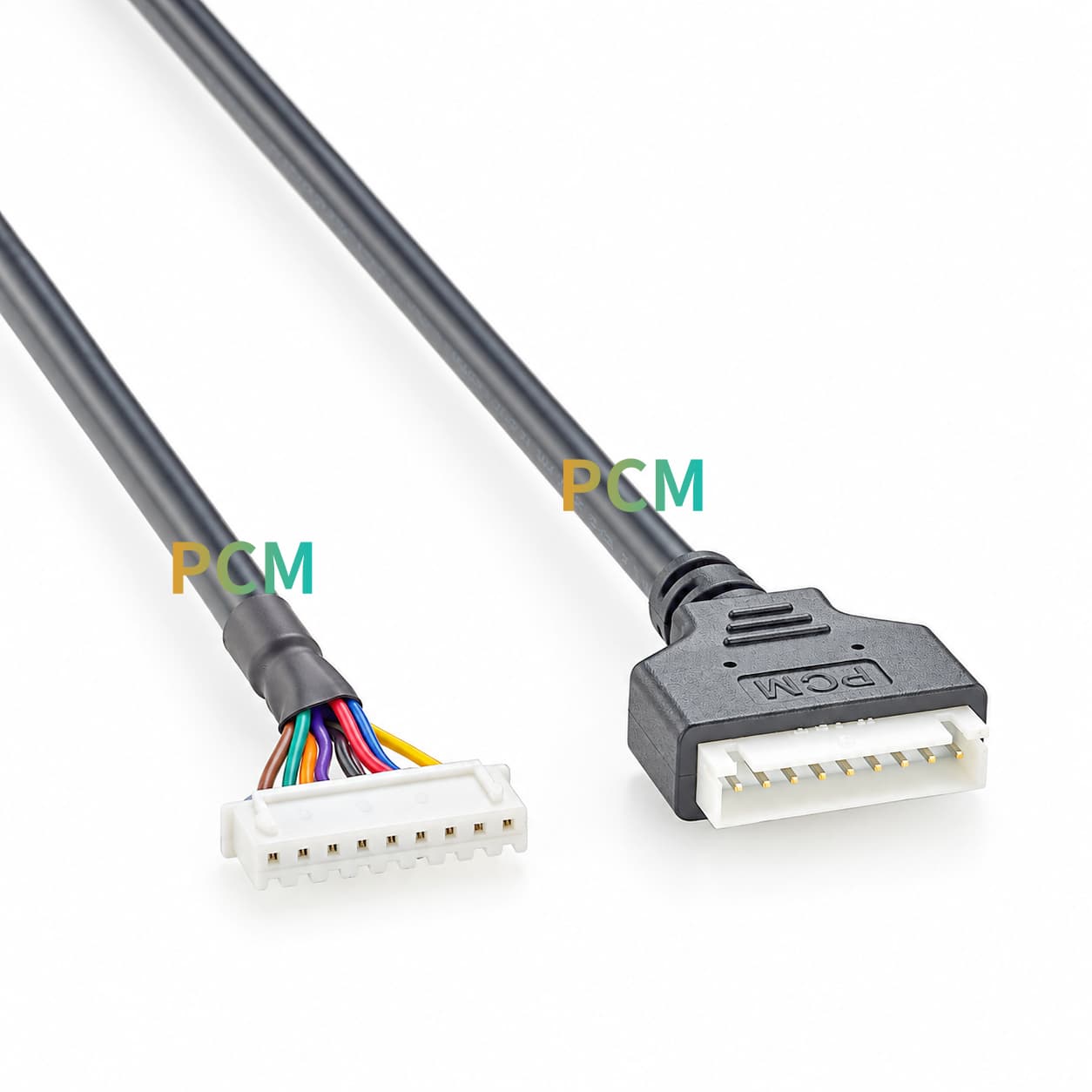
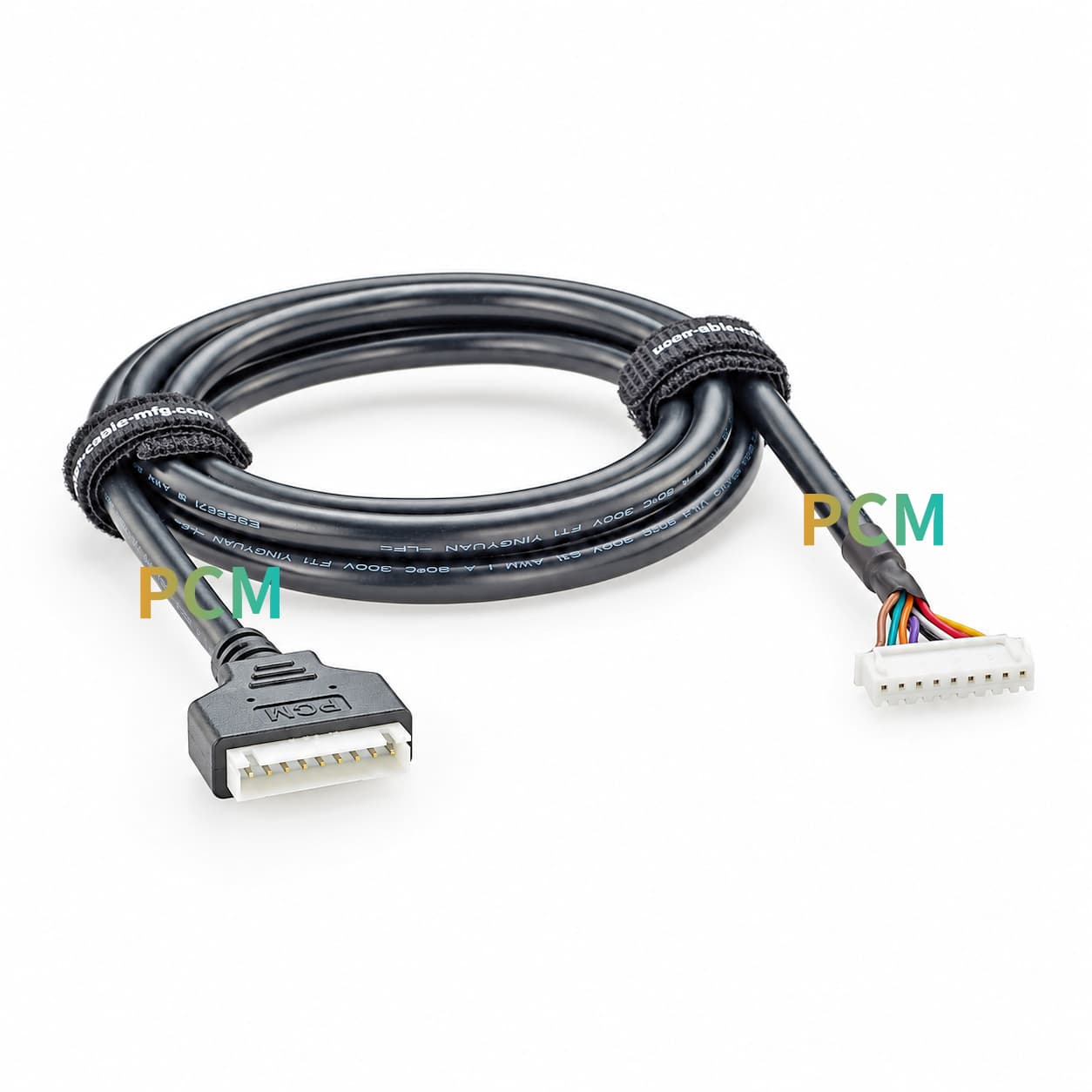
PCM-1009 is a 9-pin JST male-to-female motor extension cable developed by Premier Cable for Senergy motors, Motor Driven Roller (MDR) conveyor systems, and industrial automation equipment.
The assembly is based on the JST XH connection system, using a JST XHP-9 9-circuit female housing on one end and a JST B9B-XH-A 9-pin male header on the other, with a 2.5 mm pitch. When developed around the PulseRoller CACRSC reference configuration, the cable can use a 22 AWG × 9 conductor construction with 1:1 pin mapping.
PCM-1009 does not change the motor-control architecture or perform protocol conversion. Its primary purpose is to extend the existing connection path between a Senergy motor and its controller.
A typical connection is:
Senergy Motor Roller → 9 Pin JST → PCM-1009 → Controller
When the motor roller and controller cannot be directly connected because of conveyor length, frame construction, control box placement, or maintenance space requirements, PCM-1009 provides additional routing distance while maintaining the original 9-pin JST connection architecture.
It therefore has a more specific market position than a generic "9 Pin JST Cable":
Senergy Motor Extension Cable / MDR Motor Extension Harness
PulseRoller documentation confirms that conventional Senergy uses a 9-pin JST interface, while Senergy-Ai uses a 4 pin M8 connection, making them distinct connection systems.
Products Specification
| Product Name | 9-Pin JST-Style Male to 9-Pin JST-Style Female Extension Cable |
| P/N | PCM-1009 |
| Connection | P1 9-Pin Male → P2 9-Pin Female |
| Wiring | 9-Conductor 1:1 Straight-Through |
| Cable | UL2464, 22AWG × 9C, Black PVC Jacket |
| Cable OD | Ø6.3 mm |
Products Display
Compatible Part Numbers
| PulseRoller P/N | Description | Lengths |
| CACRSC-EXT-050 | JST Motor Extension Cable | 0.5 m |
| CACRSC-EXT-100 | JST Motor Extension Cable | 1.0m |
| CACRSC-EXT-150 | JST Motor Extension Cable | 1.5m |
| CACRSC-EXT-200 | JST Motor Extension Cable | 2.0m |
| CACRSC-EXT-250 | JST Motor Extension Cable | 2.5 m |
| CACRSC-EXT-300 | JST Motor Extension Cable | 2.5 m |
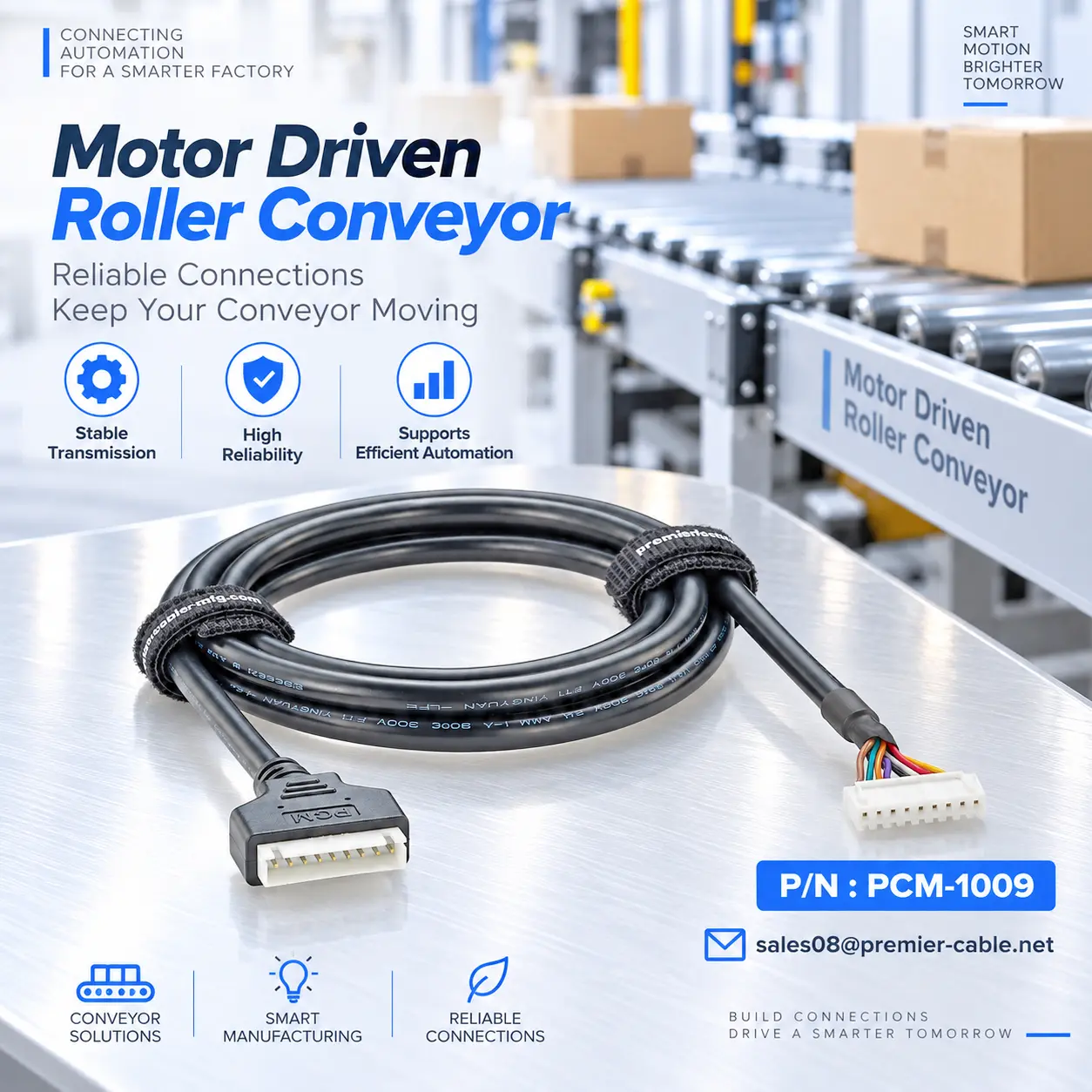
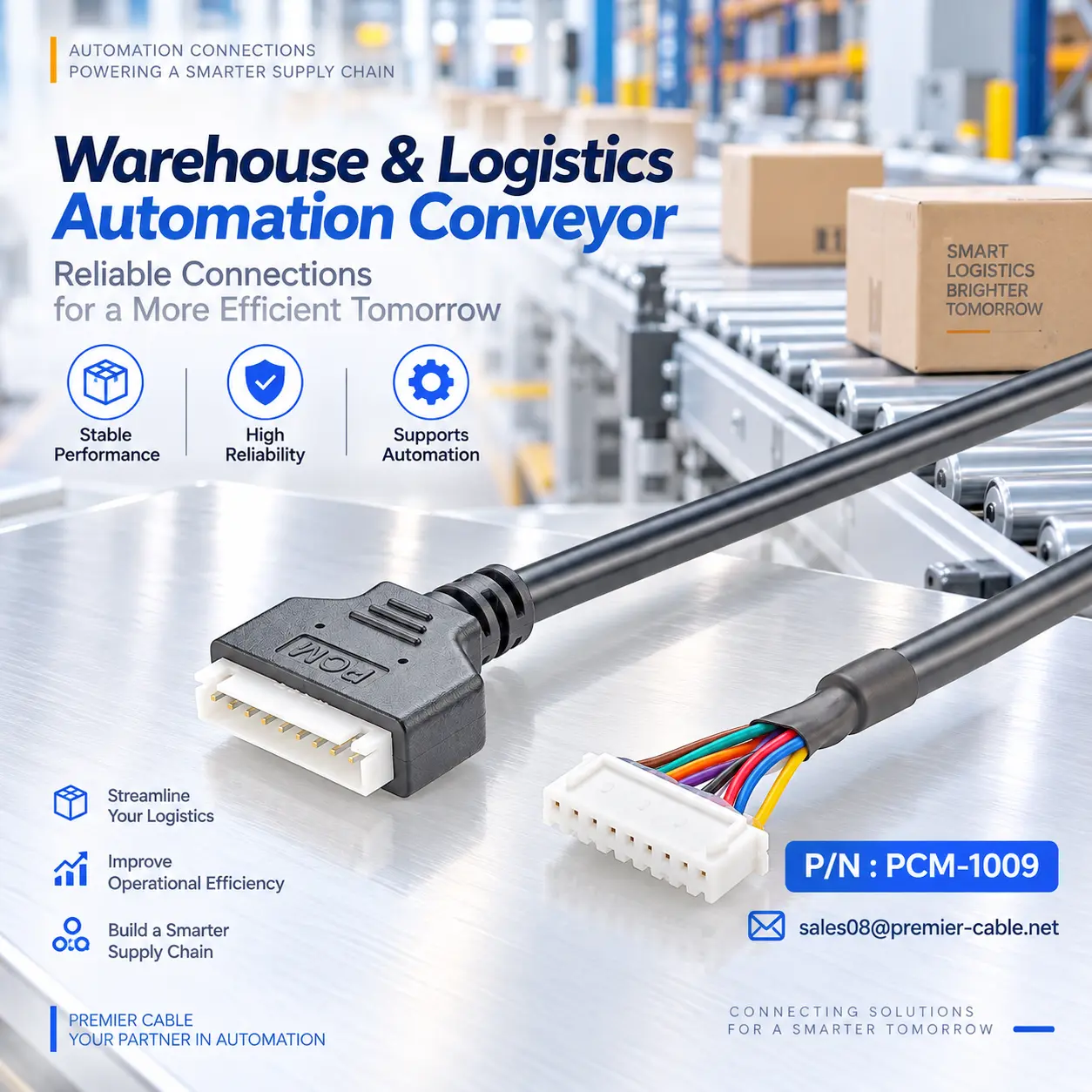
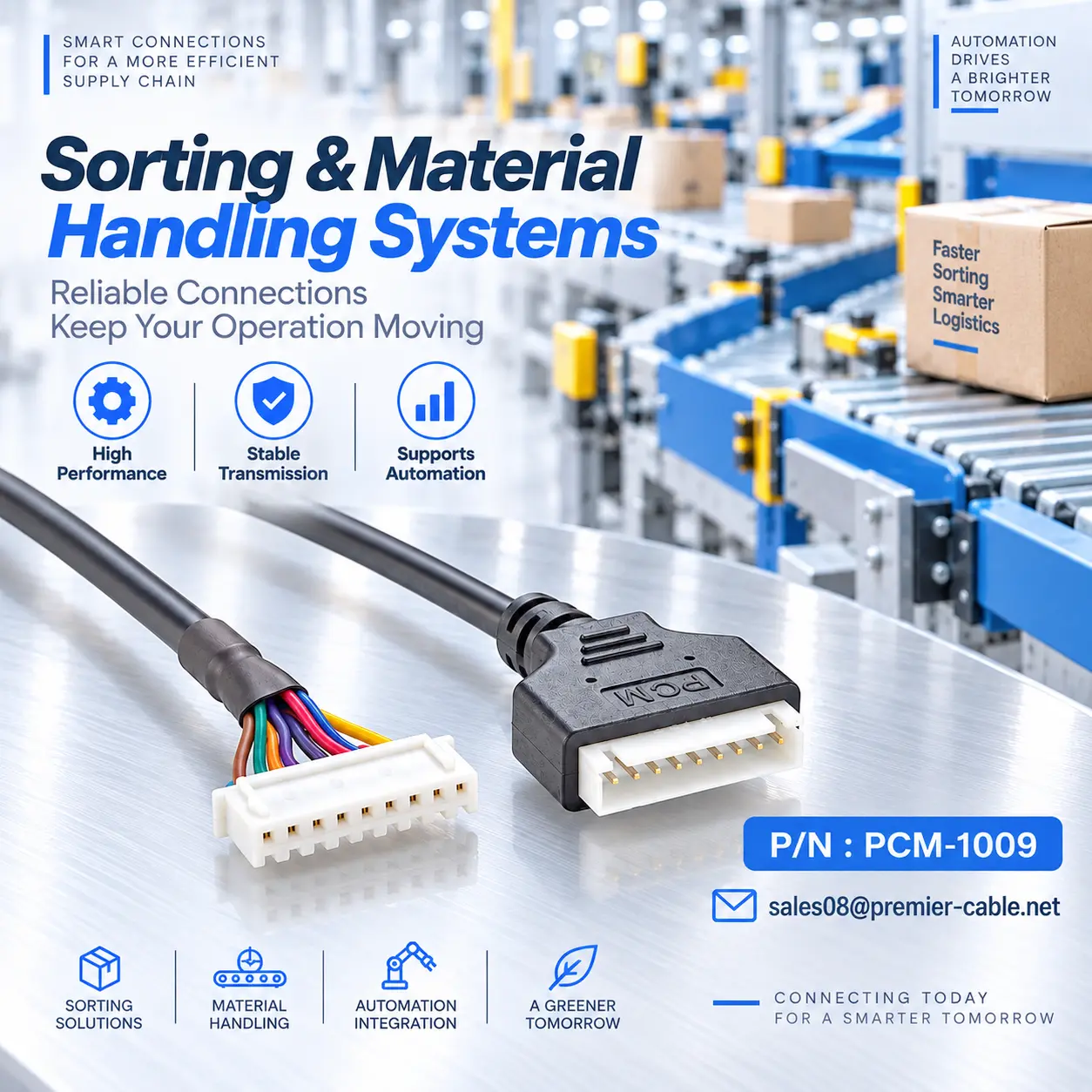
Typical Applications
Product Features
JST XH 9 Pin Connector Configuration
Combines an XHP-9 female housing with a B9B-XH-A male header from the 2.5 mm pitch JST XH series, providing a compact single row interface for nine electrical circuits. The original PulseRoller CACRSC drawing also uses this connector combination.
9 Circuit 1:1 Straight Through Connection
In the CACRSC reference configuration, pins 1 through 9 use 1:1 straight-through mapping-1→1, 2→2 through 9→9-allowing the cable assembly to extend the existing electrical path without redefining the control wiring.
22 AWG × 9 Conductor Cable Architecture
A compatible design can use a 22 AWG, 9 conductor cable. The published PulseRoller CACRSC drawing specifies a 22 AWG × 9 conductor cable with a PVC jacket as the reference cable construction.
Male to Female Modular Extension
The male to female configuration extends the routing distance between the motor roller and controller without requiring the complete motor cable assembly to be redesigned when installation distances change.
Product Advantages
● Designed for Senergy Systems, Not Generic JST Cables
PCM-1009 is defined around Senergy motor extension applications, allowing sourcing based on motor type, original extension cable P/N, and length. This reduces the risk of selecting a generic 9-pin JST cable with a similar appearance but an incompatible pinout.
● Preserves the Original Motor to Controller Architecture
The dual-cavity HFM interface consolidates two coaxial channels at the equipment side, making it useful for systems requiring two signal paths within limited connector-panel space.
● Multiple Lengths for Different Conveyor Zones
The 0.5–3 m length range supports different conveyor zones, reducing excessive cable coiling while helping prevent continuous cable tension caused by insufficient length.
● OEM Wire Harness Customization
Beyond standard compatible configurations, cable length, conductor specifications, pin assignment, labels, protective sleeving, and packaging can be customized to meet project-specific equipment BOM requirements.
Why does traditional Senergy require a 9 pin connector ?
The 9-pin interface should not be interpreted as simply "nine power wires."
Conventional Senergy uses an external motor-controller architecture, so multiple electrical connections are required between the motor and controller. The 9-pin JST interface provides a centralized multi-circuit connection.
From a harness-design perspective, this is why PCM-1009 must preserve all nine circuits rather than being replaced by a simple two- or four-conductor motor power cable.
The drawings show that its extension line uses nine independent conductors, with Pins 1 to 9 all extended to the other end.
Why are JST connectors suitable for internal wiring harnesses in devices ?
Compact multi-pin connectors such as JST XH provide a convenient way to consolidate multiple conductors into a relatively small interface, helping organize internal equipment wiring.
For a nine-conductor motor extension harness such as PCM-1009, a unified 9-pin housing simplifies:
interface identification, volume assembly, maintenance disconnection, harness identification, and BOM management.
However, this design differs from threaded industrial circular connectors such as M8. It would therefore be inaccurate to claim that "JST is always better than M8" or vice versa; they serve different equipment architectures and interface requirements.
Products Drawing
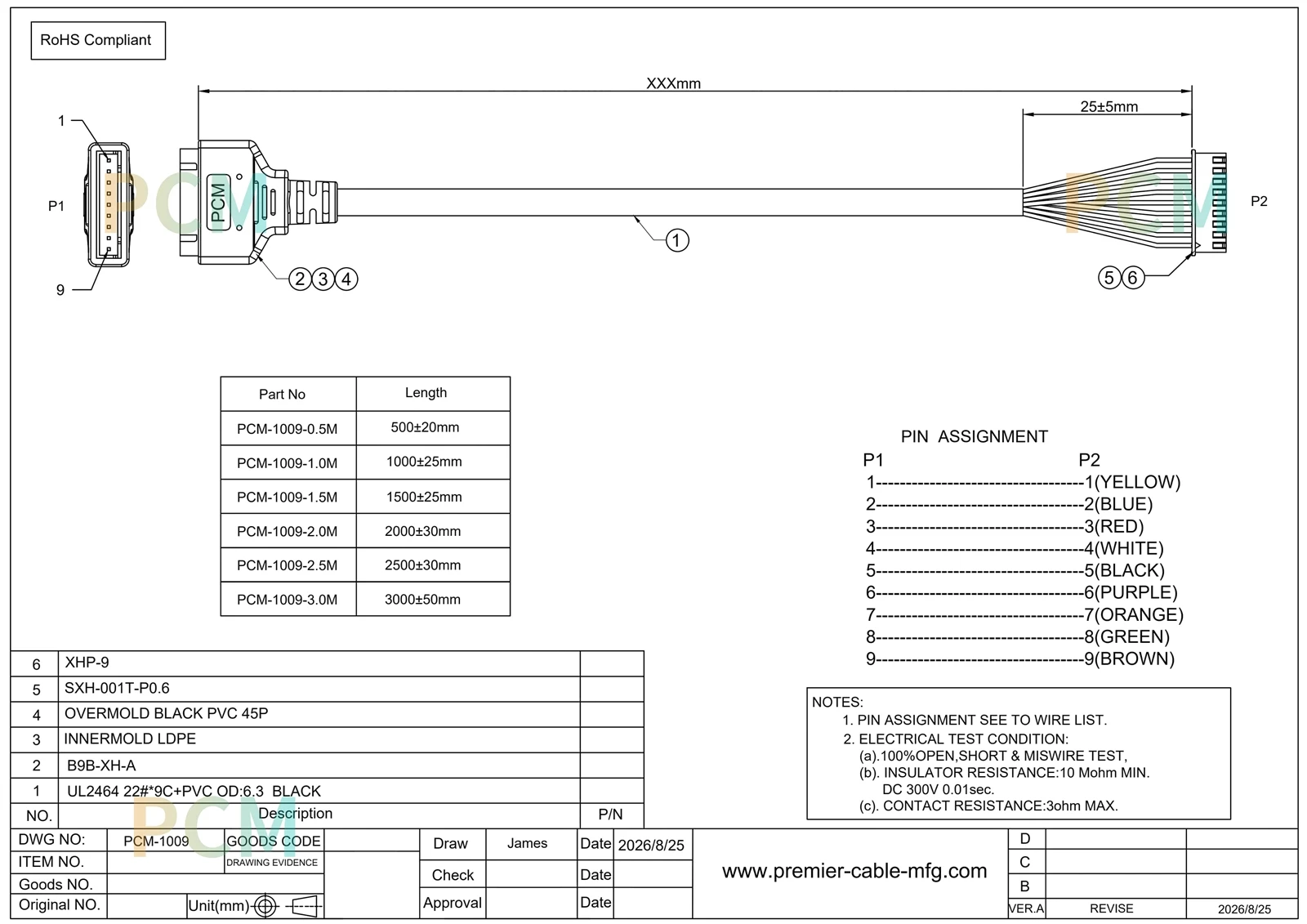
Product FAQ
What Products Is PCM-1009 Mainly Used For ?
PCM-1009 primarily targets 9-pin JST extension connections for conventional PulseRoller Senergy motors and may also be used with related MDR systems after pinout and electrical compatibility are verified.
Is PCM-1009 a Protocol Converter ?
No. PCM-1009 is a passive cable assembly that provides physical and electrical extension between compatible 9-pin JST interfaces without active protocol conversion.
Why Must the Pin Mapping Be Verified ?
Because an identical 9-pin connector appearance does not guarantee identical internal wiring. The CACRSC reference configuration uses 1:1 pin mapping, so compatibility must be verified against the actual pin definition of the target equipment.
Can the Cable Length Be Customized ?
Yes. In addition to configurations corresponding to the 0.5–3 m range, other lengths can be evaluated according to equipment layout, voltage drop, conductor specifications, and available installation space.

Hot Tags: senergy 9 pin jst motor extension cable, China senergy 9 pin jst motor extension cable manufacturers, suppliers, factory