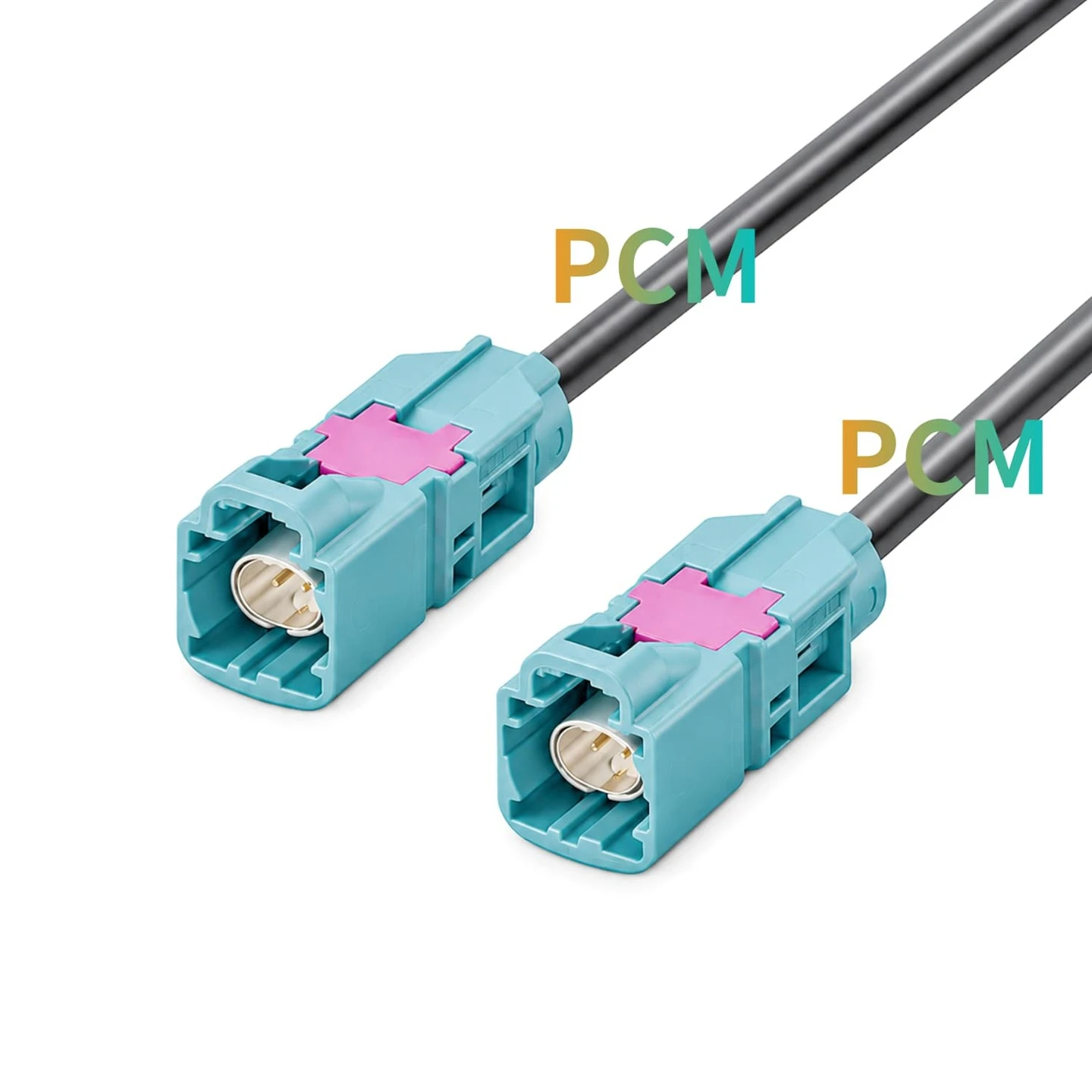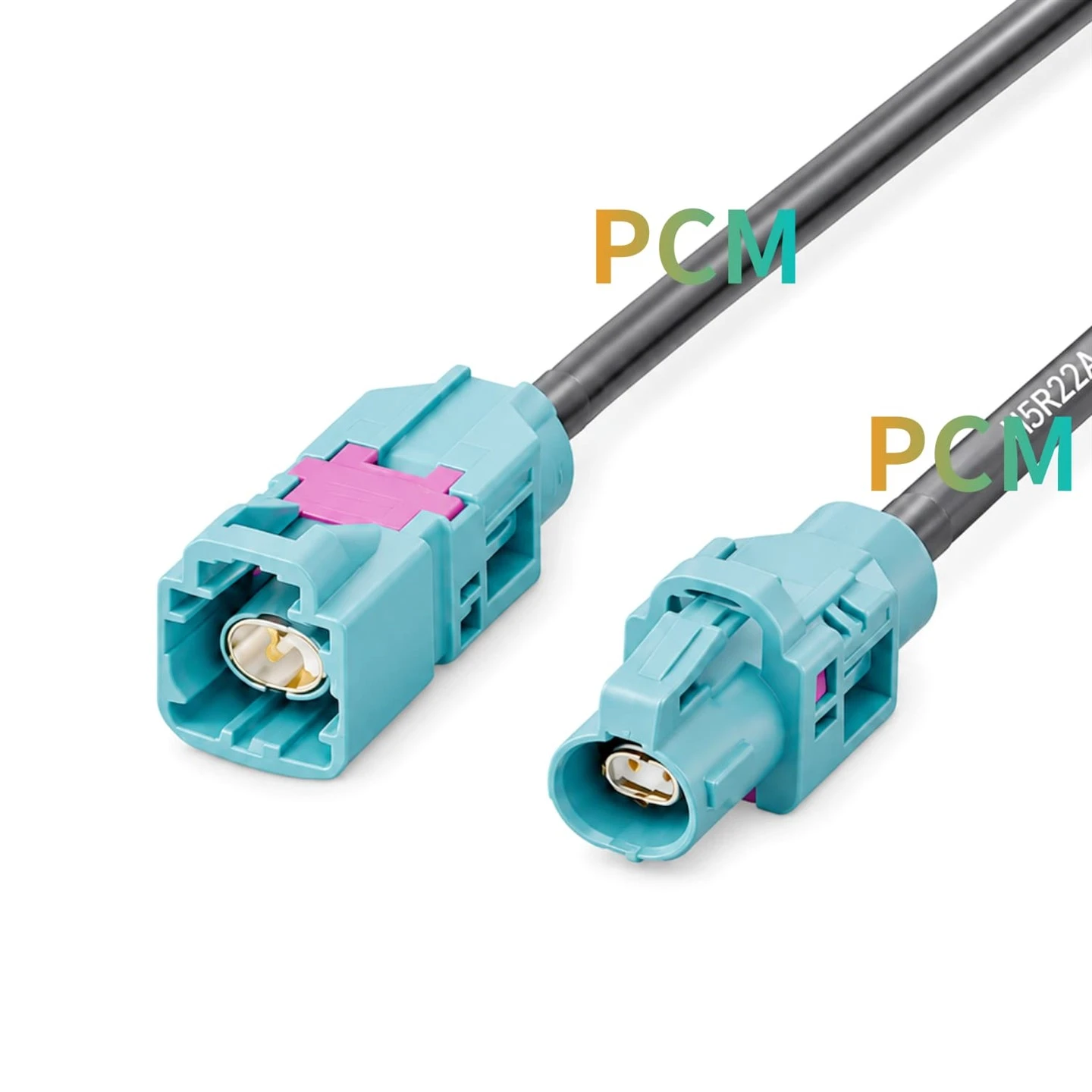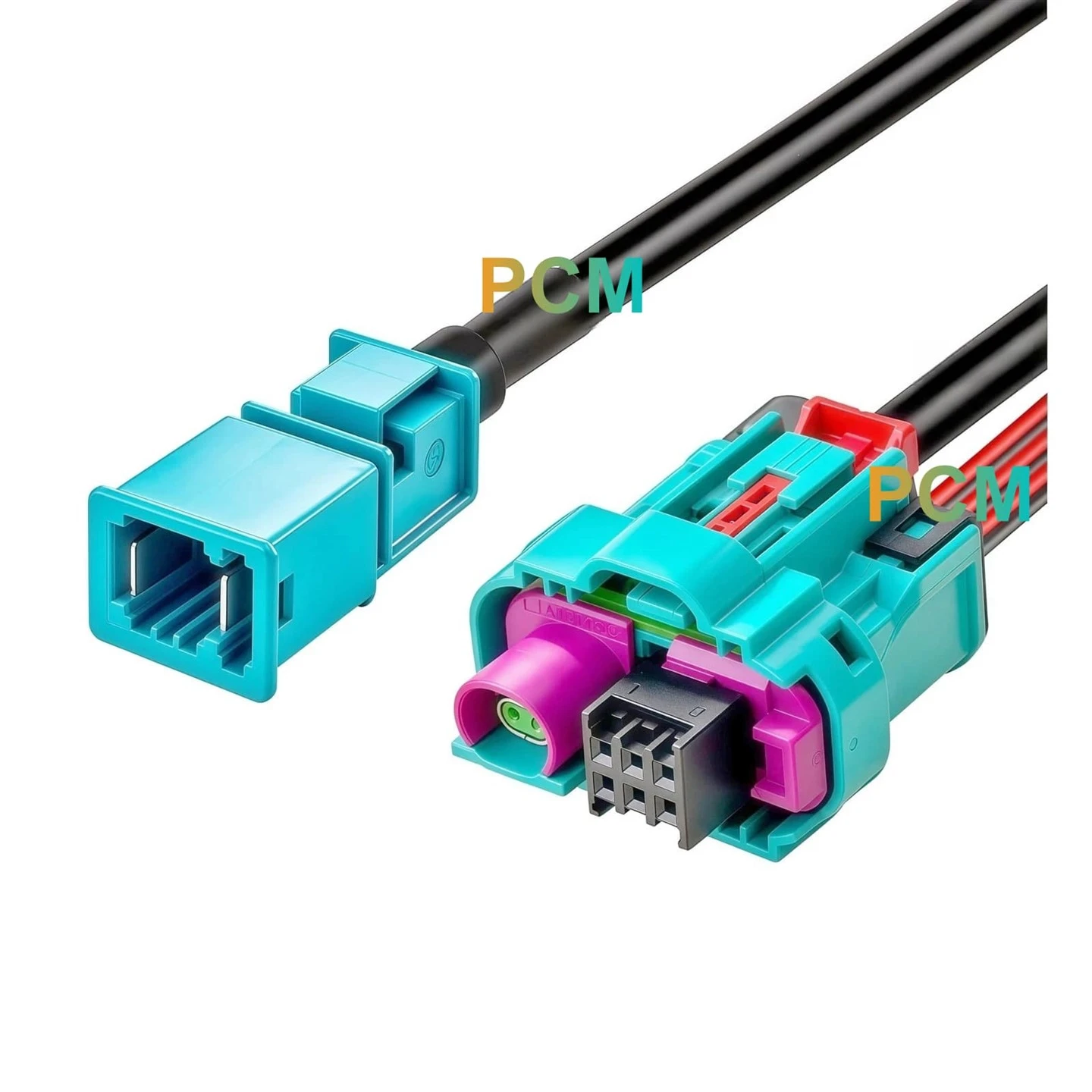
The significance of using GMSL connector (Gigabit Multimedia Serial Link) on Modular Computer is mainly reflected in the following aspects:
1. High-bandwidth data transmission
GMSL connector can achieve high-bandwidth data transmission, usually supporting high-speed transmission of more than 1Gbps. This is very important for processing multimedia data such as vehicle-mounted cameras, especially when real-time processing of high-definition video streams or data from multiple cameras is required. Modular computers are usually used to process data streams from different sensors (such as cameras, radars, LiDAR, etc.), and GMSL can ensure that these data are transmitted efficiently and with low latency.
Application example: In an autonomous driving system, the video data collected by the vehicle-mounted camera needs to be transmitted to the computing platform in real time for image processing. GMSL provides a stable and high-speed data transmission channel, supporting high-resolution video streams (such as 4K camera or multiple 1080p camera input).

2. Long-distance transmission capability
GMSL protocol supports data transmission over long distances. Compared with traditional HDMI or LVDS, GMSL can transmit high-definition images or video streams over longer distances (usually several meters) in the vehicle, which is particularly important for distributed sensor systems.
Application example: The computing platform in the vehicle may be located in the center of the vehicle, while the camera may be installed at the front, rear or side of the vehicle. Through the GMSL connection, long-distance, low-latency data transmission can be achieved between the camera and the computing platform, avoiding the limitations of traditional connection methods.
3. Simplified cable and connector design
The GMSL protocol supports the transmission of multiple channels of video and data over a single cable, which can greatly simplify cable wiring and interface design, reduce the number of required physical connection points and transmission lines, and reduce system complexity and cost.
Application example: In an in-vehicle modular computing platform, multiple GMSL interfaces can connect multiple cameras or other sensors through a single cable. Compared with traditional multi-channel connections (such as LVDS, HDMI, etc.), GMSL can achieve complex transmission requirements with fewer connectors and wiring.

4. Enhanced power and signal integration
The GMSL protocol not only supports data transmission, but also can transmit power over the same cable (called Power over Coax or PoC). This means that devices such as cameras can transmit data and power over the same cable, simplifying system design and reducing wiring complexity.
Application example: On the in-vehicle modular computing platform, the connection between the camera and the computer can not only transmit data at high speed through GMSL, but also provide power through the same cable, making the device more compact, energy-saving, and easier to install and maintain.
5. Support multiple video formats
GMSL can support different video compression and decompression formats, such as MJPEG, H.264, etc., and can flexibly adapt to different video transmission requirements. For the in-vehicle computing platform, this can make it compatible with the data streams of various cameras and sensors, and flexibly respond to different application scenarios.
Application example: The in-vehicle modular computer can use the GMSL interface to connect to multiple cameras of different brands and models (which may use different video compression formats) without the need to design different interfaces or data transmission methods for each camera.

6. Integration and compatibility
GMSL connectors have become standard in many in-vehicle computing platforms, especially in systems that support autonomous driving (ADAS) and advanced driver assistance systems (ADAS). Through GMSL, modular computers can be efficiently integrated with a variety of in-vehicle sensors, support a wide range of sensor configurations, and enhance system compatibility.
Application example: If a modular computing platform has multiple GMSL connectors, it can simultaneously support multiple data inputs from front-view cameras, rear-view cameras, side-view cameras, surround-view systems, etc., realize multi-sensor fusion, and provide accurate perception data for autonomous driving or driver assistance systems.
7. Reduce EMI (electromagnetic interference)
Because GMSL adopts differential signal transmission and low-noise design, it has strong anti-interference ability to electromagnetic interference (EMI), and is particularly suitable for application in vehicle environments. There are usually a large number of electrical devices inside the vehicle, and the anti-interference performance of GMSL can ensure stable communication between the vehicle computing platform and sensors.
Application example: In a complex vehicle environment, GMSL connection can ensure high-quality video and data transmission without reducing signal quality due to interference from the vehicle's engine, wireless communication equipment, etc.
Summary
The main significance of integrating GMSL connectors in modular computers is to provide high-bandwidth, long-distance, low-latency data transmission capabilities, and support efficient processing of video and sensor data. It can simplify system design, reduce the number of cables and interfaces, improve system compatibility, and at the same time improve anti-interference capabilities to adapt to the requirements of vehicle environment for reliability and real-time performance. This makes GMSL one of the key technologies in autonomous driving, in-vehicle computing and intelligent transportation systems.