Product Specifications
| Parameter | Specification |
|---|---|
| Coaxial Paths | 2 |
| Interface | FAKRA |
| Cable Type | FDC402 |
| Signal Type | Coaxial |
| Orientation | Straight |
| Housing Color | Turquoise |
| Common Connector Reference | 2-2203575-0 |
| Single Female Reference | 2-2326910-0 |
| Single Male Reference | 2-2326914-0 |
| Dual Female Reference | 2-2345658-0 |
| Coding | FAKRA Z Code |
| Protection Rating | Non-waterproof |
| Product Type | Dual channel coaxial cable harness |
| Connector Type | Dual cavity and single cavity FAKRA |
| Cable Length | 0.5, 1, 1.5, 2, 2.5, 3, 4, 5, 6, 8, 10, 12 and 15 m |
| Connection Structure | Dual cavity to two singles or dual cavity to dual cavity |
| Gender | Male to two females; male to two males; male to female; male to male |
| Custom Options | Cable length; branch geometry and other changes subject to drawing review |
Available Configurations
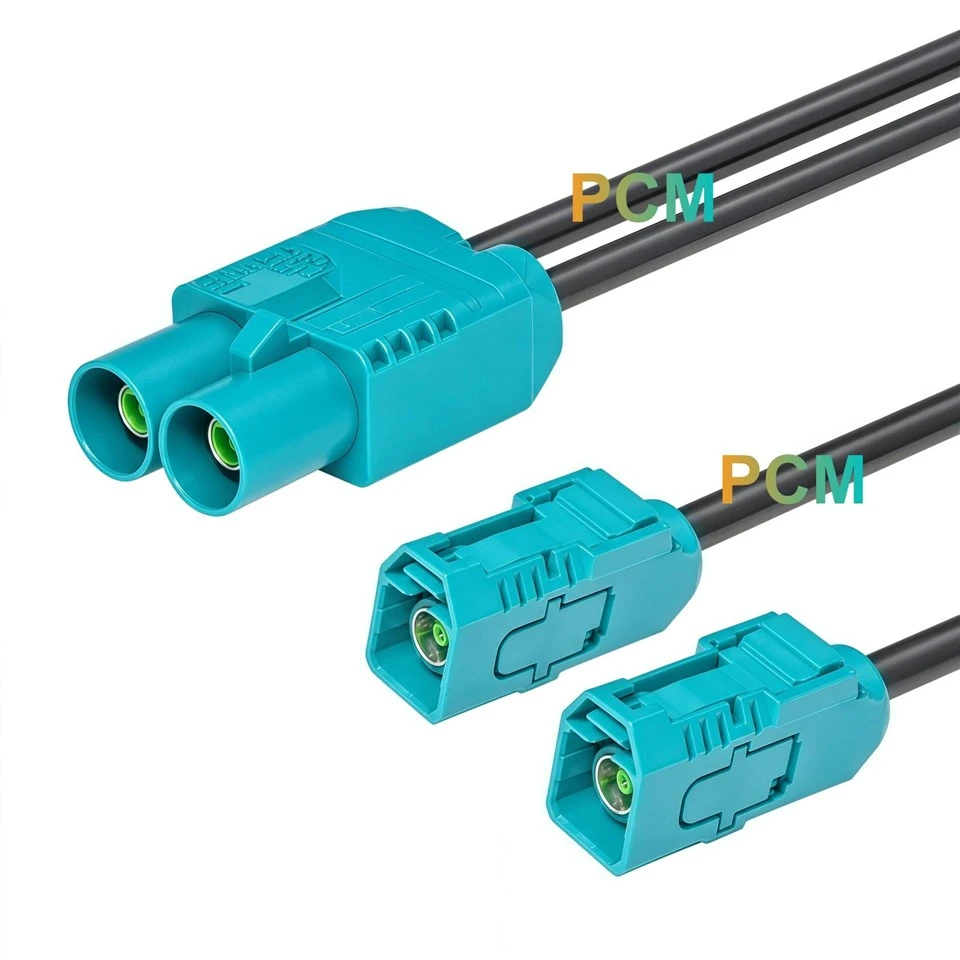
Dual FAKRA Male to Two FAKRA Female Breakout Cable
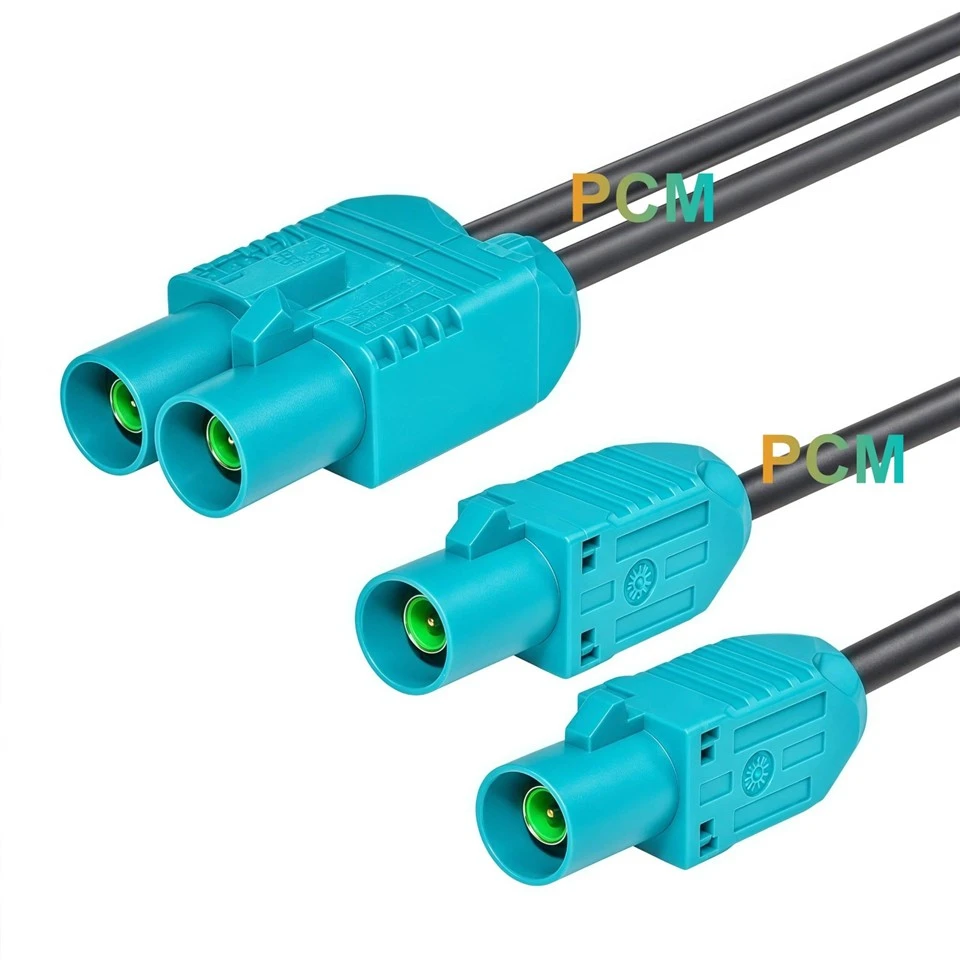
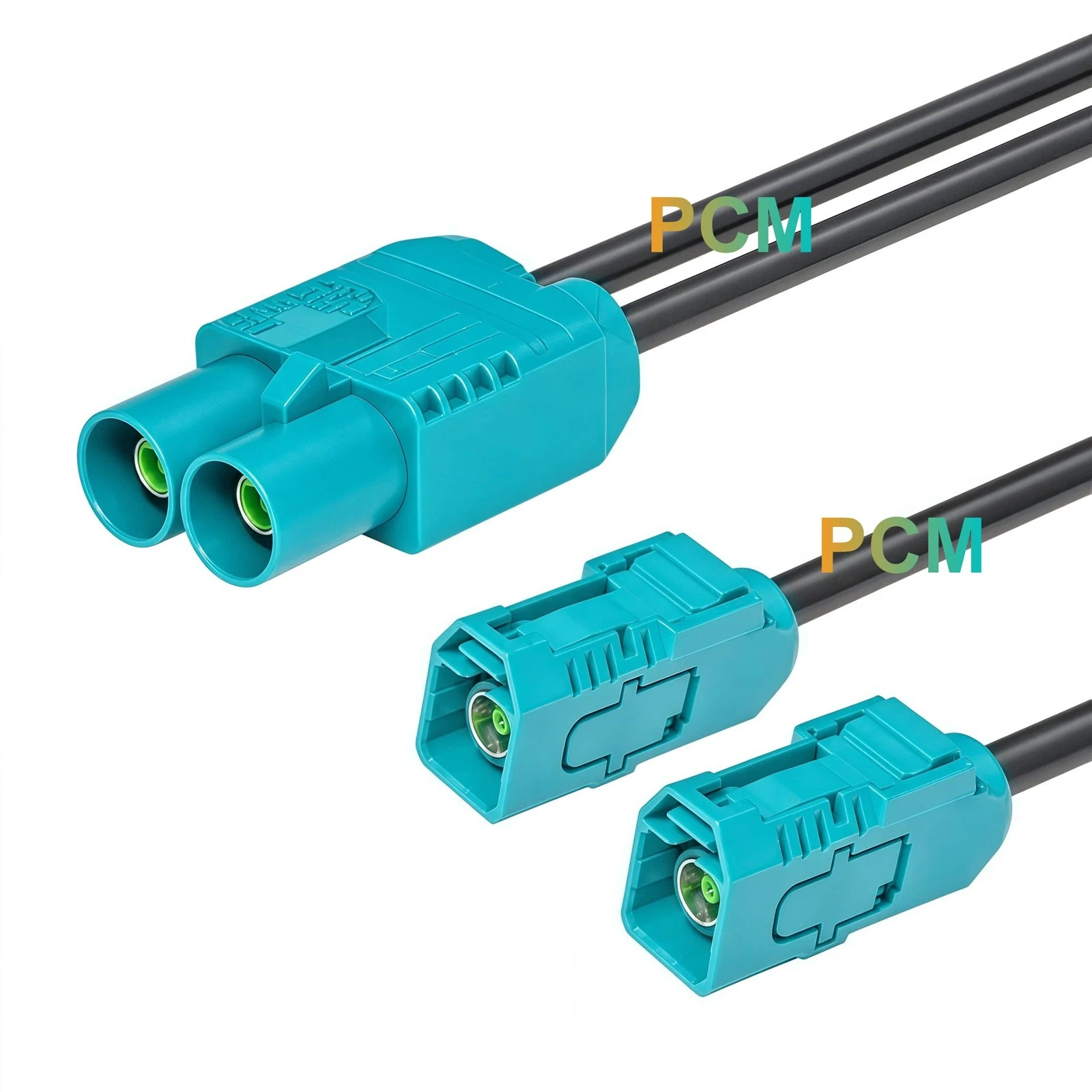
Connection Structure: One 2-2203575-0 dual cavity male connector to two 2-2326910-0 single cavity female connectors. All interfaces use FAKRA Z Code.
Unique Difference: Separates the grouped interface into two independently positioned female terminations, allowing each branch to reach a corresponding male port.
Suitable Installation: Equipment with a dual cavity female connection on one side and two separated male ports on the other, such as individually mounted camera connections.
Dual FAKRA Male to Two FAKRA Male Breakout Cable
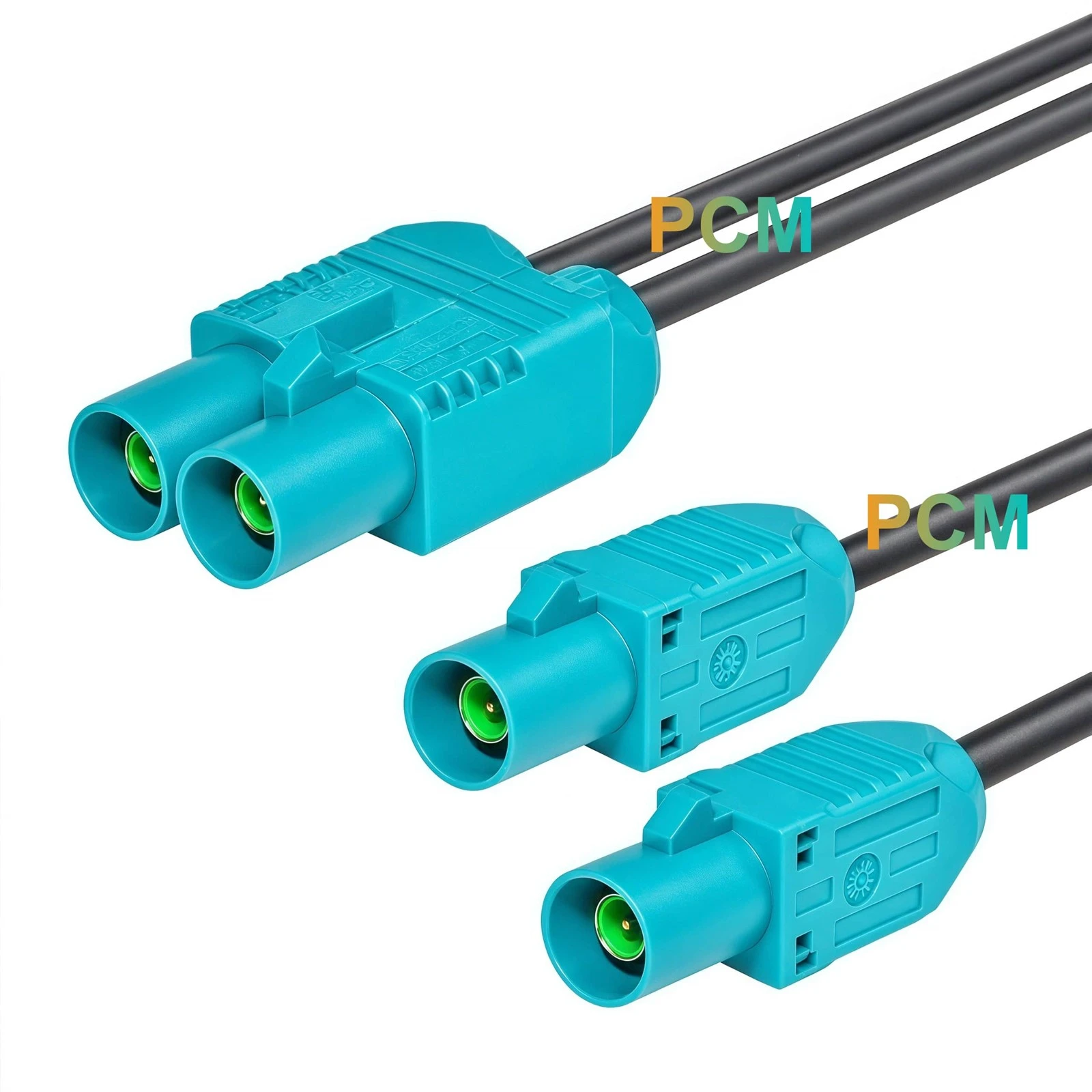
Connection Structure: One 2-2203575-0 dual cavity male connector to two 2-2326914-0 single cavity male connectors. All interfaces use FAKRA Z Code.
Unique Difference: Provides two male branch ends for connection to existing female cable interfaces, supporting a different mating arrangement from configuration 1.
Suitable Installation: Adapter and extension layouts where two existing female terminated leads must connect to a grouped dual cavity female interface.
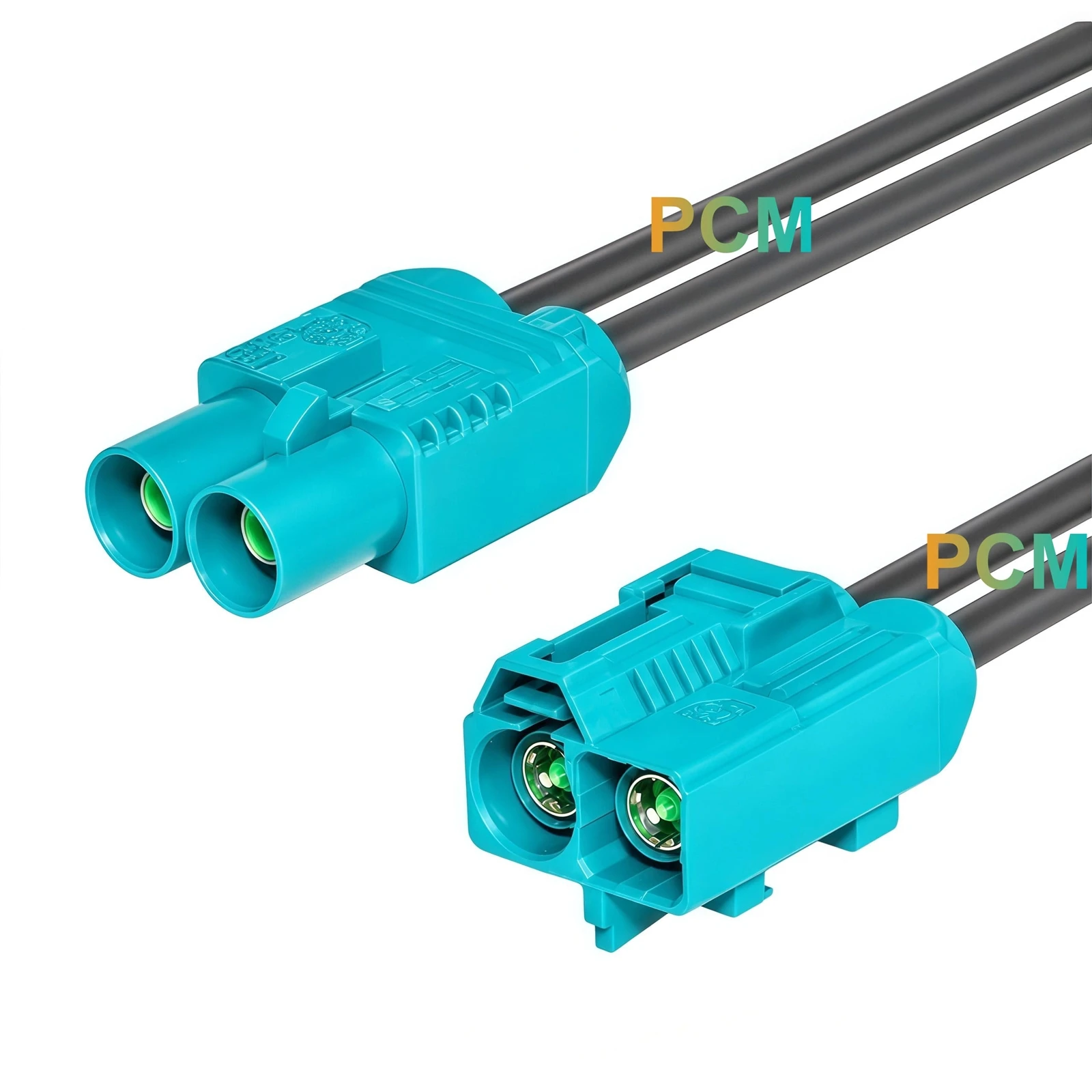
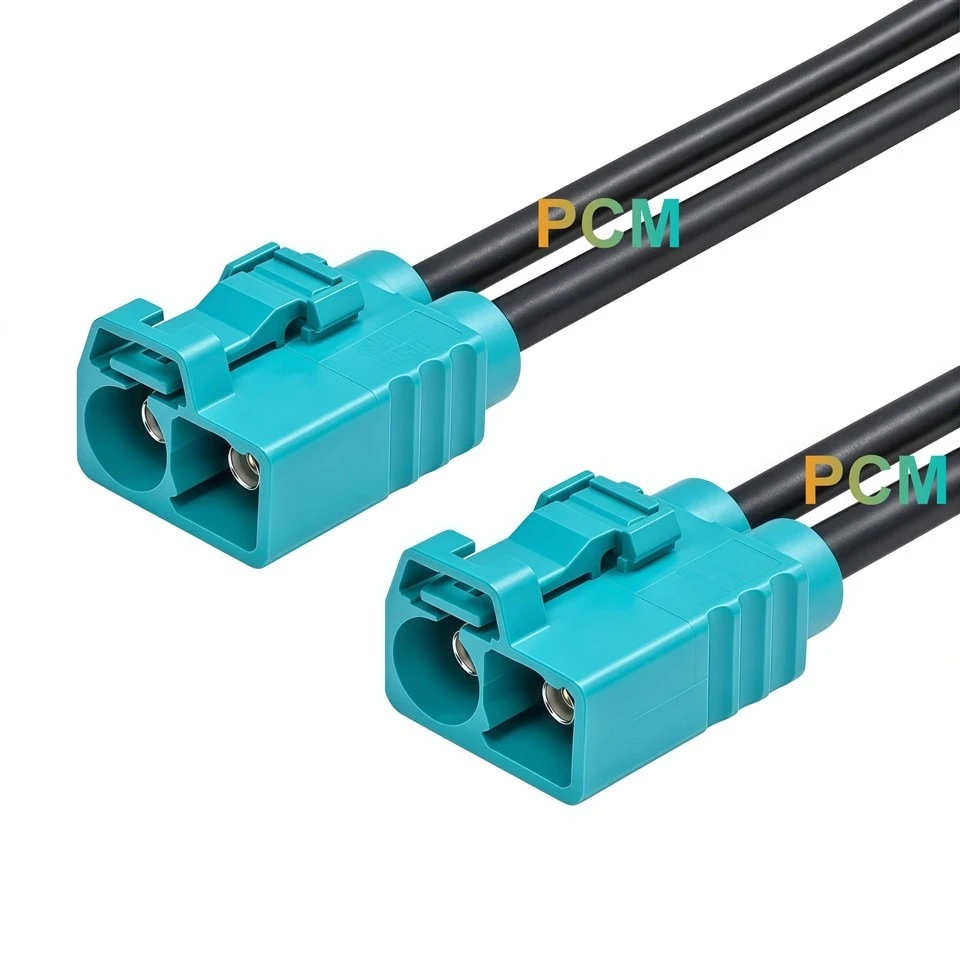
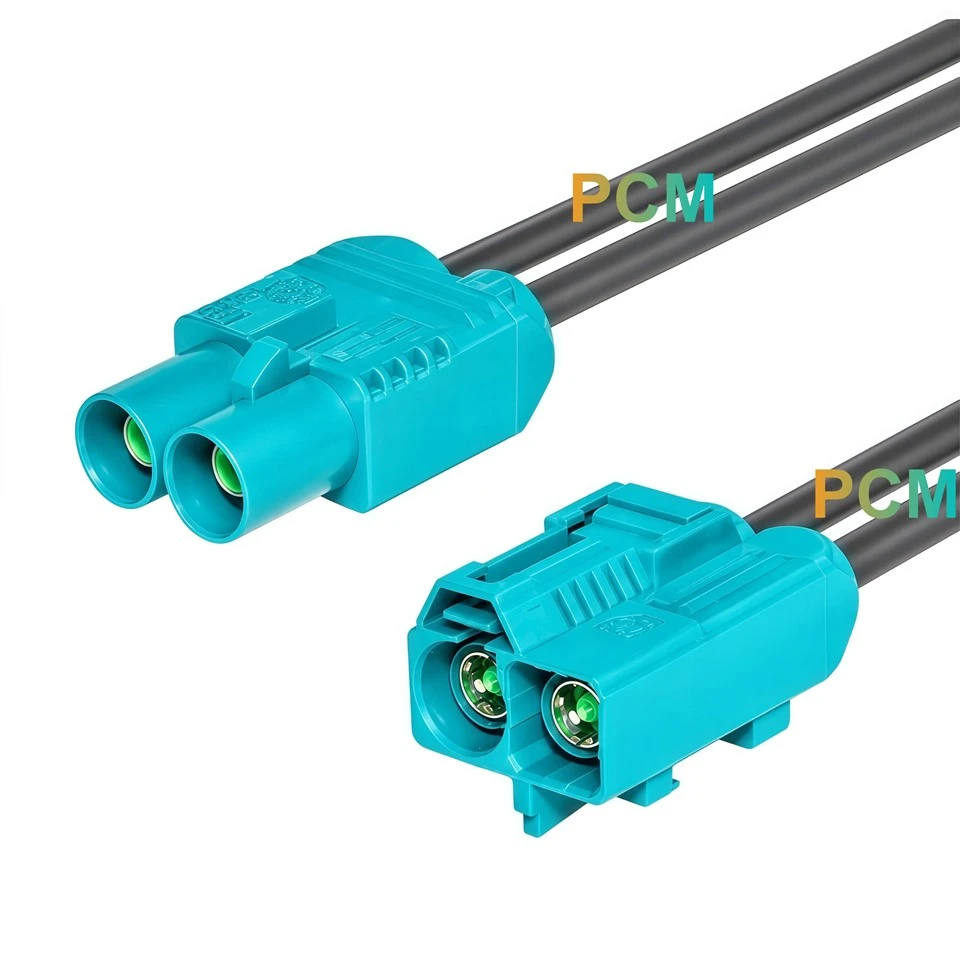
Dual FAKRA Male to Dual FAKRA Female Cable
Connection Structure: One 2-2203575-0 dual cavity male connector to one 2-2345658-0 dual cavity female connector. Both ends use FAKRA Z Code.
Unique Difference: Retains the grouped interface while changing gender between the two ends, allowing a paired connection to continue through a male to female assembly.
Suitable Installation: Extension routes between an existing dual cavity male interface and a corresponding dual cavity female interface, with both channels handled together.
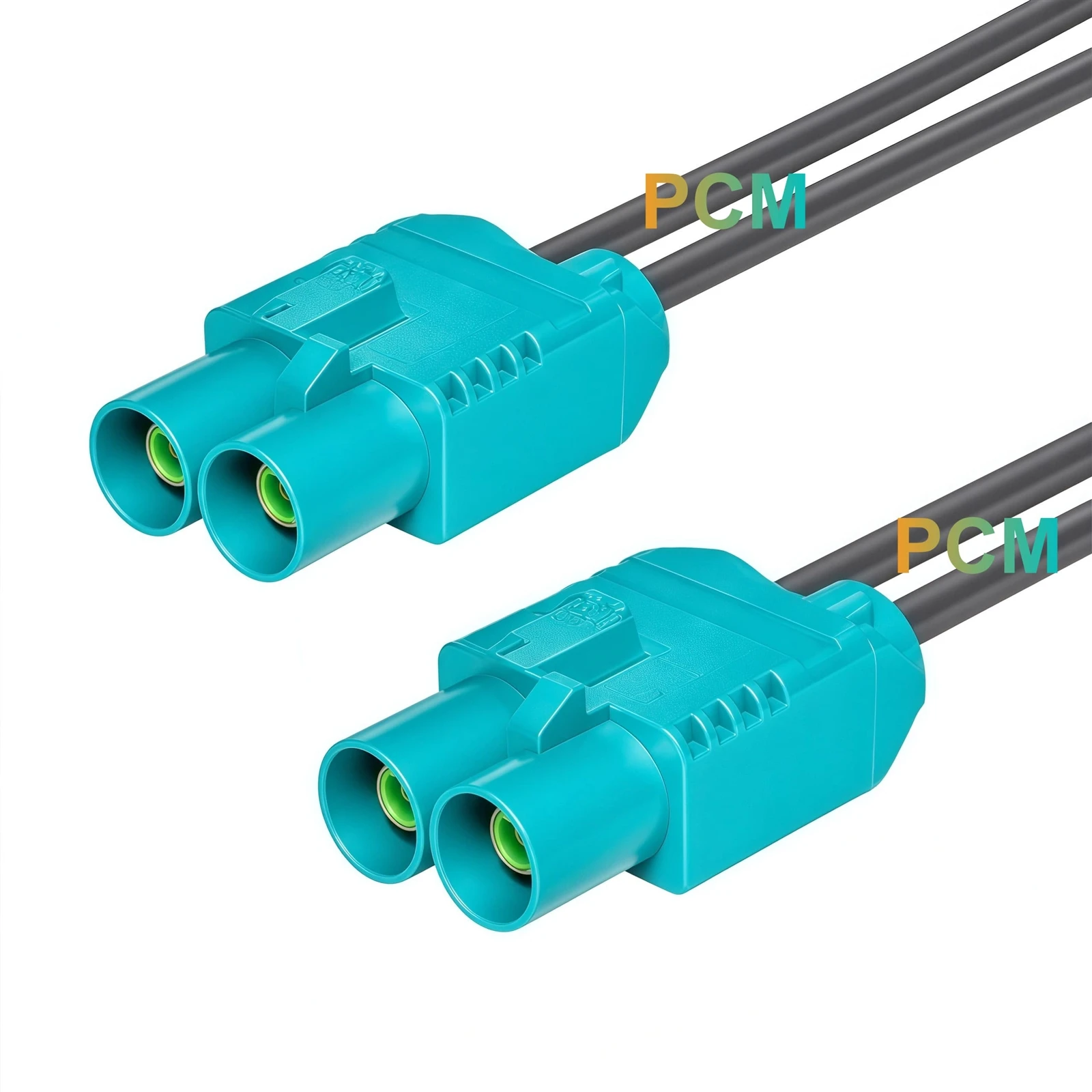
Dual FAKRA Male to Male Cable
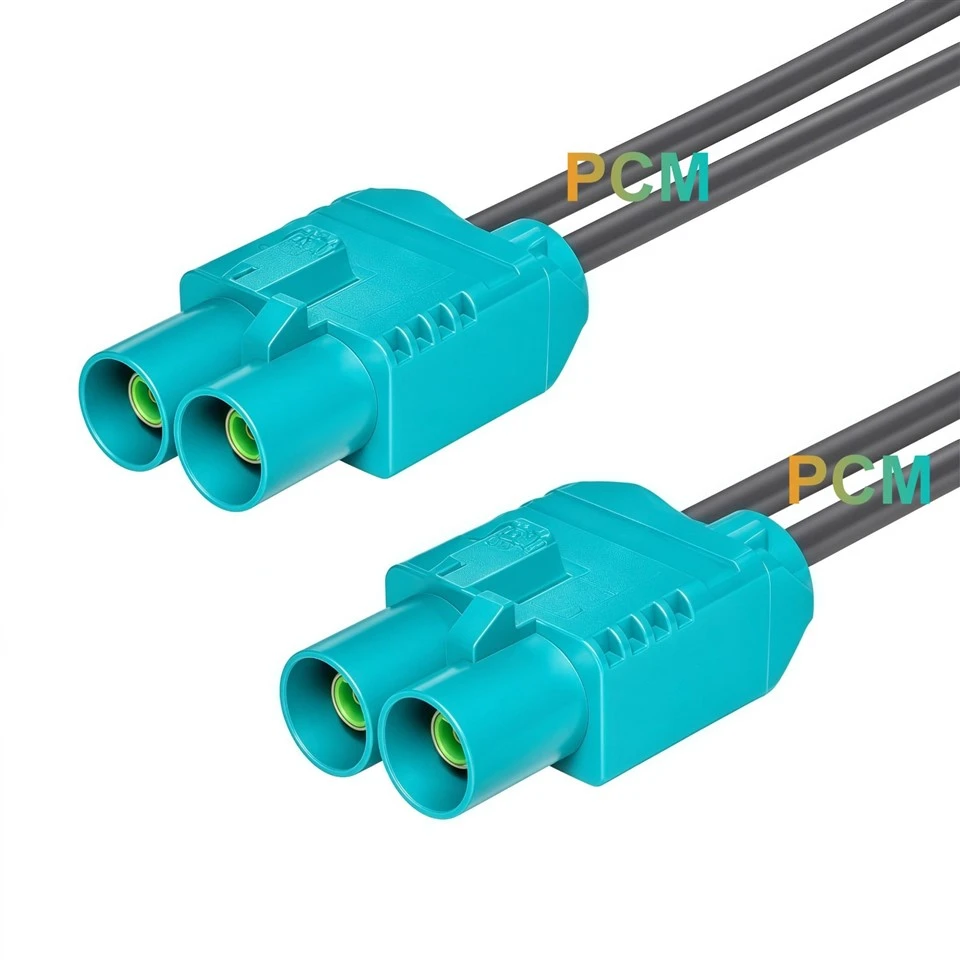
Connection Structure: One 2-2203575-0 dual cavity male connector at each end, both using FAKRA Z Code.
Unique Difference: Uses identical grouped male interfaces, with no single cavity branches at either end.
Suitable Installation: Direct interconnection between two corresponding dual cavity female ports where separate channel access is unnecessary.
Applications & Customer Value
Distributed Camera Connections
A grouped equipment port may need to reach two cameras installed at different positions. Separate branch routing allows each connection to follow its own installation path without requiring the destination ports to sit together.
Existing Harness Adaptation
Prototype or replacement work often involves cables that already have fixed connector genders. Selecting the matching termination combination helps engineers connect these assemblies without adding separate gender adapters.
Paired Equipment Links
Where both devices use grouped interfaces, keeping the channels together simplifies installation records and allows technicians to handle the pair as one connection group.
Vehicle Development Fixtures
Fixtures may need individual channel access during evaluation but grouped connections during routine operation. The configuration range lets engineers choose the physical connection arrangement suited to each stage of the project.
Product Features
Common Dual Cavity Equipment Interface
The 2-2203575-0 housing groups two separate coaxial connection positions within one compact connector body. Using it consistently across the product range gives the four configurations a common interface for equipment selection.
Separate or Grouped Remote Terminations
Configurations 1 and 2 use separate single-cavity housings at the remote end, while Configurations 3 and 4 use a dual-cavity housing. This affects cable routing and handling without implying signal duplication.
Straight Connector Cable Exits
All pictured connectors use straight cable exits. Harness routing must provide sufficient clearance space behind the connector for proper cable support and bending, particularly where the two cables leave a dual cavity housing together.
Two FDC402 Coaxial Cable Paths
The supplied images identify FDC402 cable for the assembly. Cavity mapping, shield continuity and electrical acceptance criteria should be defined in the approved manufacturing drawing; they cannot be established from the product photograph alone.
Customization Capabilities
Premier Cable supports:
Connector Customization
Connector type, gender, coding and housing design can be reviewed against the mating equipment. The specification can define whether the remote connections remain grouped or terminate in separate housings.
Cable Customization
Overall length, branch lengths, jacket, shielding and cable structure can be reviewed for the installation. For breakout versions, the drawing can specify the separation point and the distance to each destination port.
Electrical Customization
Pin assignment, cavity to branch mapping and wiring definition can be documented for the project. Circuit configuration, resistance value and power rating requirements can be evaluated where applicable; these are not confirmed functions or ratings of the illustrated harnesses.
OEM Manufacturing
Premier Cable supports drawing review, prototypes and mass production to an approved specification. Branch labels, connector identification, product labels and packaging can be defined to support installation and production supply.
Product FAQ
Q1. Does a dual FAKRA breakout cable divide one signal between two devices?
No. "Breakout" describes the change from one grouped connector housing to two separate housings. This product is presented as two coaxial connection paths, not a signal power divider.
Q2. How should I choose between separate and dual cavity terminations?
Use separate terminations when the destination ports are individually positioned or require individual disconnection. Choose a dual cavity termination when the mating interface already groups the two positions in one housing.
Q3. Can FAKRA Z Code alone confirm compatibility?
No. Confirm the complete mating connector reference, gender, housing arrangement and equipment requirements. Matching coding does not establish camera protocol or electrical compatibility.
Q4. Does a listed 15 m length confirm operation at my required data rate?
No. Available cable length and validated operating length are different specifications. Provide the signal system, data rate or frequency range, and permitted channel loss so the proposed assembly can be evaluated.
Q5. What drawing details are most useful for an OEM order?
Include the configuration number, connector references, length measurement points and cavity mapping. For breakout versions, add individual branch lengths, the required separation point and branch labels. Quantity and inspection requirements should accompany the drawing.

Hot Tags: te connectivity fakra cable assembly, China te connectivity fakra cable assembly manufacturers, suppliers, factory