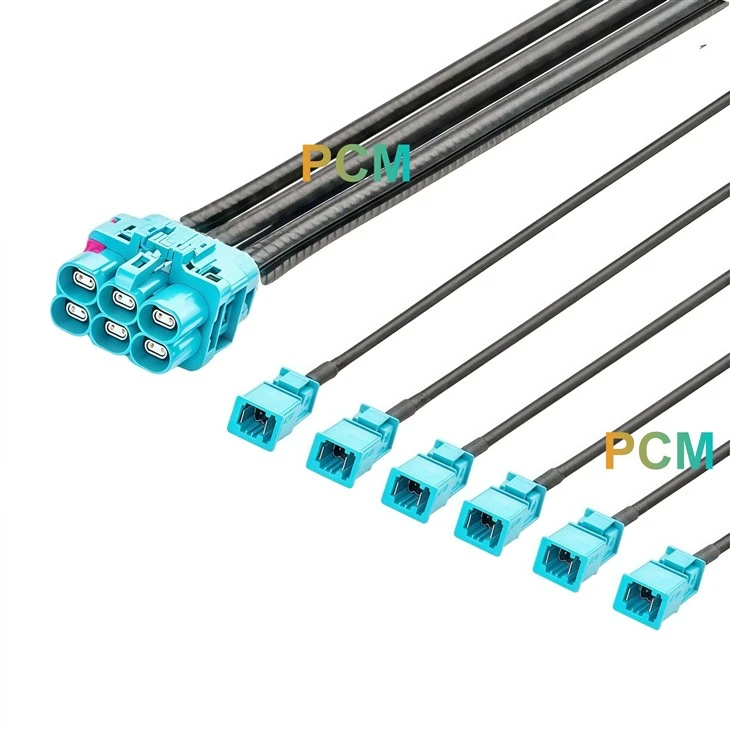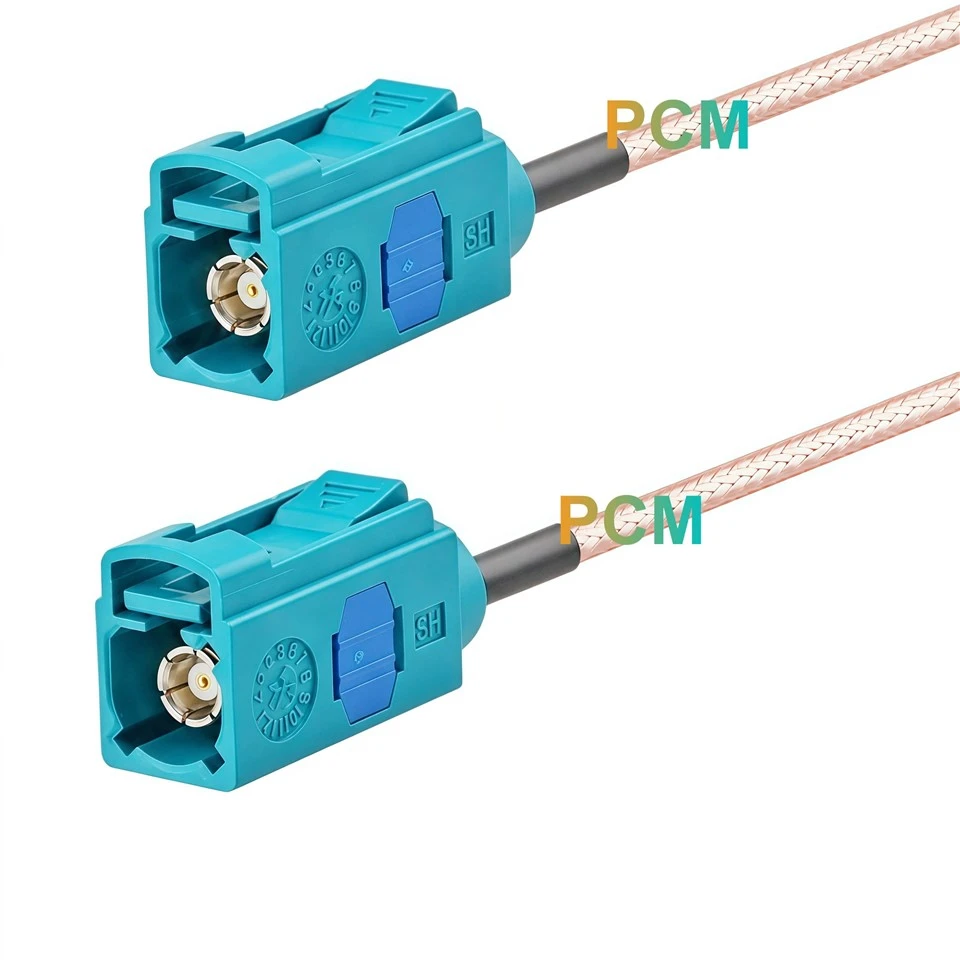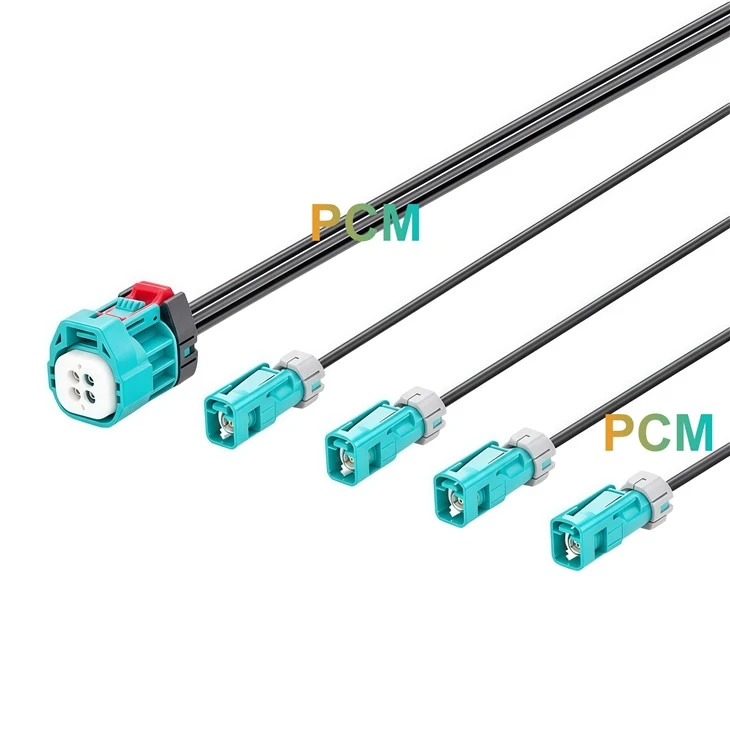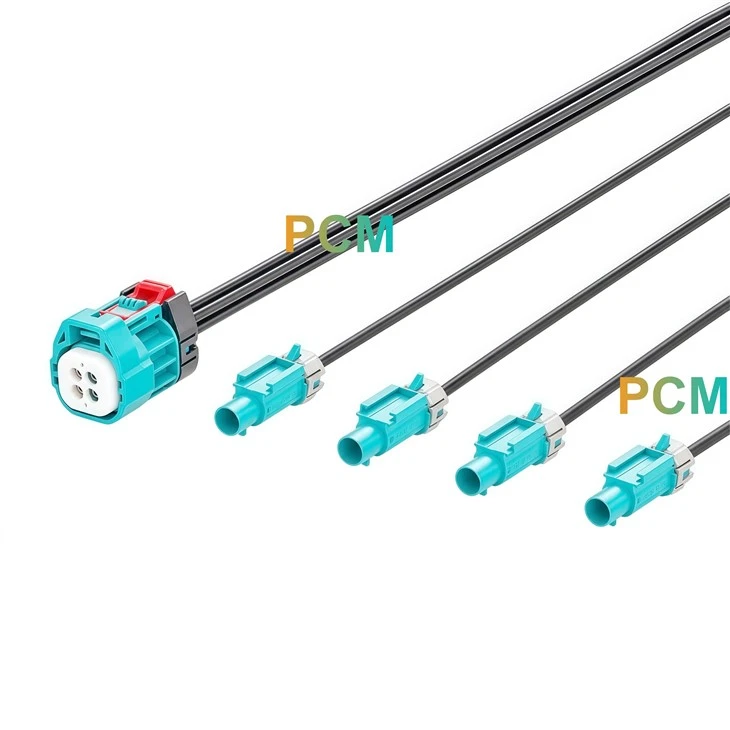
What Are Aptiv AMEC, Rosenberger H-MTD, TE MATEnet, and TE GEMnet ?
| Aptiv AMEC | An automatable modular Ethernet connector system designed for automotive Ethernet applications, supporting connectivity from 100 Mbps to 1 Gbps with modular, multi-port, and hybrid integration options. |
| Rosenberger H-MTD | A high-speed modular twisted-pair data connector system developed for automotive high-frequency transmission, supporting multi-gigabit applications up to 56 Gbps and various high-speed communication protocols. |
| TE MATEnet |
A miniaturized modular automotive Ethernet connector system based on TE NanoMQS terminal technology. It supports UTP and STP cable configurations, with standard automotive Ethernet connectivity up to 1 Gbps and higher data rates through alternative transmission technologies. |
| TE GEMnet | A multi-gigabit automotive differential connector system designed for high-performance computing platforms, LiDAR, radar, 8K displays, and high-speed data networks, with product family capabilities reaching up to 56 Gbps. |
Product Display
|
|
|
|
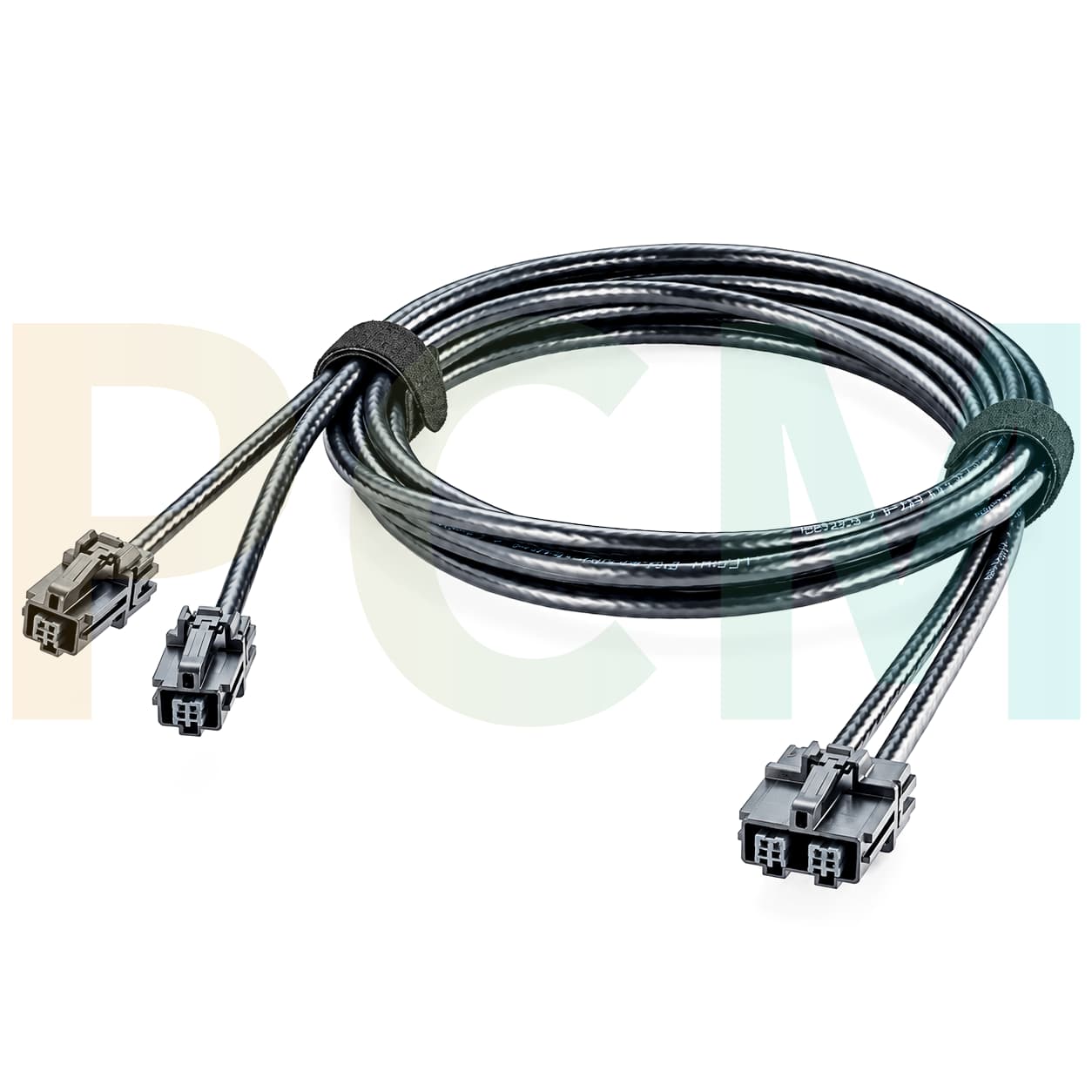

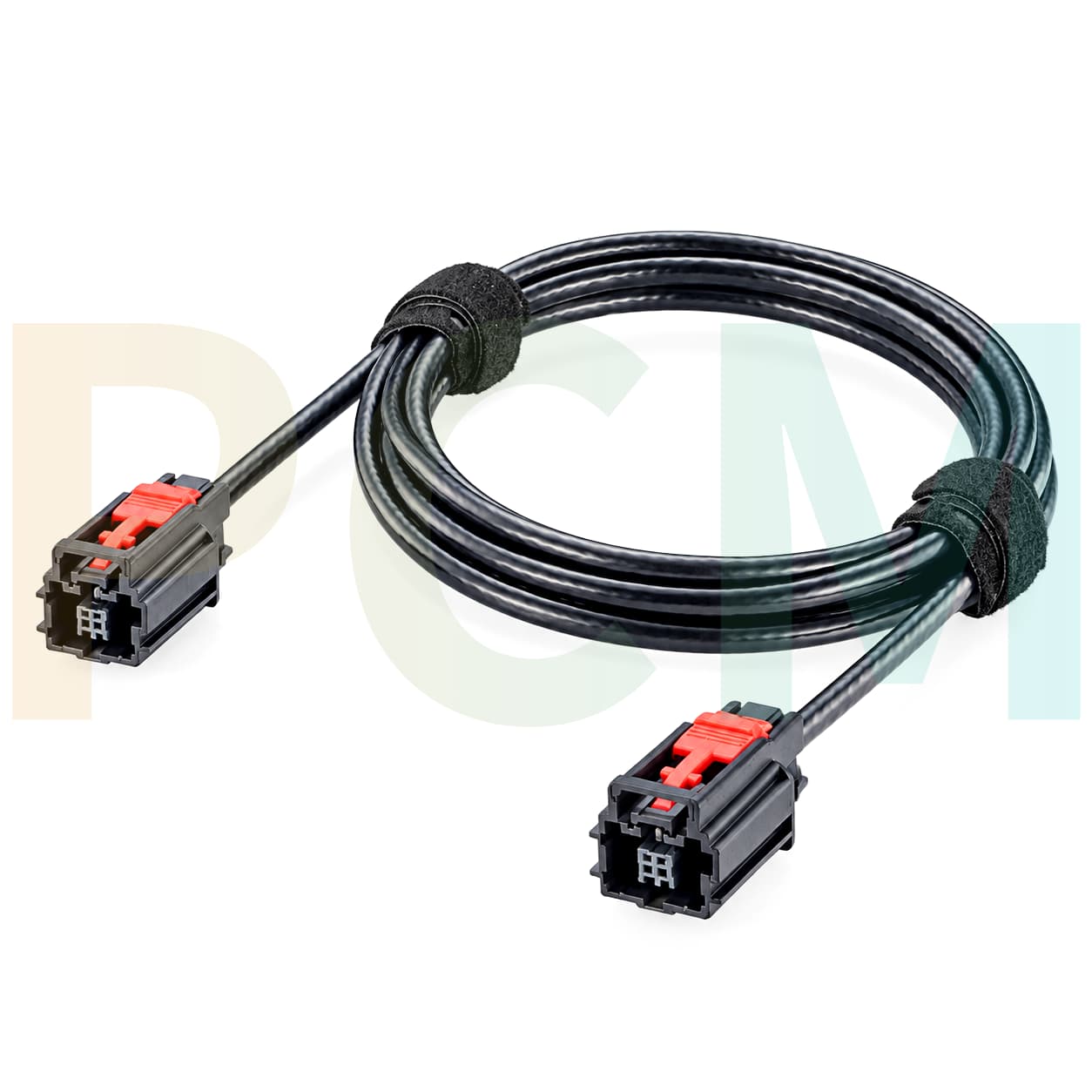
What Are the Common Features of These Four Connector Systems ?

1,Automotive-Grade Connectivity
All four connector systems are designed for automotive electronic environments, where vibration, temperature variations, mechanical stress, and long-term reliability must be considered. Compared with conventional consumer electronics connectors, automotive-grade data connectors place greater emphasis on mechanical locking, terminal retention, connection stability, and environmental durability.
All four technologies support high-speed differential data connectivity. Differential signaling helps improve immunity to common-mode interference. Their designs must consider key parameters such as differential impedance, insertion loss, return loss, crosstalk, and signal integrity.
3,Compact and Modular Architecture
As available space inside automotive electronic equipment becomes increasingly limited, connectors must provide more data interfaces within compact packaging. All four systems emphasize compact structures and different port configurations to accommodate device-side, cable-side, and PCB-side installation requirements.
4,Support for Advanced Automotive Electronics
All four connector systems can serve modern automotive electronic networks, supporting applications involving ADAS, automotive cameras, radar, LiDAR, ECUs, and in-vehicle computing platforms. They help establish data connections between different electronic modules.
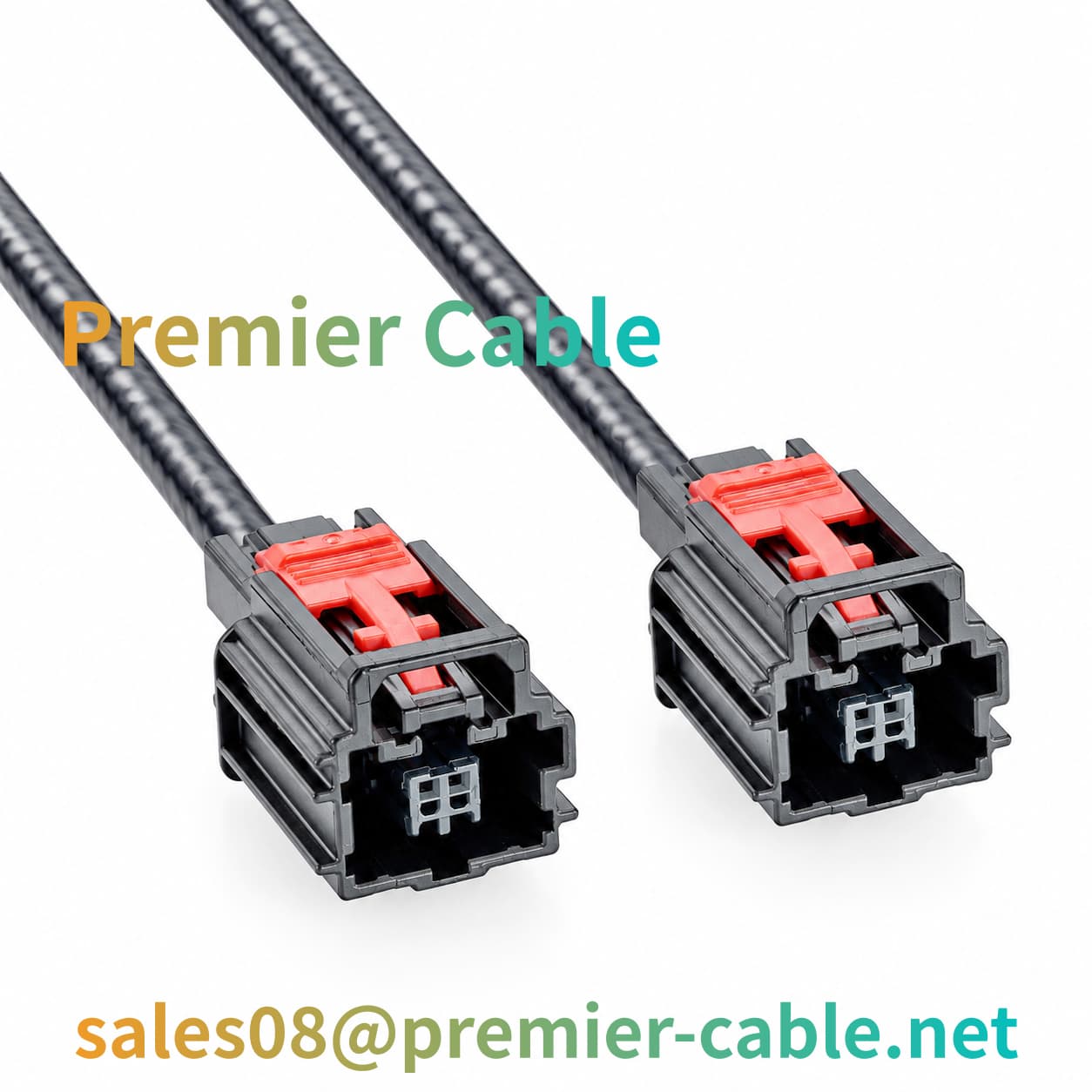
What Are the Key Differences Between AMEC, H-MTD, MATEnet, and GEMnet ?
1. Technical Positioning
| Product | Technical Positioning |
| Aptiv AMEC | Automatable modular automotive Ethernet |
| Rosenberger H-MTD | High-frequency, multi-gigabit modular twisted-pair connectivity |
| TE MATEnet | Miniaturized modular automotive Ethernet |
| TE GEMnet | Multi-gigabit high-speed differential connectivity |
AMEC and MATEnet are therefore more naturally compared as automotive Ethernet connectivity platforms, while H-MTD and GEMnet are better compared as high-frequency, multi-gigabit connectivity platforms.
2. Data Transmission Capability
- AMEC:AMEC and AMEC+ primarily address automotive Ethernet connectivity, supporting configurations from 100 Mbps to 1 Gbps. Their ability to provide different data rates within the same PCB footprint offers flexibility for device upgrades.
- H-MTD:The high-end H-MTD product family supports frequencies up to 20 GHz and data transmission rates up to 56 Gbps. Beyond automotive Ethernet, it supports various SerDes and other high-speed data protocols.It is important to note that H-MTD e also includes dedicated 100 Mbps and 1 Gbps automotive Ethernet configurations. Therefore, the entire H-MTD family should not be described as exclusively a 56 Gbps solution.
- MATEnet:Standard MATEnet automotive Ethernet configurations support 100BASE-T1 and 1000BASE-T1, reaching up to 1 Gbps. TE also specifies data rates up to 4 Gbps using higher-modulation technologies. This is different from standard 1000BASE-T1 connectivity.
- GEMnet:GEMnet targets multi-gigabit differential connectivity. TE specifies data transmission rates up to 56 Gbps and a bandwidth specification of 15 GHz, making it suitable for higher-bandwidth automotive electronic equipment.
3. Connector Architecture and Structural Design
| Product | Structural Design Features | Primary Design Focus |
| AMEC | Uses standard 0.50 terminals and supports multi-port and hybrid connection configurations. | Automated assembly and modular integration. |
| H-MTD | Features a modular housing design with single-, dual-, quad-, and six-port configurations. | High-density port layouts and high-frequency connectivity. |
| MATEnet | Based on the NanoMQS terminal system, supporting various frame designs and port configurations. | Miniaturization and interface scalability. |
| GEMnet | Features a multi-port differential connector system with different mounting orientations and sealing configurations. | High-bandwidth data transmission and computing platform integration. |
AMEC offers multiple port and housing configurations to improve automotive Ethernet integration flexibility. It also supports mixed connectivity with other electrical functions.
H-MTD uses a modular housing architecture to consolidate multiple data ports within a limited installation space. Selected versions also offer Connector Position Assurance (CPA) to reduce the risk of unintended disconnection.
MATEnet is based on TE's NanoMQS terminal technology, emphasizing terminal miniaturization and high-density layouts. This helps integrate multiple data interfaces within limited PCB space.
GEMnet is designed for high-performance computing equipment and multi-gigabit connectivity. It offers different port counts, mounting orientations, and sealing configurations to accommodate complex electronic systems.
Application Differences
1. Aptiv AMEC – Automotive Ethernet Networking
Suitable for active safety modules, vehicle gateways, and infotainment systems requiring automotive Ethernet connectivity, particularly projects emphasizing modular interfaces and scalable manufacturing.
Suitable for high-resolution cameras, ADAS, autonomous driving computing platforms, and various high-speed data networks, with multi-gigabit transmission available depending on the specific product configuration.
Suitable for high-performance computing platforms, domain controllers, LiDAR, radar, and high-resolution display equipment requiring greater data bandwidth.

How to Choose the Right Automotive High-Speed Connector ?
When selecting a connector for an automotive cable harness project, maximum transmission speed should not be the only consideration. Device interfaces, system architecture, cable construction, packaging constraints, and long-term reliability must also be evaluated.
The following table provides a practical selection reference:
| Project Requirement | Suggested Product Family | Selection Rationale |
| 100 Mbps–1 Gbps automotive Ethernet | Aptiv AMEC | Modular automotive Ethernet connectivity |
| Miniaturized automotive Ethernet interfaces | TE MATEnet | NanoMQS terminals and compact design |
| Multi-gigabit differential data connectivity | Rosenberger H-MTD | Family capabilities up to 56 Gbps |
| High-performance computing connectivity | TE GEMnet | Designed for multi-gigabit computing and high-speed data applications |
Six Key Parameters to Verify:
1. Data Rate
Confirm the required communication speed, such as 100 Mbps, 1 Gbps, 2.5 Gbps, or higher.
2. Connector Interface
Verify the connector manufacturer, series, exact part number, mating interface, and mechanical coding.
3. Cable Construction
Determine whether UTP, STP, or another approved transmission medium is required.
4. Impedance Requirements
Confirm the differential impedance requirements of the target communication channel and impedance matching between the connector and cable.
5. Installation Space
Consider PCB footprint, port quantity, cable exit orientation, and minimum bending radius.
6. Electrical Validation
Verify insertion loss, return loss, crosstalk, and complete channel performance according to the target protocol.
Can AMEC, H-MTD, MATEnet, and GEMnet Be Interchanged ?
Generally, these four connector systems are not directly interchangeable.
Although AMEC, H-MTD, MATEnet, and GEMnet all belong to the automotive high-speed connectivity sector, they use different mechanical interfaces, terminal structures, connector coding systems, and cable termination designs.Even when two connector systems support the same transmission rate, this does not mean they share the same physical interface.
For example:
- AMEC and MATEnet both support 1 Gbps automotive Ethernet applications, but their connector interfaces and terminal systems are different.
- H-MTD and GEMnet both support multi-gigabit data connectivity, but their matching compatibility cannot be assumed based solely on their maximum transmission rates.
- UTP and STP cables can both be used for differential data transmission, but their connector configurations, shield termination methods, and electrical performance requirements may differ.
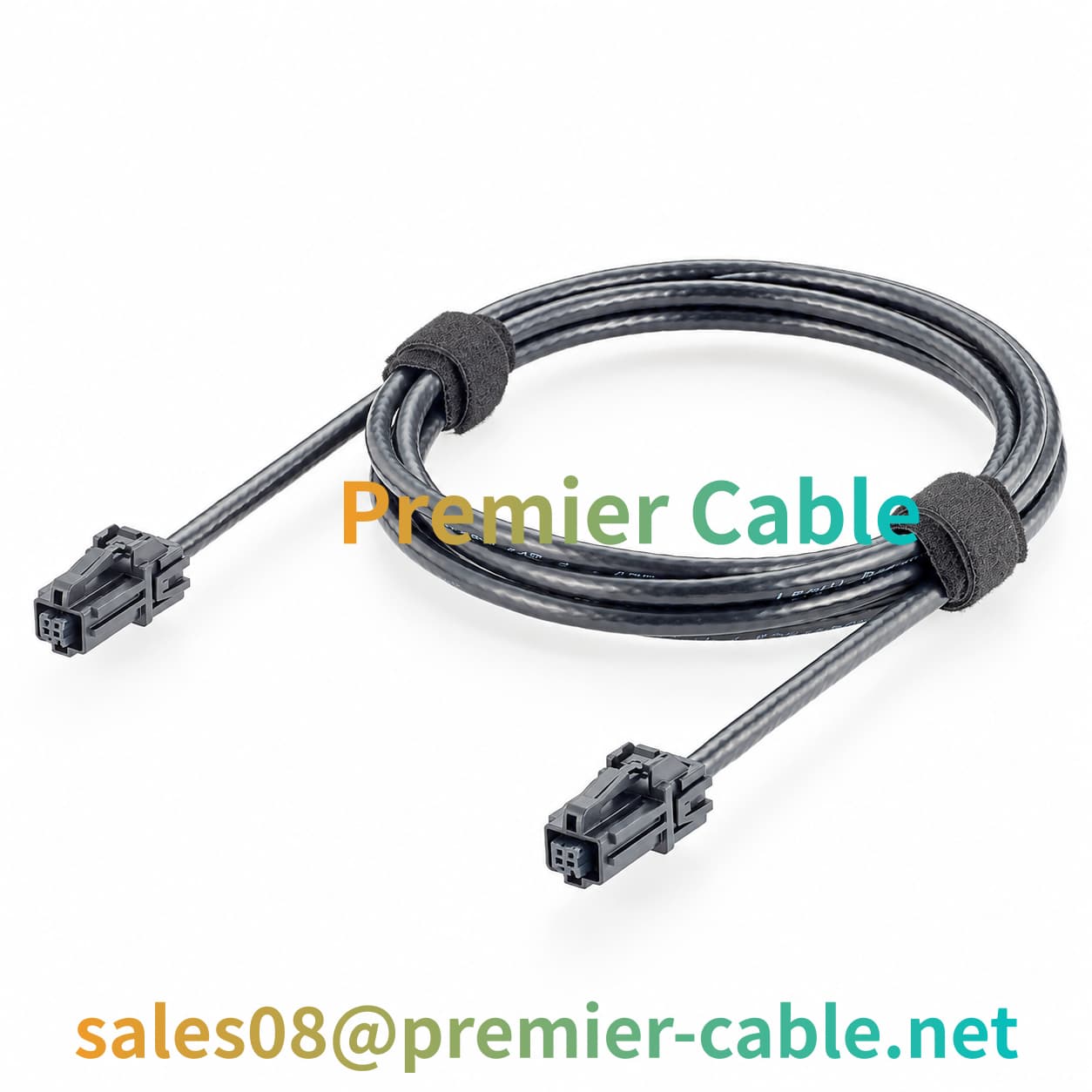
Why Are These Four Connector Technologies Important for Future Vehicles ?
As automotive electronic architectures evolve toward Software-Defined Vehicles (SDVs), centralized computing, and zonal control, in-vehicle communication systems are transitioning from traditional low-speed control networks to high-speed, multi-protocol data networks.
This transformation not only increases data transmission requirements but also raises expectations for connector miniaturization, mechanical reliability, electromagnetic compatibility, and multi-port integration.
AMEC, H-MTD, MATEnet, and GEMnet address different aspects of automotive connectivity through modular Ethernet, high-frequency twisted-pair transmission, miniaturized interfaces, and multi-gigabit differential connectivity.
As high-resolution cameras, intelligent driving sensors, high-performance computing platforms, and in-vehicle infotainment systems continue to develop, high-speed data connectivity components will become increasingly important infrastructure within automotive electronic architectures.
Conclusion
Although Aptiv AMEC, Rosenberger H-MTD, TE MATEnet, and TE GEMnet all belong to the automotive high-speed data connectivity sector, they have different technical positioning, structural designs, and transmission capabilities.
AMEC emphasizes modular automotive Ethernet connectivity and automated assembly. H-MTD focuses on high-frequency, multi-gigabit, and multi-protocol connectivity. MATEnet prioritizes miniaturized and scalable automotive Ethernet interfaces, while GEMnet targets high-performance computing platforms and multi-gigabit differential data transmission.
Their common objective is to meet the growing demand for high-speed, reliable, and compact data connectivity in modern automotive electronic systems. However, there is no single connector solution that is ideal for every application.
For automotive electronics manufacturers and cable harness developers, proper selection should be based on a comprehensive evaluation of communication protocols, data bandwidth, interface compatibility, cable construction, and actual installation conditions.
As intelligent driving, zonal control, and Software-Defined Vehicles continue to advance, these high-speed connectivity technologies will play an increasingly important role in future automotive electronic architectures.
Product FAQ
Do AMEC, H-MTD, MATEnet, and GEMnet Support the Same Automotive Ethernet Protocols ?
Not exactly. These four connector families have different product positioning and supported communication technologies. AMEC and MATEnet primarily target automotive Ethernet applications, while H-MTD and GEMnet also cover various high-speed differential data and SerDes connectivity applications. Actual protocol support depends on the specific connector model, cable assembly, and device-side PHY or SerDes configuration. Protocol compatibility cannot be determined by the connector family name alone.
Why Are AMEC and MATEnet Not Considered Identical Even Though Both Support 1 Gbps ?
The same nominal data rate does not indicate identical high-frequency performance. Although AMEC and MATEnet can both support 1 Gbps automotive Ethernet applications, their terminal designs, connector structures, cable compatibility, and signal integrity characteristics may differ. Engineering selection should also consider insertion loss, return loss, crosstalk, mating interfaces, and actual cable length.
How Should Engineers Choose Between H-MTD and GEMnet When Both Support Up to 56 Gbps ?
Both connector families target multi-gigabit high-speed data connectivity, but their selection should not be based solely on maximum data rates. H-MTD emphasizes modular high-frequency twisted-pair connectivity and multi-protocol applications, while GEMnet targets high-performance automotive electronics and multi-gigabit differential data transmission. Engineers should evaluate device interfaces, target protocols, frequency requirements, cable construction, PCB layouts, and testing specifications.
When Should Multi-Port Connectors Be Selected Instead of Multiple Individual Connectors ?
Multi-port connectors may be considered when equipment needs to connect multiple cameras, radar sensors, control modules, or other high-speed data channels within limited PCB and installation space. Multi-port designs help consolidate interfaces, reduce individual connection locations, and simplify certain harness routing tasks. However, engineers should also evaluate inter-port crosstalk, thermal space, serviceability, and mechanical installation requirements.