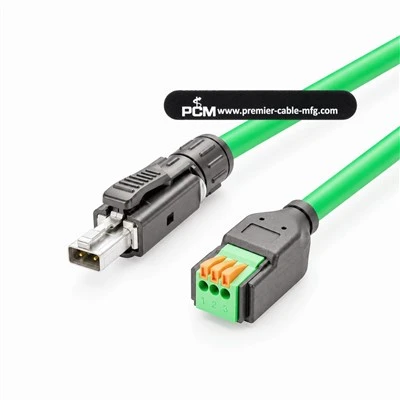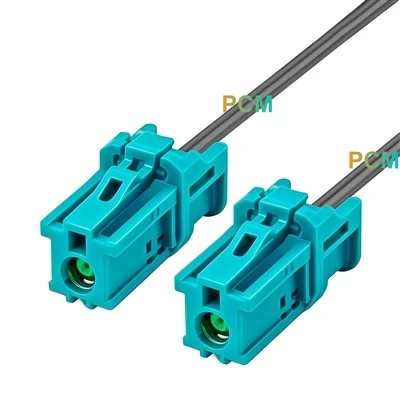
Can SPE Work with MATEnet?
Yes - SPE can work with MATEnet, but connector compatibility and Ethernet compatibility are two separate questions.
Engineers and buyers researching this topic are usually trying to solve one practical problem: one device uses an SPE interface, another uses MATEnet, and they need the link between them to actually pass Ethernet data - not just physically plug in.
SPE and MATEnet can be used in 100BASE-T1 and 1000BASE-T1 Automotive Ethernet architectures. However, the connector housings are different and cannot be directly mated. A purpose-built SPE-to-MATEnet adapter cable bridges the physical interfaces while maintaining the required electrical signal path.
Three Questions Engineers Need to Solve
Connector fit is only the first step. A reliable Automotive Ethernet link requires three questions to be answered.
Can They Connect?
SPE and MATEnet connectors do not directly mate. The first question is whether a passive adapter cable is sufficient or active conversion is required.
Will Ethernet Work?
Matching connector shapes does not guarantee communication. PHY standard, pin assignment, cable construction and shielding must also match.
Which Cable Do I Need?
SPE 2-Pin, SPE M8 and MATEnet Male/Female interfaces create multiple combinations. Selecting the correct gender, pinout and shielding is essential.
SPE and MATEnet: What Are They?
SPE (Single Pair Ethernet) refers to Ethernet technologies that transmit data over a single twisted pair, helping reduce cable weight, connector size and wiring complexity.
MATEnet is TE Connectivity's modular automotive data connector system. It is designed for in-vehicle high-speed data networks and supports Automotive Ethernet implementations including 100BASE-T1 and 1000BASE-T1.
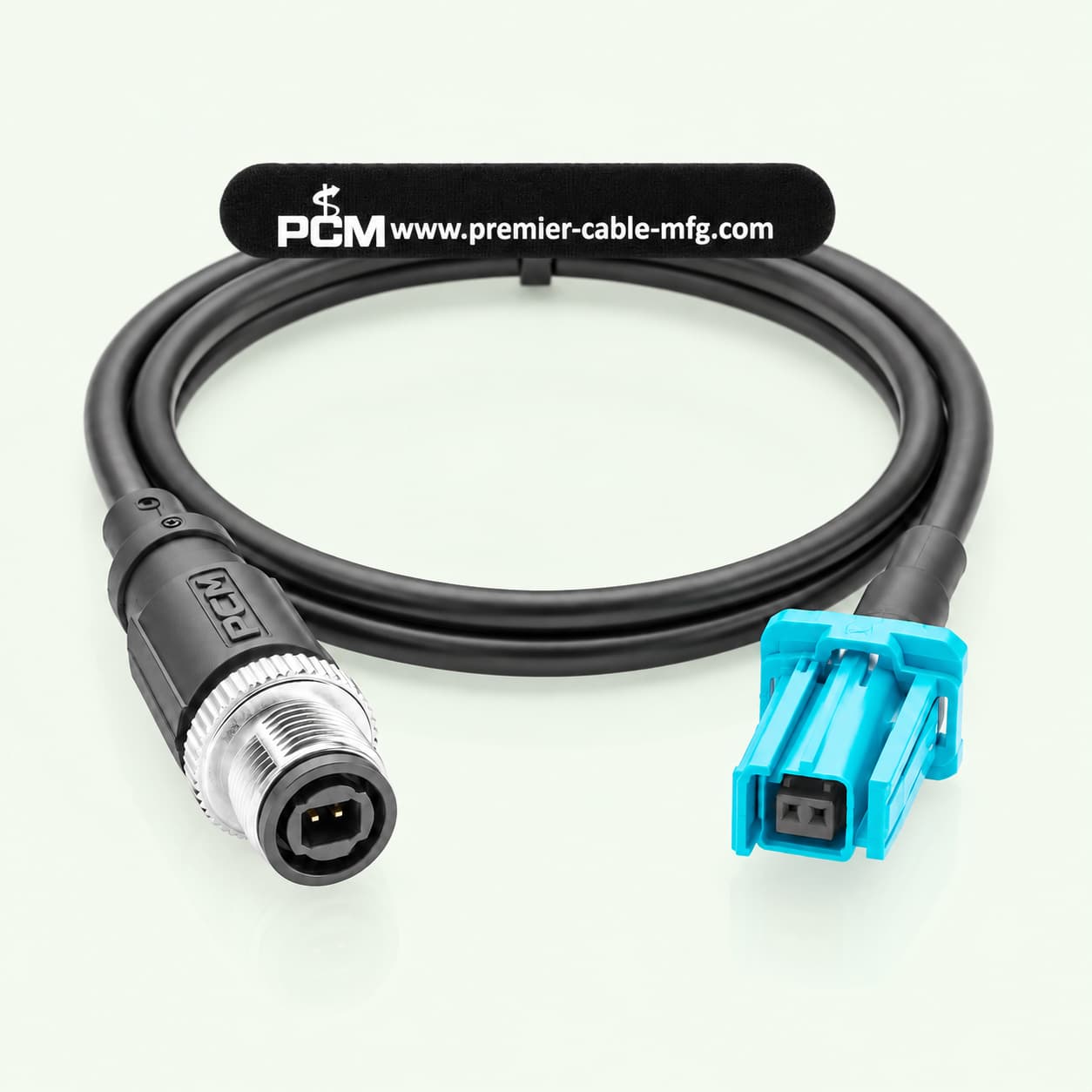
SPE vs. MATEnet
Item |
SPE |
MATEnet |
|---|---|---|
| Category | Ethernet technology / connector ecosystem | Automotive connector system |
| Conductors | Single twisted pair | Single-pair Ethernet implementations |
| Typical Ethernet | 100BASE-T1 / 1000BASE-T1 and other SPE variants | 100BASE-T1 / 1000BASE-T1 |
| Cable | UTP / STP depending on application | UTP / STP configurations |
| Applications | Sensors, ECUs, industrial devices, test systems | Vehicle networks, cameras, gateways, ADAS systems |
Adapter Cable or Media Converter?
When both devices use the same Ethernet standard but different connector families, a passive SPE-to-MATEnet cable can normally adapt the physical interface.
A passive adapter cable changes the connector interface - it does not convert 100BASE-T1 into 1000BASE-T1.
If one device operates at 100BASE-T1 and the other at 1000BASE-T1, active electronics such as a suitable media converter may be required. Connector adaptation and protocol conversion should therefore be treated as separate engineering questions.
Typical SPE-to-MATEnet Applications
ADAS & Sensor Networks
Connect cameras, radar, sensors and Automotive Ethernet control units using different physical interfaces.
ECU & Gateway Development
Bridge development ECUs, gateways and prototype modules from different connector ecosystems.
Ethernet Test Systems
Connect DUTs, data acquisition equipment and Automotive Ethernet validation hardware.
Zonal Architecture
Support prototype and validation links between zonal controllers, gateways and distributed vehicle devices.
SPE-to-MATEnet Cable Solutions
Choose the connector combination according to the interfaces on your device and test equipment. Data-rate support should be confirmed for the specific cable construction and project.
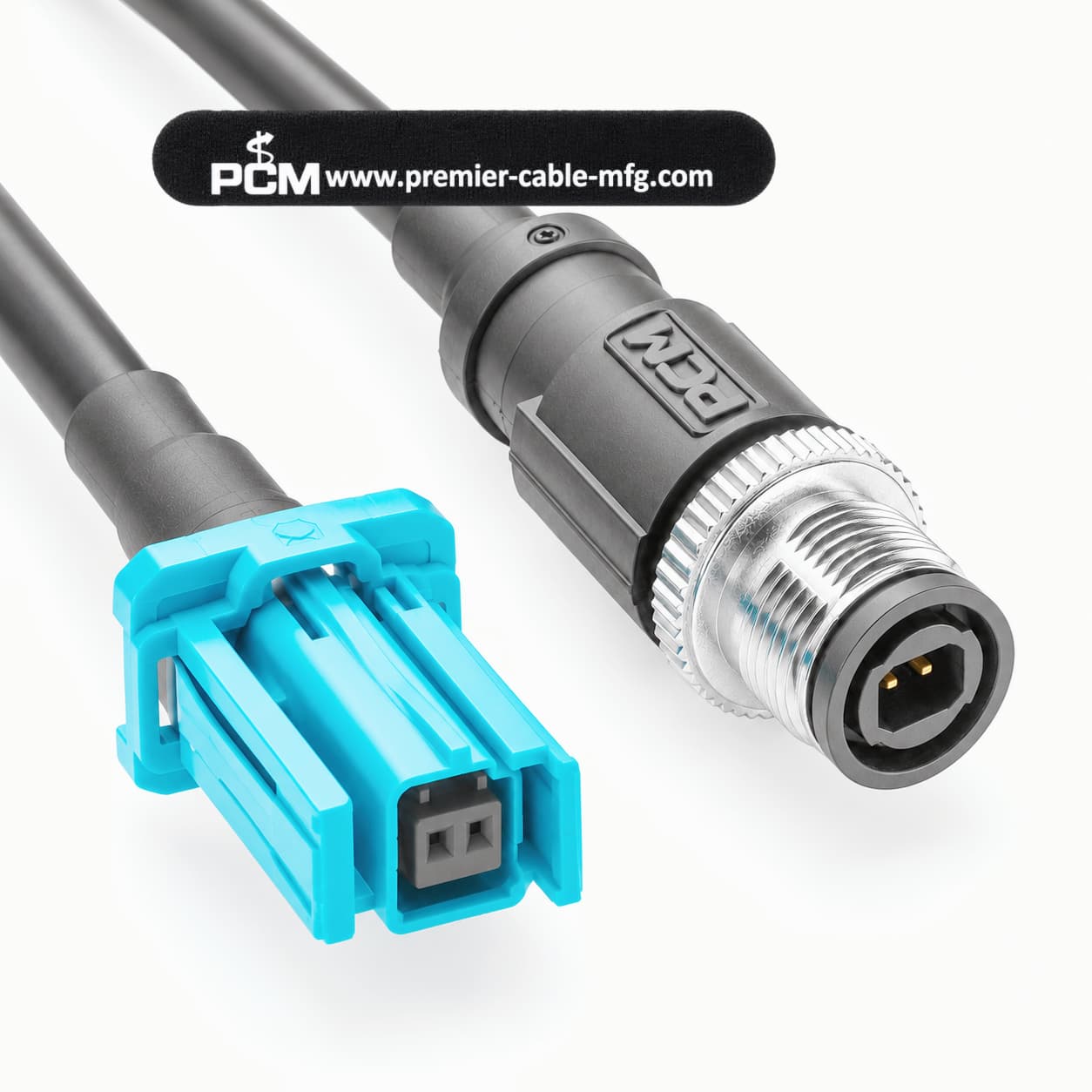
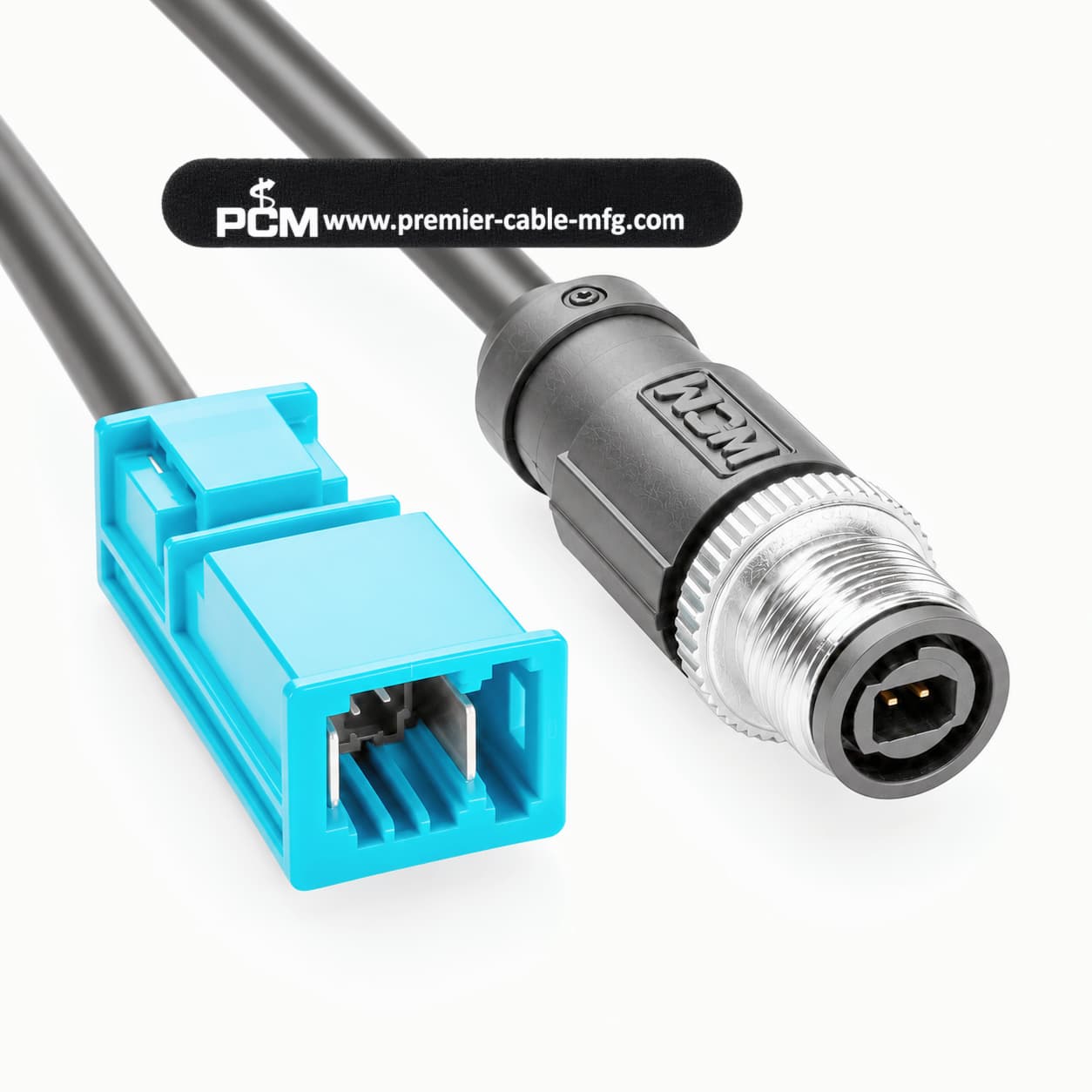
SPE 2-Pin Male to MATEnet Female Cable
Designed for Automotive Ethernet applications requiring a compact SPE 2-pin interface on one side and a MATEnet female interface on the other. Suitable for ADAS sensor networks, ECU development and validation systems.
SPE 2-Pin Male to MATEnet Male Cable
A configurable Automotive Ethernet adapter cable for vehicle network backbone development, Automotive Ethernet test systems and prototype interconnection.
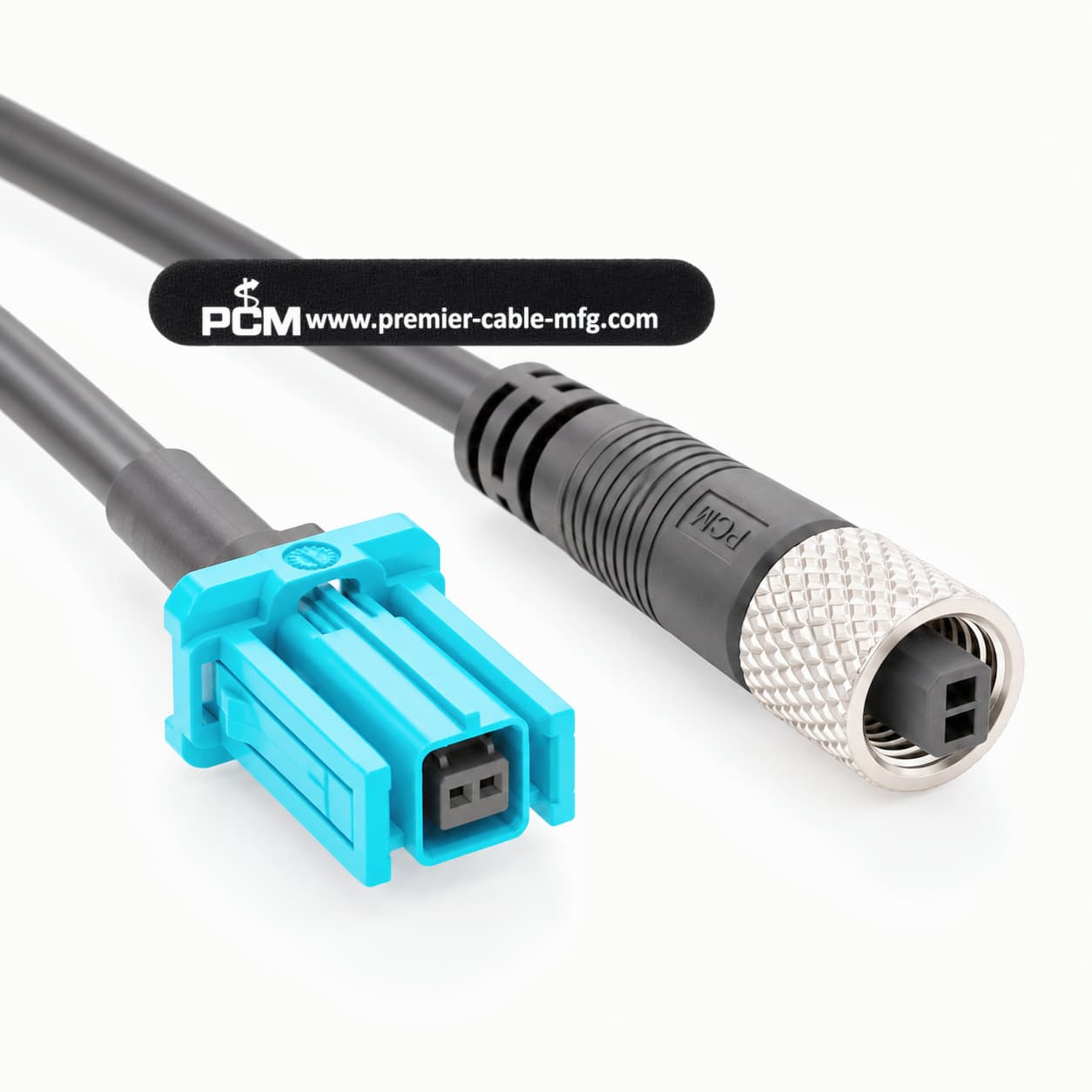
SPE M8 Female to MATEnet Female Cable
Bridges an SPE M8 female interface to a MATEnet female termination for Automotive Ethernet data acquisition, ADAS sensor networks and development equipment.

SPE M8 Female to MATEnet Male Cable
Designed for ECU and gateway development, zonal vehicle architecture and Automotive Ethernet test environments requiring SPE M8-to-MATEnet interface adaptation.
How to Choose the Right SPE-to-MATEnet Cable
Confirm 100BASE-T1 or 1000BASE-T1 on both devices.
Confirm male/female interfaces on both ends.
Verify signal mapping rather than relying only on pin count.
Select according to system EMI/EMC requirements.
Confirm shield and shell termination for shielded assemblies.
Specify the required length and intended channel configuration.
Consider temperature, vibration and ingress-protection requirements.
Provide connector part numbers, drawings or interface photos.
Frequently Asked Questions
Can SPE connect to MATEnet?
It can through a correctly designed adapter cable, provided both devices use compatible Ethernet standards and the signal pin assignments are correctly mapped.
Is MATEnet a Single Pair Ethernet connector?
MATEnet is TE Connectivity's automotive data connector system and is used with Automotive Ethernet technologies including 100BASE-T1 and 1000BASE-T1.
Does an SPE-to-MATEnet cable support 1000BASE-T1?
Depending on the specific cable assembly, connector configuration and construction, a cable can be designed for 1000BASE-T1. The required data rate should be confirmed before production.
Can SPE M8 connect to MATEnet?
Yes. SPE M8-to-MATEnet cable assemblies can be produced with the appropriate male or female termination according to the device interfaces.
Do I need UTP or STP?
The choice depends on the system's EMC requirements and installation environment. Shielded designs should also maintain the required shield continuity through the cable assembly.
Can SPE-to-MATEnet cables be customized?
Yes. Premier Cable supports customized connector combinations, cable lengths, pin assignments, UTP/STP constructions, labels and OEM/ODM cable assembly requirements.

Last updated September 2026.