
Can an M16 cable adapter be used in corrosive environments?
As a supplier of M16 cable adapters, I often receive inquiries from customers regarding the suitability of our products in various environments, especially corrosive ones. This blog aims to provide a comprehensive analysis of whether an M16 cable adapter can be used in corrosive environments.
Understanding M16 Cable Adapters
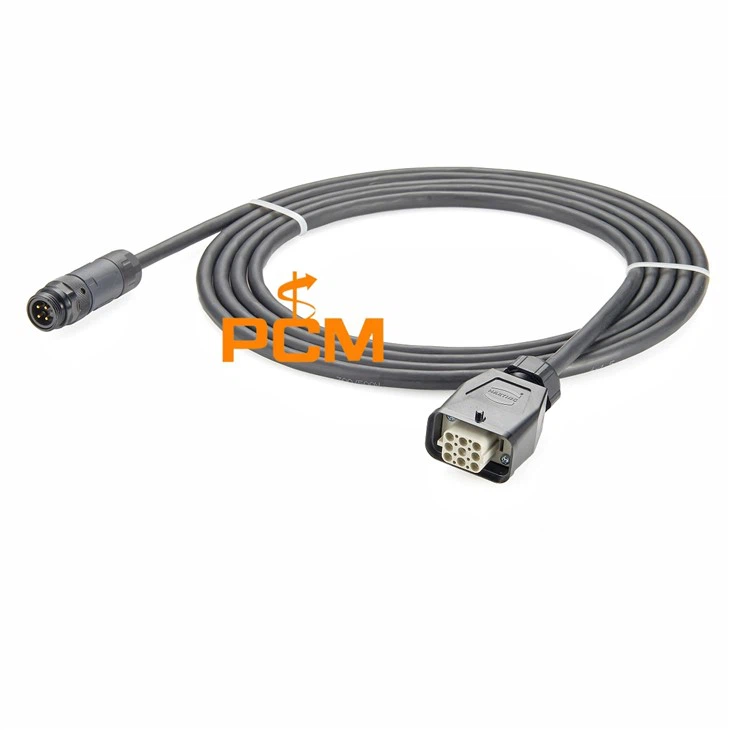
Before delving into the question of using M16 cable adapters in corrosive environments, it's essential to understand what M16 cable adapters are. M16 cable adapters are a type of circular connector commonly used in industrial automation, sensor technology, and telecommunications. They are designed to provide a secure and reliable connection between cables and other electrical components. The M16 designation refers to the outer diameter of the connector, which is approximately 16 millimeters.
These adapters come in different configurations, including different numbers of pins, male and female connectors, and various cable lengths. They are known for their durability, ease of installation, and ability to withstand mechanical stress. For a more detailed overview of M16 AISG and M16 sensor encoder actuator connector cables, you can visit M16 AISG And M16 Sensor Encoder Actuator Connector Cable Overview.
Factors Affecting the Use of M16 Cable Adapters in Corrosive Environments
Several factors need to be considered when determining whether an M16 cable adapter can be used in a corrosive environment. These factors include the materials used in the adapter, the type and concentration of the corrosive agents, and the duration of exposure.

-
Materials of the M16 Cable Adapter
The materials used in the construction of the M16 cable adapter play a crucial role in its resistance to corrosion. Most M16 cable adapters have a housing made of plastic or metal. Plastic housings, such as those made of polyamide or polycarbonate, offer good resistance to many types of chemicals. They are lightweight, non - conductive, and can be cost - effective. However, some plastics may be susceptible to certain solvents or high - temperature corrosive substances.
Metal housings, on the other hand, are typically made of materials like aluminum or stainless steel. Aluminum is lightweight and has good electrical conductivity, but it can corrode in the presence of certain acids and alkalis. Stainless steel is more resistant to corrosion and is suitable for a wider range of corrosive environments. The pins and contacts inside the adapter are usually made of copper or brass, which may also be prone to corrosion if not properly protected. -
Type and Concentration of Corrosive Agents
Corrosive environments can contain a variety of substances, such as acids, alkalis, salts, and solvents. The type and concentration of these substances determine the severity of the corrosion. For example, a highly concentrated acid solution will cause more rapid corrosion than a dilute one. Strong acids like sulfuric acid and hydrochloric acid can react with the metals in the M16 cable adapter, causing pitting, rusting, and eventual failure of the connection.
Alkalis, such as sodium hydroxide, can also attack certain metals and plastics. Salts, especially in a humid environment, can accelerate the corrosion process through electrochemical reactions. Solvents, depending on their nature, may dissolve or swell the plastic components of the adapter. -
Duration of Exposure
The longer the M16 cable adapter is exposed to a corrosive environment, the greater the likelihood of corrosion occurring. Short - term exposure to a mild corrosive agent may not cause significant damage, but continuous exposure over an extended period can lead to degradation of the adapter's performance. Even if the initial corrosion is minor, it can gradually progress and affect the electrical conductivity and mechanical integrity of the adapter.
Assessing the Suitability of M16 Cable Adapters in Corrosive Environments
Based on the above factors, it's possible to assess whether an M16 cable adapter can be used in a particular corrosive environment.
-
Low - Corrosivity Environments
In low - corrosivity environments, such as those with a slightly acidic or alkaline atmosphere, or occasional exposure to mild solvents, an M16 cable adapter with a plastic housing may be sufficient. Plastic housings can provide a certain degree of protection against these mild corrosive agents. However, it's still important to ensure that the plastic material is compatible with the specific substances present in the environment.
For example, in a food processing plant where there may be occasional contact with mild cleaning agents, an M16 cable adapter with a polyamide housing can be a suitable choice. Polyamide is resistant to many food - grade chemicals and can withstand the relatively low - level corrosive conditions in such an environment. -
Moderate - Corrosivity Environments
In moderate - corrosivity environments, such as those with a moderate concentration of salts or weak acids and alkalis, an M16 cable adapter with a stainless - steel housing is recommended. Stainless steel offers better corrosion resistance than aluminum or plastic in these conditions. The pins and contacts inside the adapter should also be properly coated or plated to prevent corrosion.
For instance, in a marine environment where there is exposure to saltwater, a stainless - steel M16 cable adapter can provide reliable performance. The stainless - steel housing can resist the corrosive effects of saltwater, and the coated pins can maintain good electrical conductivity. -
High - Corrosivity Environments
In high - corrosivity environments, such as those with strong acids, concentrated alkalis, or aggressive solvents, standard M16 cable adapters may not be suitable. In these cases, specialized corrosion - resistant adapters may be required. These adapters may be made of exotic materials or have additional protective coatings.
For example, in a chemical processing plant where there are high - concentration acids and alkalis, an M16 cable adapter with a Teflon - coated housing and gold - plated contacts may be necessary. Teflon is highly resistant to most chemicals, and gold plating provides excellent corrosion resistance for the electrical contacts.
Protecting M16 Cable Adapters in Corrosive Environments
Even if an M16 cable adapter is suitable for a particular corrosive environment, additional protective measures can be taken to extend its lifespan.
-
Sealing
Proper sealing is essential to prevent the ingress of corrosive substances into the adapter. Many M16 cable adapters come with O - rings or gaskets to provide a watertight and dust - tight seal. In corrosive environments, these seals should be checked regularly to ensure they are in good condition. If the seals are damaged, they should be replaced immediately. -
Coatings
Applying protective coatings to the M16 cable adapter can enhance its corrosion resistance. For metal housings, a powder - coating or a chemical conversion coating can be applied. These coatings create a barrier between the metal and the corrosive environment, reducing the risk of corrosion. For plastic housings, a UV - resistant and chemical - resistant coating can be used to protect against environmental degradation.
-
Regular Inspection and Maintenance
Regular inspection and maintenance of the M16 cable adapters are crucial in corrosive environments. The adapters should be visually inspected for signs of corrosion, such as rust, discoloration, or pitting. Any damaged or corroded components should be replaced promptly. Additionally, the electrical performance of the adapters should be tested regularly to ensure that they are functioning properly.
Conclusion
In conclusion, whether an M16 cable adapter can be used in a corrosive environment depends on several factors, including the materials of the adapter, the type and concentration of the corrosive agents, and the duration of exposure. While standard M16 cable adapters may be suitable for low - to moderate - corrosivity environments, specialized adapters are required for high - corrosivity environments. By taking appropriate protective measures and conducting regular maintenance, the lifespan of M16 cable adapters in corrosive environments can be extended.
If you are in need of M16 cable adapters for your specific application, especially in corrosive environments, we would be more than happy to assist you. Our team of experts can help you select the most suitable adapter based on your requirements. Feel free to contact us to start a procurement discussion.
References
- Groover, M. P. (2010). Fundamentals of Modern Manufacturing: Materials, Processes, and Systems. Wiley.
- Schey, J. A. (2007). Introduction to Manufacturing Processes. McGraw - Hill.
- ASM Handbook Committee. (1990). ASM Handbook, Volume 13: Corrosion. ASM International.