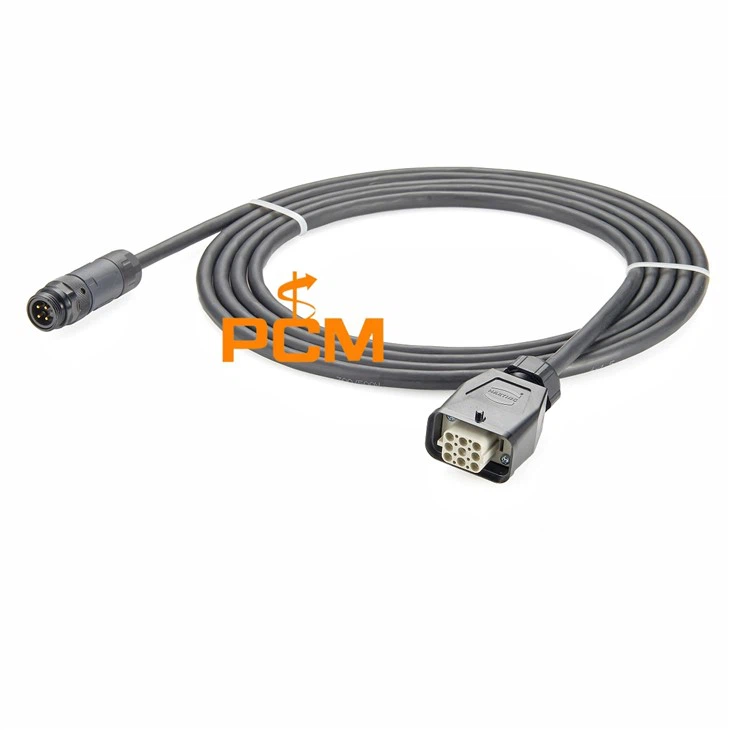

Hey there! As a supplier of m23 interbus cables, I often get asked a super important question: "Is m23 interbus cable resistant to salt spray?" Well, let's dive right into this topic and break it down.
First off, what's salt spray, and why does it matter for m23 interbus cables? Salt spray is basically a fine mist of salty water. You'll commonly find it in coastal areas, near industrial facilities that use salt in their processes, or even in some marine applications. When cables are exposed to salt spray, the salt can cause corrosion over time. Corrosion is a big no - no for cables because it can damage the conductors, insulation, and connectors, leading to signal loss, electrical shorts, and ultimately, cable failure.
Now, let's talk about the m23 interbus cables. These cables are designed for a wide range of industrial applications, from automation systems to remote bus modules. They're known for their reliability and durability, but how do they hold up against salt spray?
The construction of m23 interbus cables plays a crucial role in their salt - spray resistance. Most high - quality m23 interbus cables are made with materials that are somewhat resistant to corrosion. For example, the conductors are usually made of copper or copper alloys. Copper is a good conductor of electricity, but it can corrode when exposed to salt. However, many manufacturers coat the copper conductors with a thin layer of tin or other anti - corrosion materials. This coating acts as a barrier between the copper and the salt spray, reducing the risk of corrosion.
The insulation of m23 interbus cables is also important. Good insulation materials, like PVC (polyvinyl chloride) or PUR (polyurethane), can provide some protection against salt spray. These materials are resistant to moisture and can prevent the salt from reaching the conductors. But it's important to note that not all insulation materials are created equal. Some lower - quality insulation may degrade over time when exposed to salt spray, so it's essential to choose cables with high - quality insulation.
Let's take a look at some of the specific m23 interbus cables we offer. The Interbus - S Cable Male To Female M23 Connector is a popular choice for many industrial applications. It's designed to provide a reliable connection between different components in an automation system. This cable is built with high - quality materials that offer decent resistance to salt spray. The connectors are made of materials that are resistant to corrosion, and the cable's insulation helps protect the conductors from the salt.
Another great option is the M23 Power Supply Cable for Remote Bus Module. This cable is used to supply power to remote bus modules, and it needs to be reliable, especially in harsh environments. The cable's construction is optimized to withstand various environmental factors, including salt spray. The outer jacket is made of a tough material that can resist abrasion and moisture, and the internal components are protected to ensure long - term performance.
The M23 Overmolded Remote Bus Cable Right Angle is also worth mentioning. This cable has an overmolded design, which provides additional protection for the connectors and the cable itself. The overmolding helps to seal out moisture and salt, making it a great choice for applications where salt spray is a concern.


But here's the thing: while m23 interbus cables can offer some resistance to salt spray, it's not a one - size - fits - all situation. The level of salt - spray resistance can vary depending on factors like the cable's quality, the thickness of the protective coatings, and the severity of the salt - spray environment.
In a mild salt - spray environment, such as an indoor industrial facility near the coast with proper ventilation, most high - quality m23 interbus cables should be able to last for a long time without significant corrosion. However, in a harsh outdoor marine environment, where the cables are constantly exposed to salt water and high humidity, additional protective measures may be needed.
One option is to use cable glands or enclosures. Cable glands can help to seal the cables where they enter equipment, preventing salt water from seeping in. Enclosures can provide a physical barrier around the cables, protecting them from direct exposure to salt spray.
Regular maintenance and inspection are also crucial. You should periodically check the cables for signs of corrosion, such as rust on the connectors or discoloration of the cable jacket. If you notice any issues, it's important to replace the affected parts or the entire cable as soon as possible to avoid system failures.
In conclusion, m23 interbus cables can have some resistance to salt spray, but it depends on their construction and the environment they're used in. As a supplier, we offer a range of high - quality m23 interbus cables that are designed to withstand various environmental challenges, including salt spray. If you're in an area with salt - spray concerns or need cables for marine or coastal applications, we can help you choose the right cables and provide advice on protective measures.
If you're interested in purchasing m23 interbus cables or have any questions about their salt - spray resistance, feel free to reach out to us. We're here to help you find the best solutions for your industrial needs. Let's have a chat and see how we can work together to keep your systems running smoothly.
References
- Industry standards on cable corrosion resistance
- Manufacturer specifications for m23 interbus cables