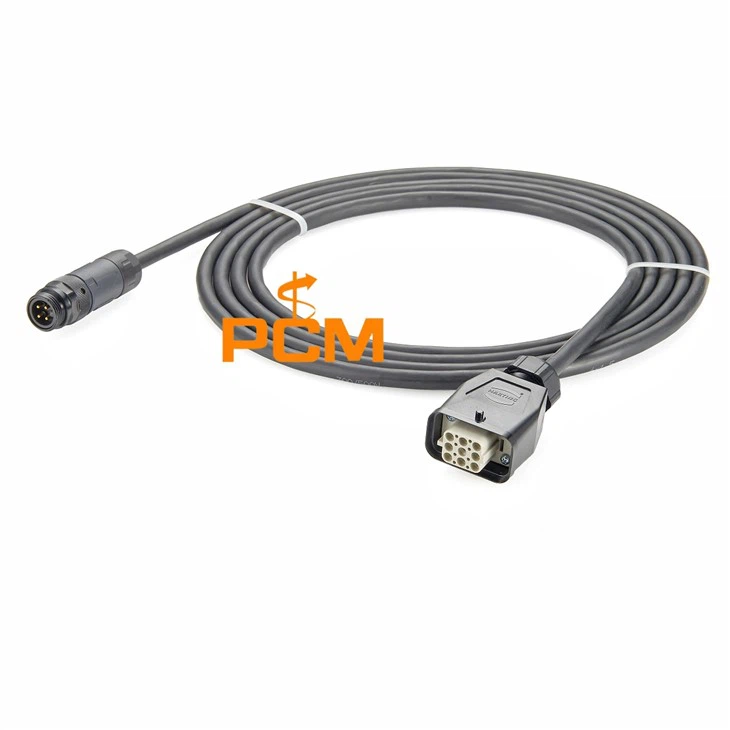

In the food processing industry, maintaining high - level hygiene is of utmost importance. Every piece of equipment, no matter how small, must meet strict hygiene standards to ensure the safety and quality of the food products. As a supplier of M12 cable adapters, I understand the critical role these adapters play in this industry and the specific hygiene requirements they must adhere to.
1. Material Selection
The choice of materials for M12 cable adapters in food processing is the first and most fundamental aspect of hygiene. The materials must be non - toxic and resistant to corrosion. Stainless steel is a popular choice for the outer shell of M12 adapters. It has excellent corrosion resistance, which is crucial as food processing environments often involve exposure to water, cleaning agents, and various food substances. For example, in a dairy processing plant, milk residues and cleaning solutions can be highly corrosive. Stainless steel can withstand these harsh conditions without degrading or leaching harmful substances into the food processing area.
Another important material consideration is the insulation material. It should be made of food - grade polymers. These polymers are designed to be inert, meaning they do not react with food products. For instance, some high - quality M12 adapters use PTFE (Polytetrafluoroethylene) insulation. PTFE is known for its chemical stability and non - stick properties. It is resistant to a wide range of chemicals and can be easily cleaned, reducing the risk of food residue accumulation.
2. Surface Finish
The surface finish of M12 cable adapters significantly impacts their hygiene. A smooth surface finish is essential to prevent the accumulation of dirt, food particles, and microorganisms. Rough surfaces can create crevices where bacteria and other contaminants can hide, making it difficult to clean thoroughly.
Electropolishing is a common surface treatment method for M12 adapters in food processing. This process creates a mirror - like finish on the metal surface. It not only enhances the aesthetic appearance but also makes the adapter easier to clean. When cleaning agents are applied, they can flow smoothly over the electropolished surface, effectively removing any attached dirt or bacteria. Additionally, a smooth surface reduces the risk of cross - contamination. For example, in a meat processing facility, where different types of meats are processed, a smooth - surfaced M12 adapter is less likely to trap meat particles that could potentially cause cross - contamination between batches.
3. Sealing and Protection
Proper sealing is crucial for M12 cable adapters in food processing. They need to be protected from moisture, dust, and other contaminants. IP (Ingress Protection) ratings are used to indicate the level of protection provided by the adapter. In food processing environments, adapters with high IP ratings, such as IP67 or IP69K, are often required.
An IP67 - rated adapter is dust - tight and can withstand immersion in water up to 1 meter for a limited time. This level of protection is suitable for many food processing applications where there is a risk of water splashes or light immersion. For example, in a beverage bottling plant, where there is a lot of water used in the cleaning and filling processes, an IP67 - rated M12 adapter can ensure reliable operation without being damaged by water ingress.
On the other hand, an IP69K - rated adapter offers even higher protection. It can withstand high - pressure, high - temperature water jets. This is particularly important in food processing areas that require frequent and thorough cleaning, such as in a bakery where flour and dough residues need to be removed regularly using high - pressure cleaning equipment. The adapter's sealing should be designed to prevent water and cleaning agents from entering the internal components, which could cause short - circuits or other malfunctions.
4. Resistance to Cleaning Agents
Food processing facilities use a variety of cleaning agents to maintain hygiene. M12 cable adapters must be resistant to these chemicals. Different cleaning agents have different chemical compositions. Some are alkaline - based, while others are acidic.
For example, in a fruit processing plant, acidic cleaning agents may be used to remove fruit residues and stains. M12 adapters need to be able to withstand these acidic substances without corroding or degrading. Similarly, in a poultry processing facility, alkaline - based cleaning agents are commonly used. The adapters should be tested to ensure they can resist the corrosive effects of these alkaline solutions.
Manufacturers often conduct chemical resistance tests on M12 adapters. They expose the adapters to different cleaning agents for a certain period and then evaluate their performance. This helps ensure that the adapters can maintain their integrity and functionality even after repeated exposure to cleaning chemicals.
5. Ease of Cleaning
In addition to being resistant to cleaning agents, M12 cable adapters should be easy to clean. Complex designs with many small parts or hard - to - reach areas can make cleaning a challenging task.
A modular design is often preferred for M12 adapters in food processing. Modular adapters can be easily disassembled for thorough cleaning. For instance, if an adapter has a removable connector or a detachable cable, it can be taken apart, and each component can be cleaned separately. This allows for more comprehensive cleaning, especially in areas that are difficult to access when the adapter is assembled.
Moreover, the design should minimize the number of joints and gaps. Fewer joints mean fewer places for dirt and bacteria to accumulate. Some M12 adapters are designed with a single - piece construction, which reduces the risk of contamination at joints and makes the cleaning process much simpler.
6. Compliance with Standards
M12 cable adapters used in food processing must comply with relevant industry standards. In Europe, the European Hygienic Engineering and Design Group (EHEDG) standards are widely recognized. These standards set out strict requirements for the design, construction, and materials of equipment used in food processing to ensure hygiene.
In the United States, the Food and Drug Administration (FDA) has regulations regarding the materials and safety of equipment in contact with food. Adapters must be made from FDA - approved materials to ensure they do not pose a risk to food safety.
Compliance with these standards is not only a legal requirement but also a guarantee of the adapter's quality and suitability for food processing applications. Customers can have more confidence in purchasing M12 cable adapters that meet these recognized standards.
As a supplier of M12 cable adapters, I am committed to meeting all these hygiene requirements. Our adapters are carefully designed and manufactured to ensure they are suitable for the demanding food processing environment. If you are in the food processing industry and are looking for high - quality M12 cable adapters that meet strict hygiene standards, please feel free to contact us for more information and to discuss your specific needs. We can provide you with detailed product specifications and samples for testing. For more information about M12 connectors in general, you can visit M12 Connectors Overview.


References
- European Hygienic Engineering and Design Group (EHEDG) Guidelines
- Food and Drug Administration (FDA) Regulations on Food - Contact Materials
- Industry research reports on food processing equipment hygiene requirements.