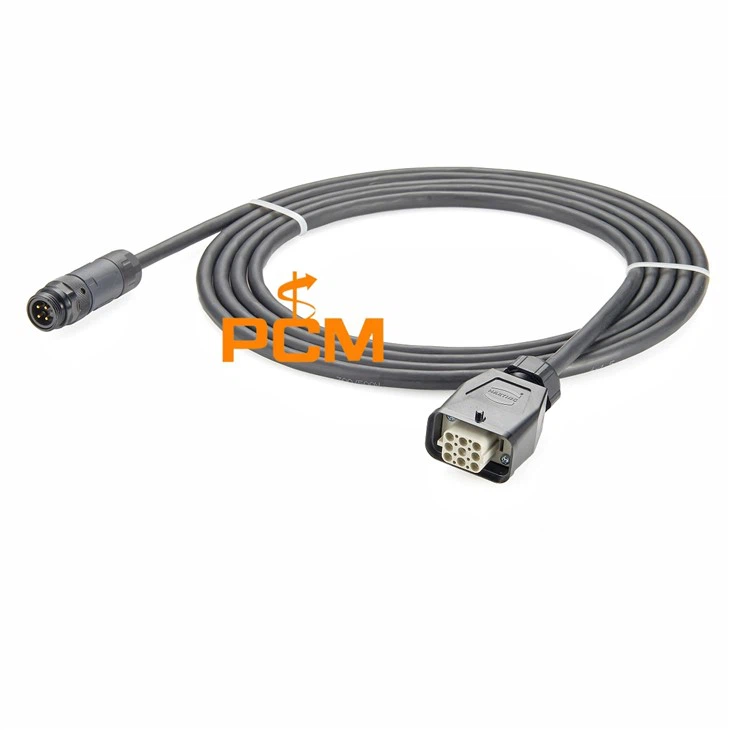

The bending radius of an M12 cable adapter is a critical specification that significantly impacts its performance, durability, and overall functionality. As a supplier of M12 cable adapters, understanding this concept is essential for providing high - quality products and ensuring customer satisfaction.
Understanding the Bending Radius
The bending radius refers to the minimum radius at which a cable or cable adapter can be bent without causing damage to the internal conductors, insulation, or other components. When a cable is bent beyond its recommended bending radius, several issues can arise. For example, the conductors inside the cable may be stretched or compressed unevenly, leading to increased resistance. This increased resistance can result in signal loss, especially in high - frequency applications where signal integrity is crucial.
In addition, excessive bending can damage the insulation of the cable. The insulation serves to prevent electrical leakage and interference between conductors. If the insulation is compromised due to over - bending, it can lead to short circuits, electromagnetic interference (EMI), and reduced reliability of the cable adapter.
Factors Affecting the Bending Radius of M12 Cable Adapters
Cable Construction
The construction of the M12 cable adapter plays a major role in determining its bending radius. Cables with more flexible conductors, such as stranded conductors, generally have a smaller bending radius compared to those with solid conductors. Stranded conductors are made up of multiple small wires twisted together, which allows them to bend more easily without breaking.
The type and thickness of the insulation also affect the bending radius. Softer and thinner insulation materials can provide more flexibility, enabling the cable to be bent to a smaller radius. However, these materials may need to balance between flexibility and other properties such as mechanical protection and chemical resistance.
Application Requirements
The specific application in which the M12 cable adapter is used can also influence the appropriate bending radius. In industrial automation, for example, where cables are often routed through tight spaces and may be subject to frequent movement, a smaller bending radius is usually required. On the other hand, in more static installations, a larger bending radius may be acceptable.


High - speed data transmission applications demand a more precise bending radius to maintain signal integrity. Even a slight deviation from the recommended bending radius can cause significant signal degradation, leading to errors in data transfer.
Standard Bending Radius Values for M12 Cable Adapters
Industry standards often provide guidelines for the bending radius of M12 cable adapters. Typically, the minimum bending radius for M12 cable adapters is around 4 to 6 times the outer diameter of the cable. For example, if the outer diameter of an M12 cable adapter is 5 mm, the minimum bending radius would be between 20 mm and 30 mm.
However, it's important to note that these are general guidelines, and the actual bending radius can vary depending on the manufacturer and the specific design of the cable adapter. Some high - performance M12 cable adapters may have a smaller bending radius, allowing for more flexibility in installation.
Importance of Adhering to the Bending Radius
Adhering to the recommended bending radius is crucial for several reasons. First and foremost, it ensures the long - term reliability of the M12 cable adapter. By avoiding excessive bending, the risk of conductor damage, insulation failure, and signal loss is minimized, which reduces the likelihood of system failures and downtime.
Secondly, following the bending radius guidelines helps to maintain compliance with industry standards and regulations. In many industries, such as automotive, aerospace, and industrial automation, strict standards are in place to ensure the safety and performance of electrical systems. Using M12 cable adapters within the recommended bending radius helps to meet these requirements.
Installation Considerations
When installing M12 cable adapters, proper handling and routing are essential to ensure that the bending radius is not exceeded. Here are some installation tips:
- Plan the Routing: Before installation, carefully plan the cable routing to avoid sharp bends and tight corners. Use cable management systems such as cable trays, conduits, and cable ties to keep the cables organized and prevent excessive bending.
- Use Bend - Relief Fittings: Bend - relief fittings can be used at the ends of the cable adapters to provide additional support and prevent sharp bends. These fittings help to distribute the stress evenly along the cable, reducing the risk of damage.
- Inspect the Installation: After installation, inspect the cable adapters to ensure that the bending radius has been maintained. Look for any signs of kinking, twisting, or excessive bending, and make adjustments as necessary.
Our Commitment as an M12 Cable Adapter Supplier
As a supplier of M12 cable adapters, we are committed to providing high - quality products that meet or exceed industry standards. Our M12 cable adapters are designed with careful consideration of the bending radius requirements. We use high - quality materials and advanced manufacturing processes to ensure that our cables have excellent flexibility and durability.
We also provide detailed technical specifications for our M12 cable adapters, including the recommended bending radius. Our technical support team is available to assist customers with any questions regarding cable installation, bending radius, or other technical issues.
In addition, we continuously invest in research and development to improve the performance of our M12 cable adapters. We are constantly exploring new materials and designs to reduce the bending radius while maintaining or improving other important properties such as signal integrity and mechanical strength.
Conclusion
The bending radius of an M12 cable adapter is a critical factor that affects its performance, reliability, and installation flexibility. As a supplier, we understand the importance of providing accurate information about the bending radius and ensuring that our products meet the highest quality standards.
If you are in need of M12 cable adapters for your project, we invite you to contact us for more information. Our team of experts can help you select the right M12 cable adapter based on your specific requirements, including the bending radius. We look forward to working with you to provide the best solutions for your electrical connectivity needs.
For more information about M12 connectors, you can visit our M12 Connectors Overview page.
References
- Industry standards related to electrical cables and connectors
- Technical literature from M12 cable adapter manufacturers
- Research papers on cable flexibility and signal integrity