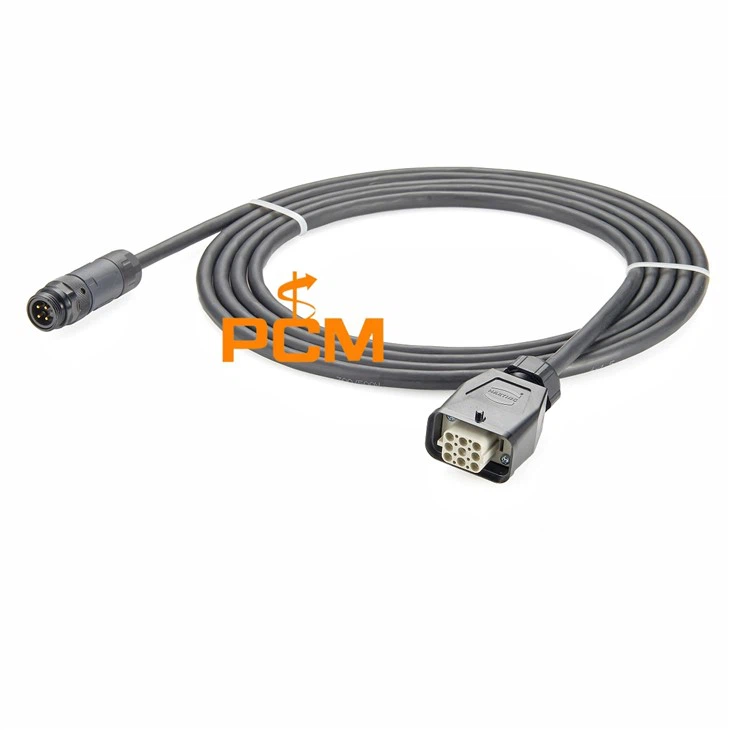

As a seasoned supplier of Devicenet cable adapters, I often encounter inquiries regarding the data transmission distance of these essential components. Understanding the factors that influence the transmission distance is crucial for ensuring optimal performance in industrial automation systems. In this blog post, I will delve into the intricacies of Devicenet cable adapter data transmission distances, exploring the key determinants and offering practical insights to help you make informed decisions for your applications.
Understanding Devicenet
Devicenet is a widely used industrial network protocol that enables communication between various devices, such as sensors, actuators, and controllers. It operates on a master - slave architecture, where a master device initiates communication with multiple slave devices. Devicenet cable adapters play a vital role in facilitating this communication by providing a reliable connection between the devices and the network.
Factors Affecting Data Transmission Distance
Several factors can impact the data transmission distance of a Devicenet cable adapter. Let's take a closer look at each of these factors:
Cable Type and Quality
The type and quality of the cable used with the Devicenet cable adapter are perhaps the most significant factors affecting transmission distance. Devicenet cables are typically shielded to minimize electromagnetic interference (EMI) and radio - frequency interference (RFI). High - quality shielded cables can significantly extend the transmission distance by reducing signal degradation. For example, a well - shielded Category 5e or Category 6 cable can provide better performance over longer distances compared to a lower - quality unshielded cable.
Data Rate
The data rate at which the Devicenet network operates also affects the transmission distance. Higher data rates generally result in shorter transmission distances. This is because as the data rate increases, the signal becomes more susceptible to attenuation and interference. Devicenet supports data rates of 125 kbps, 250 kbps, and 500 kbps. At a lower data rate of 125 kbps, the transmission distance can be up to 500 meters, while at 500 kbps, the maximum distance is reduced to 100 meters.
Network Topology
The network topology, or the way the devices are connected in the network, can impact the transmission distance. Devicenet supports both linear and tree topologies. In a linear topology, where the devices are connected in a daisy - chain fashion, the signal has to travel through each device, which can cause signal degradation over longer distances. A tree topology, on the other hand, allows for more flexibility in device placement but may also introduce additional signal loss at the branch points.
Environmental Conditions
Environmental conditions such as temperature, humidity, and the presence of electromagnetic fields can also affect the data transmission distance. Extreme temperatures can cause the cable insulation to degrade, leading to increased signal loss. High humidity can introduce moisture into the cable, which can also degrade the signal. Additionally, electromagnetic fields from nearby equipment can interfere with the Devicenet signal, reducing the transmission distance.
Typical Transmission Distances
Based on the factors mentioned above, here are the typical data transmission distances for Devicenet cable adapters under different conditions:
- 125 kbps Data Rate: At this relatively low data rate, with high - quality shielded cables and favorable environmental conditions, the transmission distance can reach up to 500 meters. This makes it suitable for applications where devices are spread over a large area, such as in a large manufacturing plant.
- 250 kbps Data Rate: The maximum transmission distance at 250 kbps is typically around 250 meters. This data rate offers a good balance between speed and distance, making it a popular choice for many industrial applications.
- 500 kbps Data Rate: When operating at 500 kbps, the transmission distance is limited to approximately 100 meters. This high - speed data rate is suitable for applications where real - time communication is critical, such as in robotic control systems.
Importance of Choosing the Right Cable Adapter
Selecting the appropriate Devicenet cable adapter is essential for achieving the desired data transmission distance and overall network performance. A high - quality cable adapter can provide better signal integrity, reduce the risk of interference, and ensure reliable communication between the devices. At our company, we offer a wide range of Devicenet cable adapters that are designed to meet the diverse needs of industrial applications.
Related Products
In addition to Devicenet cable adapters, we also offer other related products that can enhance your industrial network. For example, our Servo Motor Power Cable M23 Connector provides a reliable connection for servo motors, ensuring efficient power transmission. Our USB A Plug To RS485 TTL 2 - In - 1 Serial Converter Adapter allows for easy communication between USB - enabled devices and RS485 or TTL - based systems. And our Profibus Connector M12 PG Socket B - coding is ideal for Profibus networks, providing a secure and stable connection.


Conclusion
The data transmission distance of a Devicenet cable adapter is influenced by several factors, including cable type, data rate, network topology, and environmental conditions. By understanding these factors and choosing the right cable adapter and related products, you can ensure reliable and efficient communication in your industrial automation system.
If you are in the market for high - quality Devicenet cable adapters or any of our other products, we invite you to contact us for a detailed discussion about your specific requirements. Our team of experts is ready to assist you in selecting the most suitable solutions for your applications.
References
- "Devicenet Specification", ODVA (Open DeviceNet Vendors Association)
- "Industrial Ethernet and Fieldbus Networks", By Peter Welinder