
Hey there! As a supplier of Devicenet trunk cables, I often get asked about the difference between Devicenet trunk cables and Ethernet cables. So, I thought I'd take a moment to break it down for you in a way that's easy to understand.
Let's start with the basics. Ethernet cables are pretty much everywhere. You've probably used them to connect your computer to a router or your gaming console to the internet. They're designed to transmit data at high speeds over long distances. Ethernet cables come in different categories, like Cat5e, Cat6, and Cat6a, each with its own maximum speed and bandwidth capabilities.
On the other hand, Devicenet trunk cables are used in industrial automation systems. They're part of the DeviceNet network, which is a popular fieldbus protocol for connecting industrial devices like sensors, actuators, and controllers. DeviceNet is known for its simplicity, reliability, and cost - effectiveness in industrial environments.
Physical Differences
First off, let's talk about the physical appearance. Ethernet cables typically have an RJ - 45 connector at each end. These connectors are rectangular and have eight pins. The cables themselves can be made of copper or fiber - optic materials. Copper Ethernet cables are more common for local area networks (LANs) in homes and offices, while fiber - optic cables are used for high - speed, long - distance transmissions.
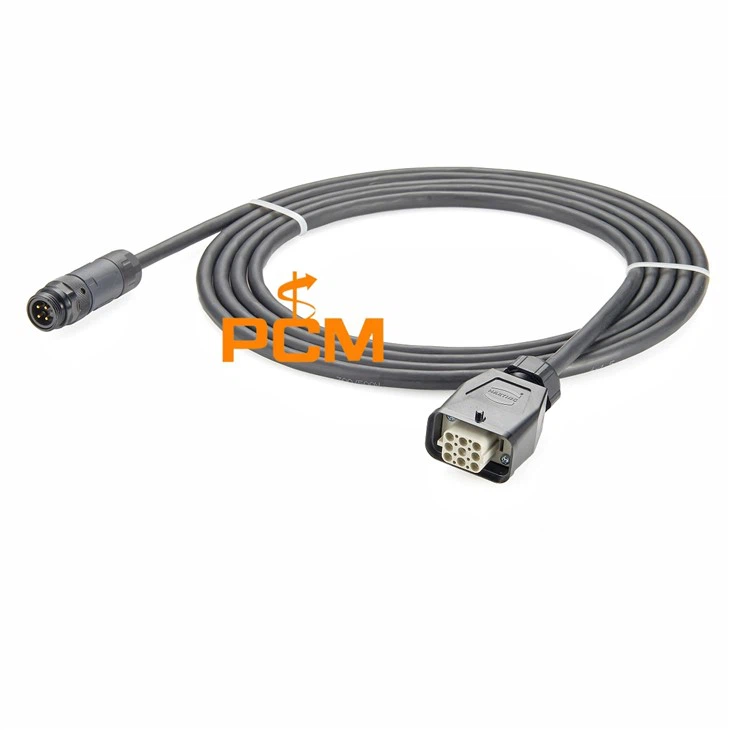
Devicenet trunk cables, however, use a different type of connector. The most common connector for DeviceNet is the Mini - C connector. It's smaller and more compact than the RJ - 45 connector, which makes it suitable for industrial applications where space can be limited. The cable itself is usually shielded to protect against electromagnetic interference (EMI), which is a big deal in industrial settings where there are lots of electrical devices running.
Electrical Characteristics
When it comes to electrical characteristics, Ethernet cables and Devicenet trunk cables are quite different. Ethernet cables are designed to carry high - speed digital signals. For example, a Cat6 Ethernet cable can support data transfer speeds of up to 10 Gigabits per second (Gbps) over short distances. The signal on an Ethernet cable is a differential signal, which means it uses two wires to carry the signal, with one wire having the positive signal and the other having the negative signal.
Devicenet trunk cables, on the other hand, operate at a much lower data rate. The maximum data rate for DeviceNet is 500 kilobits per second (kbps). The electrical signal on a Devicenet cable is also a differential signal, but the voltage levels and signal timing are different from those of Ethernet. This lower data rate is sufficient for most industrial applications, where the devices don't need to transmit large amounts of data at extremely high speeds.
Network Topology
Another key difference is the network topology. Ethernet networks can use a variety of topologies, including star, bus, and ring topologies. In a star topology, all devices are connected to a central switch or hub. A bus topology has all devices connected to a single cable, and a ring topology connects devices in a circular loop.
DeviceNet, on the other hand, uses a bus topology. The Devicenet trunk cable acts as the main bus, and all the devices are connected to this trunk using drop cables. This simple bus topology makes it easy to install and expand the DeviceNet network. At the ends of the Devicenet trunk cable, you need to install terminator resistors. For example, you can check out our DeviceNet Trunk Mini - C Terminator Resistor which is essential for proper signal termination in the network.
Application and Environment
Ethernet cables are mainly used in office, home, and data center environments. They're used to connect computers, servers, printers, and other network - enabled devices. The environment is usually clean, with low levels of EMI and stable temperatures.
Devicenet trunk cables are used in harsh industrial environments. They're exposed to things like vibration, dust, moisture, and high temperatures. That's why they need to be rugged and reliable. For instance, if you're working on a marine ship or yacht, you might need a specialized cable like our N2K NMEA2000 7/8" H - Type Cable for Marine Ship Yacht. This cable is designed to withstand the tough conditions at sea.
Data Transmission and Protocol
Ethernet uses the Ethernet protocol, which is a set of rules for transmitting data over the network. There are different versions of the Ethernet protocol, like Ethernet II and IEEE 802.3. Ethernet is a very flexible protocol that can support a wide range of applications, from simple file sharing to high - definition video streaming.
DeviceNet uses its own protocol. The DeviceNet protocol is based on the Controller Area Network (CAN) protocol, which is a serial communication protocol. It's designed to be simple and efficient for connecting industrial devices. The protocol allows for easy device configuration and communication between different types of devices in an industrial automation system. And for proper network operation, a DeviceNet Trunk LineTerminator Resistor is often required to ensure signal integrity.
Cost
In general, Ethernet cables are cheaper than Devicenet trunk cables. Ethernet cables are mass - produced for consumer and commercial use, so the economies of scale drive down the cost. You can buy a basic Cat5e Ethernet cable for just a few dollars.
Devicenet trunk cables, on the other hand, are more expensive. The cost is higher because of the specialized connectors, shielding, and the need to meet industrial standards. But in an industrial setting, the reliability and performance of a Devicenet trunk cable are worth the extra cost.
Why Choose Our Devicenet Trunk Cables
As a supplier of Devicenet trunk cables, we understand the unique requirements of industrial automation systems. Our cables are designed and manufactured to the highest quality standards. They're tested rigorously to ensure they can withstand the harsh industrial environments, including high temperatures, vibrations, and EMI.
We offer a wide range of Devicenet trunk cables and related products, such as terminator resistors and drop cables. Our team of experts is always ready to help you choose the right cable for your specific application. Whether you're setting up a new industrial automation system or upgrading an existing one, we've got you covered.
If you're in the market for Devicenet trunk cables or have any questions about our products, don't hesitate to reach out. We're here to assist you with your procurement needs and ensure that you get the best solution for your industrial automation project.


References
- "Industrial Communication Technology Handbook" by Peter Frank
- "Ethernet for Dummies" by Doug Lowe
- DeviceNet specification documents from the Open DeviceNet Vendor Association (ODVA)