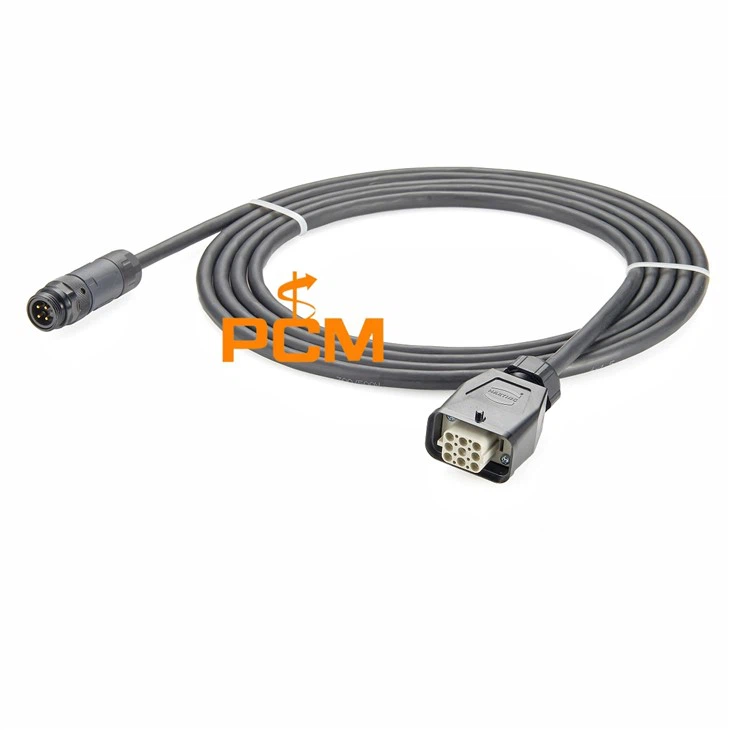

As a trusted supplier of 7/8 - 16un power cables, I often receive inquiries regarding the fire - resistance level of these cables. In this blog, I aim to provide a comprehensive understanding of the fire - resistance characteristics of 7/8 - 16un power cables, which will help you make informed decisions when it comes to cable selection for your projects.
Understanding 7/8 - 16un Power Cables
Before delving into the fire - resistance level, it's essential to understand what 7/8 - 16un power cables are. The "7/8" refers to the size of the cable's outer diameter, and "16un" is related to the thread specification. These cables are widely used in various industrial and commercial applications, such as automation systems, machinery, and power distribution.
Our company offers a diverse range of 7/8 - 16un power cables, including the Profibus DeviceNet Power Tap Cordset 7/8 Inch Connector 5 Poles, DeviceNET Profibus 7/8"-16UNF Mini Change Power Extension Cable, and 7/8" Circular Connector To IEC C13 Power Cable. Each type is designed to meet specific requirements in different scenarios.
Fire - Resistance Rating Systems
Fire - resistance ratings are crucial for evaluating the performance of cables in fire situations. There are several international and national standards that define these ratings.
One of the most well - known standards is UL (Underwriters Laboratories) in the United States. UL has a series of tests for cables, including the UL 1685 vertical tray flame test. In this test, cables are installed in a vertical tray and exposed to a specific flame for a set period. The performance is evaluated based on factors such as the spread of the flame, the amount of smoke generated, and the integrity of the cable insulation after the test.
Another important standard is IEC (International Electrotechnical Commission) in Europe. The IEC 60332 series of standards also assesses the fire - performance of cables. For example, IEC 60332 - 3 tests the ability of cables to withstand a horizontal flame spread in a multi - cable configuration.
Fire - Resistance Level of 7/8 - 16un Power Cables
The fire - resistance level of 7/8 - 16un power cables can vary depending on the materials used in their construction and the manufacturing process.
Insulation Materials
The insulation material of the cable plays a significant role in its fire - resistance. Common insulation materials for 7/8 - 16un power cables include PVC (Polyvinyl Chloride), XLPE (Cross - Linked Polyethylene), and EPR (Ethylene - Propylene Rubber).
PVC is a widely used insulation material due to its low cost and good electrical properties. However, it has relatively poor fire - resistance. When exposed to fire, PVC can release toxic gases such as hydrogen chloride, and it burns easily, spreading the flame quickly.
XLPE, on the other hand, has better fire - resistance than PVC. It has a higher melting point and produces less smoke and toxic gases when burned. XLPE - insulated 7/8 - 16un power cables are often used in applications where fire safety is a concern.
EPR is another excellent choice for fire - resistant cables. It has good thermal stability and low flammability. EPR - insulated cables can maintain their electrical integrity for a longer time during a fire, which is crucial for emergency power supply and safety systems.


Jacket Materials
The outer jacket of the cable also affects its fire - resistance. Fire - resistant jacket materials are designed to prevent the spread of fire and protect the inner insulation. Some jackets are made of materials with flame - retardant additives, which can slow down the burning process and reduce the release of toxic gases.
Applications and Fire - Resistance Requirements
Different applications have different fire - resistance requirements for 7/8 - 16un power cables.
Industrial Automation
In industrial automation systems, cables are often installed in close proximity to machinery and electrical equipment. In the event of a fire, it is essential to prevent the spread of the fire through the cables. Therefore, cables with a high fire - resistance level, such as those with XLPE insulation and fire - resistant jackets, are preferred.
Power Distribution
For power distribution in commercial buildings, hospitals, and data centers, the fire - resistance of cables is of utmost importance. These facilities require cables that can maintain their electrical integrity during a fire to ensure the continuous operation of critical systems, such as emergency lighting and fire alarms. Cables that meet strict fire - resistance standards, such as UL 1685 or IEC 60332 - 3, are typically used.
How to Choose the Right Fire - Resistant 7/8 - 16un Power Cable
When selecting a 7/8 - 16un power cable with the appropriate fire - resistance level, consider the following factors:
Application Requirements
Understand the specific requirements of your application. If it is a high - risk area where fire safety is critical, choose cables with a higher fire - resistance rating.
Standards Compliance
Ensure that the cable complies with relevant national and international standards. Check the product documentation or ask the supplier for test reports to verify the cable's fire - resistance performance.
Cost - Benefit Analysis
While fire - resistant cables may be more expensive than standard cables, the cost should be weighed against the potential risks and losses in case of a fire. In some cases, the investment in high - quality fire - resistant cables can save lives and property in the long run.
Conclusion
In conclusion, the fire - resistance level of 7/8 - 16un power cables is a crucial factor to consider in various applications. By understanding the different fire - resistance rating systems, the impact of insulation and jacket materials, and the specific requirements of different applications, you can make an informed decision when choosing the right cable.
As a professional supplier of 7/8 - 16un power cables, we are committed to providing high - quality products that meet the highest fire - safety standards. If you have any questions about our products or need assistance in selecting the appropriate cable for your project, please feel free to contact us. We look forward to discussing your requirements and helping you find the best solution.
References
- Underwriters Laboratories. UL 1685 Standard for Safety for Power - Limited Tray Cable.
- International Electrotechnical Commission. IEC 60332 - 3 Tests on Electric Cables Under Fire Conditions.