

Basic Principles
CANbus is a multi-host protocol, which means that any device (node) can send and receive messages on the bus. Messages are sent by broadcasting, and all nodes can receive and decide whether to process these messages.
Communication Methods
- Message Frame: CANbus uses standard frame and extended frame formats. Standard frame has an 11-bit identifier, and extended frame has a 29-bit identifier.
- Data Rate (Baud Rate): CANbus supports multiple data rates, the most common ones are 125 kbps, 250 kbps and 500 kbps. The maximum can reach 1 Mbps.
- Data Length (DLC): Each CAN message can contain 0 to 8 bytes of data.
- Main Features
1.Real-time: CANbus has high real-time performance and is suitable for delay-sensitive applications.
2.Error Detection and Handling: CANbus has powerful error detection and handling mechanisms, including CRC check, bit stuffing, confirmation errors and form errors.
3.Multi-master architecture: Any node can send messages, and there is an arbitration mechanism to determine which node has priority on the bus.
4.Reliability: CANbus performs well in noisy environments and is widely used for communication between automotive electronic control units (ECUs).
Application areas
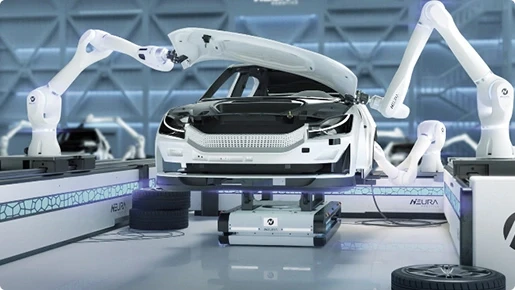
Automotive industry
sed for engine control units (ECUs), transmissions, ABS systems, air conditioning, lighting control, etc.

Medical equipment
used for data transmission between various medical instruments and equipment.

Industrial automation
used for robot control, communication between PLCs (programmable logic controllers), sensor networks, etc.

Aerospace
used for communication between aircraft internal systems, such as sensors, control systems, etc.
product detailed information
In order to help users better understand and compare various products, we have created an overview page. Below is the introduction of CAN communication connectors.
DB9 CANbus Adapter category
It is a terminal resistor used in the Controller Area Network (CANbus) network. Its main function is to ensure the correct transmission of signals and prevent data errors caused by signal reflection.

- Application scenarios
Industrial Automation: In factory automation systems, CANbus is widely used for communication between devices. Termination resistors ensure the reliability of data transmission.
Automotive Electronics: Modern cars use CANbus networks to connect ECUs (Electronic Control Units) and other subsystems. 120Ω termination resistors are a key component of these systems.
Embedded Systems: In embedded system development, CANbus adapters are used for testing and debugging purposes.

DB9 Female 9 Pin to Terminal Block CAN Terminator
The CAN Bus Adapter D-Sub DB9 Female to Threadless 9-Pin Terminal Block is a convenient solution to convert a DB9 interface to a 9-pin terminal block for quick and easy writing to the CAN bus. The adapter contains a 120 ohm termination resistor, which all CAN networks require at both ends. The TB-DB9TO9CAN termination resistor is suitable for the end of a CAN cable or for CAN nodes that do not have internal termination resistors.
- Application scenarios
Industrial Automation: Connect PLCs, sensors, and actuators.
Automotive Electronics: Diagnose and debug automotive electronic systems.
Medical Devices: Connect and debug medical devices.
Robotics: Simplify wiring for robotic systems.
Data Acquisition and Monitoring: Transmit sensor data.
Labs and R&D: Provide flexible ways to connect devices.
CAN Bus D-Sub 9 Pin DB9 Y Splitter Cable
Male to 2 Female Connector
CAN bus D-Sub 9-pin DB9 Y splitter cable is commonly used to connect CAN bus devices. It can split a DB9 connector into two, allowing two CAN devices to be connected to the same bus at the same time. This splitter is commonly used in automotive and industrial control systems, where the CAN bus is a common communication interface. Using a Y splitter can simplify wiring and reduce the number of connectors, but it is necessary to ensure that the bus load and communication rate are not affected.

- Features:
Dual connector: One DB9 male connector and two DB9 female connectors, allowing two CAN devices to be connected simultaneously.
High-quality materials: Use high-quality shielded cables to ensure signal integrity and reduce electromagnetic interference (EMI).
Rugged and durable: The connector adopts a solid metal housing, which is durable and suitable for industrial environments.
Strong compatibility: Compatible with most CAN bus devices and protocols (such as CANopen, DeviceNet, SAE J1939).

D-sub 9 Pin Male to Female CAN Bus Extension Cable is a high-quality cable used to connect and extend Controller Area Network (CAN bus) devices. It has D-sub 9-pin male and female interfaces and is widely used in automotive electronics, industrial automation, and medical equipment. Its advantages include plug-and-play, high reliability, and strong flexibility, which can ensure the stability of signal transmission and the flexibility of device connection.
DB9 to RJ45 CANbus Cable
DB9 to RJ45 CANbus cable is used to connect a CANbus device with a DB9 interface to a device with an RJ45 interface. This cable is commonly found in industrial control systems, automotive electronic systems, and other applications that require CANbus communication.

- Application scenarios:
Industrial automation: used to connect PLC (programmable logic controller) and other industrial equipment.
Automotive electronics: used for communication between different electronic modules inside the vehicle.
Other applications: including building automation, medical equipment, etc.
DB9 terminal resistor
DB9 male terminal resistors are commonly used in RS-232 serial communication interfaces to provide electrical terminations and prevent signal reflections. Commonly used in RS-232 serial communication interfaces. Terminal resistors are used to install resistors at the end of the transmission line to absorb signals and prevent signal reflections, which can improve signal integrity.
The resistance of the terminal resistor is usually matched to the characteristic impedance of the transmission line. For RS-232 communication interface, the common terminal resistor value is 120 ohms.

DB9 male terminal resistor
DB9 Female terminal resistor

D-Sub 9 Pin CAN Bus and LIN Bus Cable
D-Sub 9 Pin CAN Bus to LIN Bus Cable is a special cable used to interconnect CAN bus devices with LIN bus devices. The cable uses a standard D-Sub 9-pin connector, with one end connected to the CAN bus (including CAN_L, CAN_H and ground pins) and the other end connected to the LIN bus (including LIN signal, ground and power pins). This cable is designed to achieve reliable data transmission between two different communication protocols in complex automotive and industrial automation systems.
LIN , (Local Interconnect Network) bus is a low-cost, low-speed automotive electronic system network communication protocol. LIN bus is designed to simplify the communication between different electronic control units (ECUs) in the car and is a supplement to CAN (Controller Area Network) bus.
- Advantages:
Low-cost implementation, suitable for cost-sensitive application scenarios.
Simplified wiring, reducing complexity and installation costs.
Reliable low-speed data communication, meeting non-real-time critical data transmission needs.

DB9 Female to DB9 Male & 3 Banana Connector LIN bus data logger Cable
DB9 Female to DB9 Male & 3 Banana Connector LIN bus data logging cable is a cable specially designed for LIN (Local Interconnect Network) bus. It is used to connect LIN bus devices to achieve data transmission and logging.

CANbus CAN-high and CAN-low Test Cable
By using the CAN Bus CAN-High and CAN-Low Test Cable, technicians can effectively test and verify the normal operation of the CAN bus system, ensuring that the various control systems and sensors of the vehicle can exchange data and communicate correctly.

DB9 Male & Female field CANbus to LIN Cable
The generic adapter cable is useful for cases where neither the J1939 or OBD2 adapters can be used directly or the CAN logger's built-in DB9 connector.Generic adapter can be used as a starting point. Further, the banana plugs are useful for powering the device in test setups.
DB9 to Generic cable connector
DB9 to Generic Cable Connector refers to a cable with a DB9 connector and a generic connector (such as bare wire end, BNC connector, RJ45 connector, etc.) at both ends, which is used to connect devices using DB9 interfaces to various types of devices or interfaces.

- Main Applications
Serial Communications: Used for RS-232 standard serial communications, common in older computers, modems, and some network equipment.
Industrial Automation: Used to connect PLCs (Programmable Logic Controllers) and other industrial equipment.
Test and Measurement Equipment: Used to connect oscilloscopes, multimeters, and other measuring instruments.
CANbus DB9 Female to USB Female cable

CAN Bus Lin Bus USB hotspot power cable
The CANedge provides a configurable 5V power output via the 2nd port. This adapter lets you use this to easily power a 3G/4G USB WiFi router via this 5V output - simplifying cellular deployment use cases.
The connection to the USB adapter purely provides power and ground for the USB hotspot.

CAN Bus LIN Bus data logger cable with power supply for USB WiFi router
With this cable you can log CAN bus or LIN bus data while also powering a 3G 4G USB WiFi router. The DB9 female connector allows easy connection of CAN sensor modules or CAN GPS. In addition, the adapter provides an open DB9 female connector to easily connect CANmod sensors to CAN modules. The cable provides 5V power to the CANmod - while enabling the CANedge2 to log CAN communications from the CANmod via the second port.

Boat Data Logger CANedge2
Premier Cable's CAN Bus Lin Bus WiFi router power cable is compatible with the Boat Data Logger CANedge2 sold by CSS. As an advanced data logger, this adapter can accurately capture and analyze real-time data from vehicles or vessels, making it ideal for telematics, R&D field testing, diagnostics and predictive maintenance.
DB9 to DB9 DC Power Splitter Cable for CAN bus
The DB9 to DC power distributor is a useful tool that can power a CAN logger from an electrical outlet, battery, or cigarette lighter. It is particularly suitable for test setups, machine logging, or situations where the DB9 connector of the vehicle does not provide power or CAN bus power is not desired. In many industrial automation applications, CAN-based devices often have a DB9 connector port, but sometimes only the CAN L and CAN H pins are connected, which cannot power the CAN logger. In this case, the DB9 to DC distributor can provide external power to the device from a small battery pack to ensure the normal operation of the logger.

DB9 CAN bus data Cable with external power supply
High Speed CAN Bus, CAN FD, SAE J1939,NMEA2000, CANopen Power Supply Cable, CAN BUS CANedge Data logger DC Power Input Cable

CANedge1: 2x CAN Bus Data Logger (SD + RTC)
Premier Cable's DB9 CAN Bus Data Cable With External Power Supply is suitable for CSS devices

D-Sub 9 Pin to M12 Circular Connector CAN Bus Adapter Cable
This M12 to DB9 Can Bus data logging cable is designed for NMEA 2000, CANopen and Devicenet systems. It enables stable and reliable data transmission and is suitable for a variety of industrial and marine applications. One end of the cable is an M12 connector and the other end is a DB9 interface, which is convenient for users to quickly connect and use. Its high-quality materials ensure good anti-interference performance and durability, enabling it to maintain excellent working performance even in harsh environments. This cable is suitable for data logging and monitoring tasks, providing users with efficient data management solutions.

RS232 DB9 CAN Bus network T-Adapter
T-adapter with 9-pin Sub-D female to 9-pin Sub-D female and male connectors, without terminating resistor. The CAN BUS T-adapter is used to connect CAN LIN accessories to the CAN bus by splitting the existing bus connection.
- Application
1. Network connection
T-Adapter can connect multiple CAN devices to the same network. It connects via a DB9 interface, enabling different devices to communicate over a common bus.
2. Testing and debugging
During the development and debugging phase, the T-Adapter can be used to access diagnostic tools and test equipment. This allows engineers to monitor data flow in the network and check and analyze communication problems.
3. Device branching
T-Adapter allows new device branches to be added to an existing CAN Bus network. This is useful when you need to expand the network or temporarily connect other devices for testing.
DB9 CANbus Extension Cable
-
Founctions & Applications
CAN bus connection: used to connect CAN bus devices, such as ECU, sensors, actuators, etc., for data communication in vehicles and industrial control systems.
Signal transmission and stability: by ensuring the correct connection of CAN_L, CAN_H and CAN_GND, the stable transmission and data integrity of CAN bus signals are ensured.
Applicability: suitable for occasions where CAN bus connections need to be extended between different locations or devices, such as in vehicle commissioning, equipment installation and testing.

D-Sub 9 Pin Female to female CAN Bus Extension Cable
Cable specifications and features:Cable Type: Twisted pair cable, all with shielding to reduce electromagnetic interference and improve signal integrity.
Length and Durability: Lengths are available to suit different installation requirements, and the outer covering is made of durable and wear-resistant material, suitable for use in industrial and automotive environments.

Wiring point diagram
PIN 2---CAN-L---PIN 2
PIN 3---CAN-G---PIN 3
PIN 7---GND---PIN 7

DB9 CAN Bus Cable with 120 Ohm termination resistor
DB9 male to female CAN cable, comes with 2 120 ohm terminal resistors, connected to the terminals of CAN_L and CAN_H lines respectively. These terminal resistors are used to eliminate signal reflections and reduce interference on the CAN bus, ensuring signal stability and data integrity.
Usually designed to simplify the installation and configuration of CAN bus systems.

Wiring point diagram
PIN 2---CAN-L---PIN 2
PIN 3---CAN-G---PIN 3
PIN 7---GND---PIN 7
OBD2 to DB9 CAN Bus Cable
OBD2 to DB9 CAN Bus Cable is an adapter cable used to connect a CAN logger directly to a CAN bus. The OBD2 interface is commonly used in passenger vehicles, including cars, taxis, and light vehicles, but is also suitable for heavy vehicles such as trucks and buses. With this cable, users can easily connect CAN devices to the vehicle's CAN bus for data logging and analysis.

DB9 CANbus Cable to J1939 DEUTSCH Connector
J1939 protocol compatibility: Supports J1939 protocol, a control and data communication protocol used in heavy vehicles and mechanical equipment.
J1939 DEUTSCH connector end: used to connect to devices or nodes in the J1939 system.
Vehicle diagnostics and maintenance: This connector is often used in diagnostic systems for heavy vehicles and trucks. By connecting to the vehicle's CAN bus network, technicians can read fault codes, monitor real-time data, and perform system tests to help maintain and repair vehicles.
Data logging and analysis: In agricultural machinery, construction equipment, and other industrial applications, the DB9 CAN BUS Cable to J1939 DEUTSCH Connector is used to connect data loggers and sensors. This allows equipment operation data to be collected for performance analysis, fault prediction, and optimized operations.
Control system integration: This connector is also common in automation and control systems, especially when different devices and modules need to be connected to a centralized controller. It ensures the reliability and stability of data communication and command transmission between different devices.


Dual DB9 Female CANbus Cable to J1939 DEUTSCH Connector
Equipped with two DB9 female interfaces, it is convenient to connect multiple CAN devices and provide more flexible connection options.

CAN Cable J1939 Type 1 to Dual D-Sub 9 Pin Connector
J1939 Deutsch 9Pin to Dual DB9 Female CAN BUS Split Cable Type 2

CANOpen Cable Connector
Devicenet CANopen Cable M12 connector
Devicenet CANopen Cable M12 connector is a dedicated connection product used in industrial automation and control systems. It combines two industrial communication protocols, Devicenet and CANopen, with the design of M12 industrial connector to provide reliable and efficient connection solutions for equipment in industrial environments.
- Application scenarios
Factory automation: connect sensors, actuators, PLC (programmable logic controller) and other devices to achieve data collection and equipment control.
Embedded systems: used to connect various embedded control devices to support communication and coordination between systems.
Transportation and logistics: in automated warehousing and logistics systems, connect various automated equipment and systems to ensure efficient operation.
Process control: in industries such as chemical, pharmaceutical, and food processing, connect and control various process equipment to achieve precise control and monitoring.

Terminal resistor: resistors are installed at both ends of the CANbus to eliminate signal reflection and improve signal quality. The CANbus is a differential signal transmission system, and resistors help ensure that the signal is correctly transmitted on the bus without reflecting back to cause interference or loss of signal quality.
Electrical characteristics adjustment: the installation position and value of the resistor can adjust the electrical characteristics of the CANbus, such as the rise time and fall time of the signal, to ensure compliance with the requirements of the CAN protocol, while adapting to changes in bus length and load.


CANopen Connector
The function of the CANbus CANOpen DB9 to M12 A Code Cable adapter is to connect CANOpen devices (such as sensors or actuators) to the CAN bus network. This adapter is usually used to connect devices with different connection interfaces.
Connect devices with DB9 interfaces (such as computers, controllers, etc.) to CANOpen devices using M12 A Code interfaces. This adapter allows different types of devices to communicate on the same CAN bus and achieve interoperability between devices.
In industrial automation systems, different sensors, actuators, and controllers usually use different interface standards. The CANbus CANOpen adapter helps to achieve rapid integration and connection of these devices, simplifying the system design and installation process.
In fieldbus networks, using this adapter can effectively manage and monitor multiple devices and achieve rapid data transmission and processing.
The following are CANOpen connectors with different installation angles. Please choose the most suitable installation angle for using.


CANbus DB9 to dual M12 cable
The function of CANbus DB9 to dual M12 cable is to connect devices or nodes in a CAN bus (Controller Area Network) network. This type of cable is often used in industrial control systems or automotive electronic systems, where CAN bus is a common communication protocol. This cable allows the transmission of CAN bus signals from one device to another, such as from a main controller to a sensor, actuator or other control device.
This connector has different mounting angles, please choose the style that suits you best.


Profibus Cable Connector
S7 PLC Control and Programming Profibus Connector M12 to DB9
The ProfiBus standard protocol is widely accepted and commonly used for large assembly, material handling and process control machines. This control network only supports multi-input wiring with single-cable sensor blocks, smaller sub-networks (such as AS-i), complex Smart devices, operator interfaces and pneumatic valves.
The main purpose of the PROFIBUS bus protocol is to provide interaction between a controller or control system and field sensors. The network uses the OSI model to ensure that devices from different vendors can interact effectively and easily.
This converter is not just a physical connection conversion, it also ensures that the signal and data can be transmitted and interpreted correctly. For example, the Profibus DB interface may use a specific protocol and signal standard, and the converter needs to ensure that these signals can be correctly converted to the signal format supported by the M12 interface.

PLC S7-300 S7-200 Profibus 35° DB Female and Male to M12 5pin communication Connection Cable

Profibus 90° DB9 Female and Male to Dual M12 5pin Female and Male Connection Cable

Profibus 180° DB9 Male Connector with M12 Axial Cable Outlet

Profibus M12 5Pin B Code Cable
Profibus M12 5Pin B Code Cable is a specific type of cable, commonly used for network communication in the field of industrial automation. Its main function is to connect Profibus devices, such devices include but are not limited to sensors, actuators, PLC (Programmable Logic Controller), etc.
Profibus M12 5Pin B Code Cable can transmit data signals, allowing data communication between different devices. This data usually includes control commands, sensor data, device status, etc.
Profibus DB9 to M12 5pin B Code Male and Female Connector
Profibus DB9 to M12 5-pin B-coded male and female connectors act as an interface adapter to ensure proper and reliable connections between different types of Profibus devices. They support the integrity and stability of communication networks, especially in demanding industrial environments. Profibus DB9 to M12 connectors are used to connect various automation devices such as PLC (Programmable Logic Controller), HMI (Human Machine Interface), sensors and actuators. These connectors ensure the stability and reliability of signal transmission, thereby improving production efficiency and system stability.

Profibus DB Bus Connector 35 Degree with Programming Port

Profibus 90 Degree DB to M12 Connector with Programming Port

DB9 to M12 B-coded for Profibus DP Bus system
Profibus Terminal Resistor
For a good signal transmission it is necessary to terminate Profibus segments by a bus termination. For Profibus RS485 a bus termination consists of a combination of three resistors. For Profibus MBP (PA) a bus termination consists of a resistor and a capacitor.

Profibus Terminating resistor Male M12 4-pole B-coded

Profibus M12 Female Bus Termination B-coded IP67 Connector

Specifications

All products on this page are manufactured by Premier Cable. We provide custom and OEM services. For more information or to purchase products, please feel free to contact customer service.

Hot Tags: high-quality canbus cable adapters overview page, China high-quality canbus cable adapters overview page manufacturers, suppliers, factory, USB Front Panel C Female to A Female chassis mount Adapter, Mini DP Panel Mount Coupler Extension Cable for monitor, Reversible USB 3 0 joiner type A to B D housing, USB female to micro USB female adapter, USB 3 1 Panel Mount Cable USB C to C, Screw locking S coded 2 PE and 3 PE h Splitter