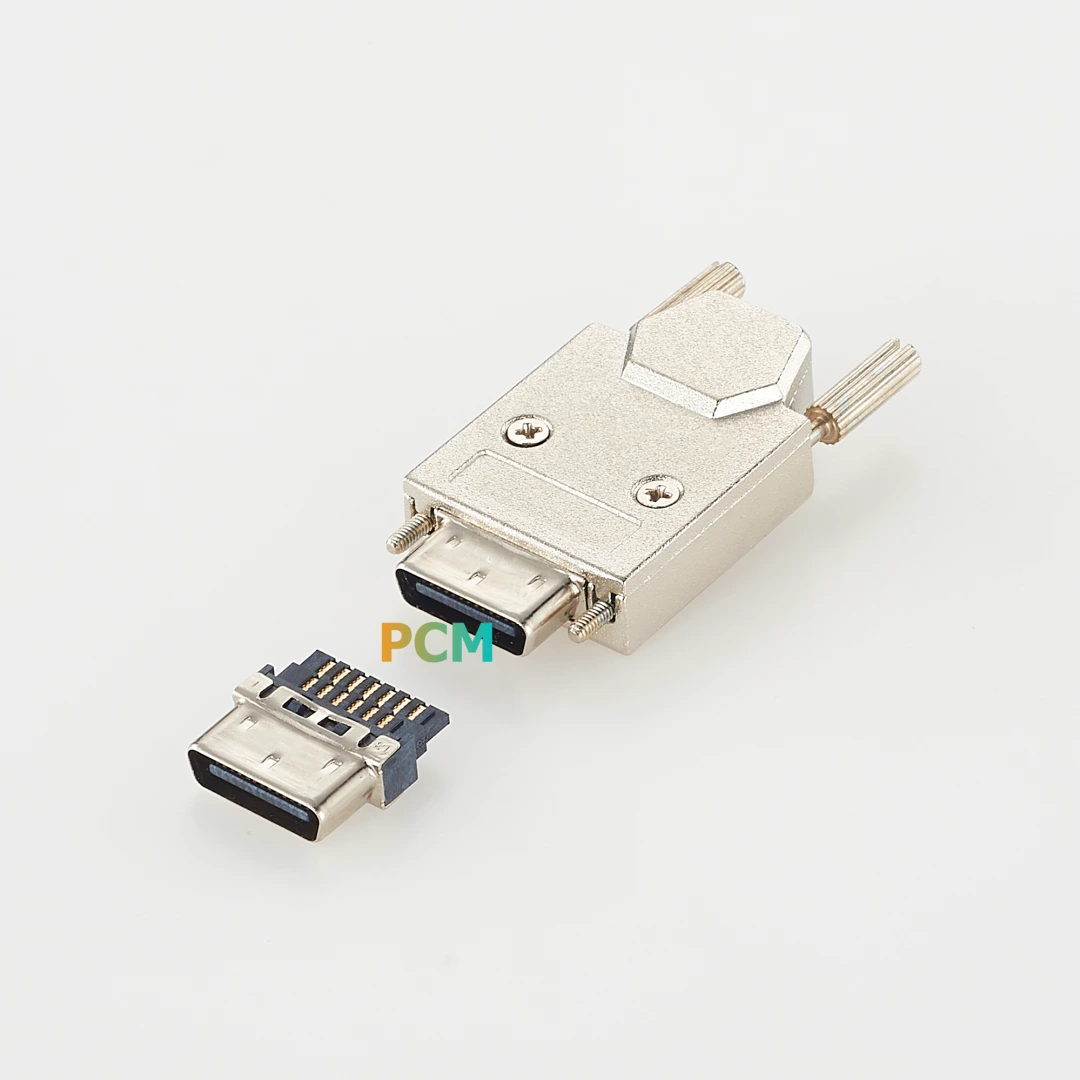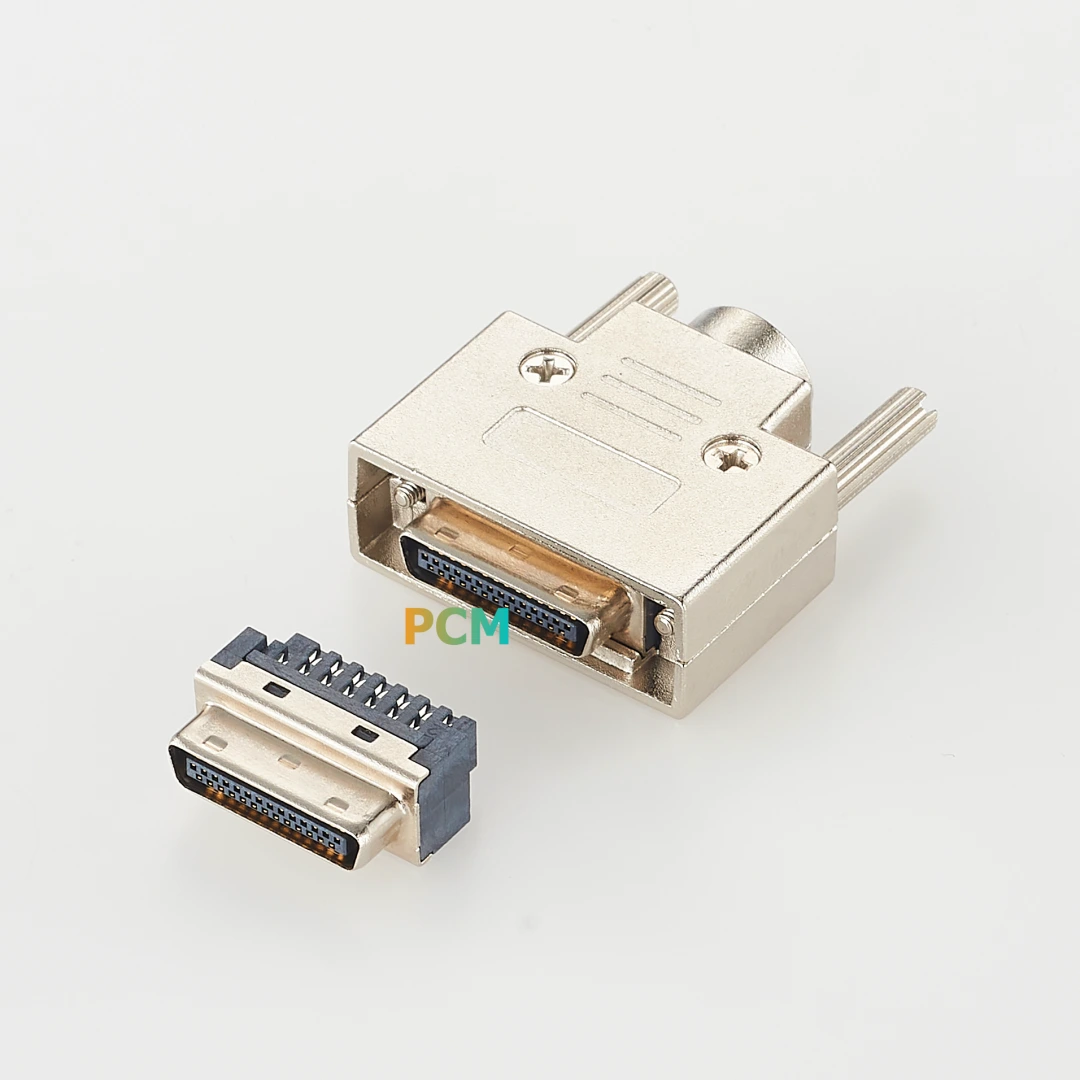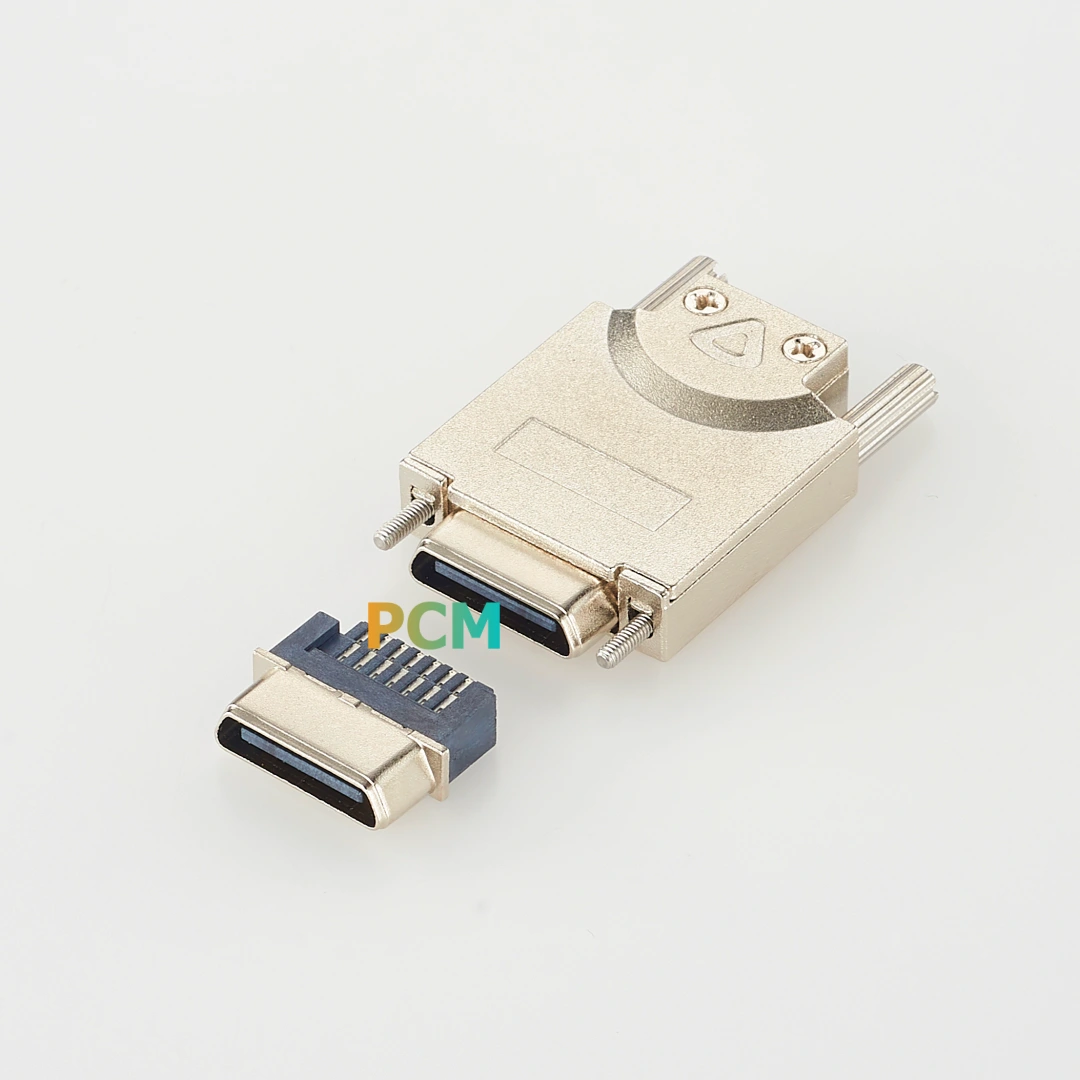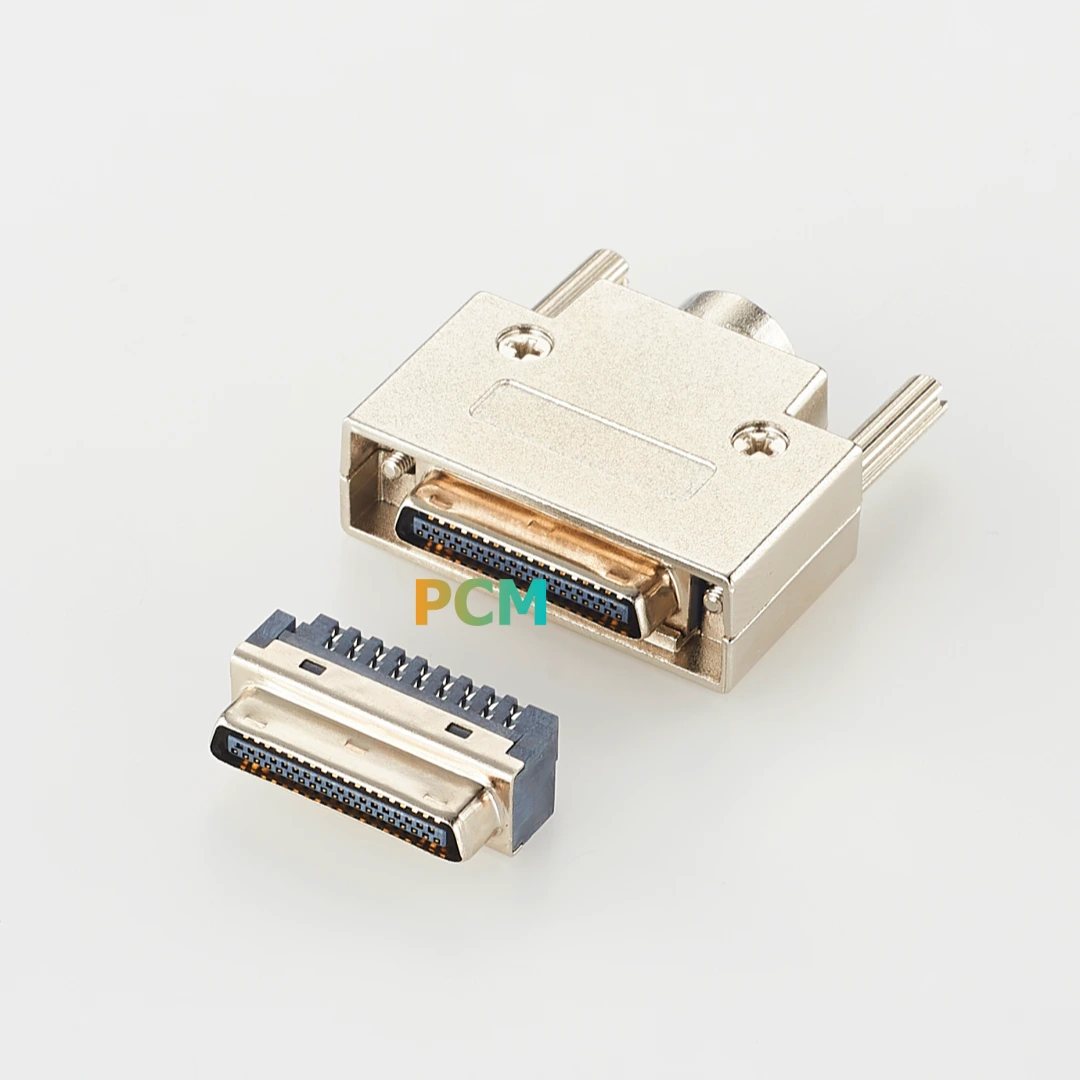
Field Wireable Connectors & Panel Feedthrough Interfaces
Explore field-wireable circular connectors and panel feedthrough interfaces for industrial automation, sensors, actuators, control cabinets, machinery and serviceable equipment connections. This collection includes M8, M12 and 7/8-16UNF connector solutions that allow cable termination, repair or interface routing at the installation site, together with bulkhead feedthrough connectors for passing a connection through an enclosure wall.
Select the exact product by connector family, coding, pin count, gender, termination method, cable outer diameter, conductor size, cable exit direction and mounting format. For panel-mounted feedthroughs, also confirm the mating interfaces on both sides of the panel, panel thickness, cutout, locking method and sealing requirements.
-
![M12 B Code Feed Through Connector]() M12 B Code Feed Through ConnectorThe M12 B-coded feed-through connector is an industrial-grade panel-mount connector featuring a standard M12 B-coded design. It supports fieldbus communication and panel mounting, offering reliable
M12 B Code Feed Through ConnectorThe M12 B-coded feed-through connector is an industrial-grade panel-mount connector featuring a standard M12 B-coded design. It supports fieldbus communication and panel mounting, offering reliable -
![M12 B Code Panel Mount Connector]() M12 B Code Panel Mount ConnectorThe M12 B-coded panel-mount connector is an industrial-grade connector featuring a standard M12 B-coding design and supporting fieldbus communication. It offers reliable locking, dust resistance, and
M12 B Code Panel Mount ConnectorThe M12 B-coded panel-mount connector is an industrial-grade connector featuring a standard M12 B-coding design and supporting fieldbus communication. It offers reliable locking, dust resistance, and -
![Panel Feedthrough Connector M8 M12 7/8'']() Panel Feedthrough Connector M8 M12 7/8''M8, M12, and 7/8 feedthrough connectors are commonly used in marine NMEA2000 Network, industrial automation, sensor, and control systems, particularly for transmitting power, signals, or data between
Panel Feedthrough Connector M8 M12 7/8''M8, M12, and 7/8 feedthrough connectors are commonly used in marine NMEA2000 Network, industrial automation, sensor, and control systems, particularly for transmitting power, signals, or data between -
![IP67 7/8" 5 Pin Male To Female Feedthru Minifast Adapter]() IP67 7/8" 5 Pin Male To Female Feedthru Minifast Adapter7/8'' 5Pin Wall Feedthrough Connector supports CANBus, CANopen, DeviceNet, and NMEA2000 protocols for seamless network integration. PCM Cable # : FT-78-MF-5
IP67 7/8" 5 Pin Male To Female Feedthru Minifast Adapter7/8'' 5Pin Wall Feedthrough Connector supports CANBus, CANopen, DeviceNet, and NMEA2000 protocols for seamless network integration. PCM Cable # : FT-78-MF-5 -
![DeviceNet 7/8"-16UNF 4Pin Feed-Thru Connector]() DeviceNet 7/8"-16UNF 4Pin Feed-Thru Connector7/8 4 Pin Male to Female Feedthrough Connector is specifically designed for use in systems like CAN Bus, DeviceNet, CANopen, and NMEA 2000, ensuring reliable connectivity in demanding applications.
DeviceNet 7/8"-16UNF 4Pin Feed-Thru Connector7/8 4 Pin Male to Female Feedthrough Connector is specifically designed for use in systems like CAN Bus, DeviceNet, CANopen, and NMEA 2000, ensuring reliable connectivity in demanding applications. -
![M8 4Pin Wall Feedthrough Panel Connector]() M8 4Pin Wall Feedthrough Panel ConnectorThe M8 Wall Feed-through Connector is perfect for applications in sensor networks, robotics, industrial automation, and smart manufacturing. Its IP67 rating ensures reliable protection against dust
M8 4Pin Wall Feedthrough Panel ConnectorThe M8 Wall Feed-through Connector is perfect for applications in sensor networks, robotics, industrial automation, and smart manufacturing. Its IP67 rating ensures reliable protection against dust -
![M8 3Pin Male To Female Panel Feed Through Connector]() M8 3Pin Male To Female Panel Feed Through ConnectorM8 3 pin male to female feedthru bulkhead connector for sensors, actuators, and control cabinets, compact design, front and rear mountable. PCM Cable # : FT-M8-3
M8 3Pin Male To Female Panel Feed Through ConnectorM8 3 pin male to female feedthru bulkhead connector for sensors, actuators, and control cabinets, compact design, front and rear mountable. PCM Cable # : FT-M8-3 -
![M12 X Code 8 Pin Feedthru Bulkhead Connector]() M12 X Code 8 Pin Feedthru Bulkhead ConnectorM12 X-Coding 8 Pin Male to Female Feed-through Panel Connector is suitable for industrial Ethernet, robotics, factory automation, machine vision, marine electronics, and other applications requiring
M12 X Code 8 Pin Feedthru Bulkhead ConnectorM12 X-Coding 8 Pin Male to Female Feed-through Panel Connector is suitable for industrial Ethernet, robotics, factory automation, machine vision, marine electronics, and other applications requiring -
![M12 X Code Sensor Feedthru Connector 8Pin]() M12 X Code Sensor Feedthru Connector 8PinP/N: FT-X-FF. The M12 8 Position X-Code Female to Female Feed Through Bulkhead connector supports a high bandwidth of up to 500 MHz, ensuring a transmission rate of up to 10 Gbps (10GBASE-T). This
M12 X Code Sensor Feedthru Connector 8PinP/N: FT-X-FF. The M12 8 Position X-Code Female to Female Feed Through Bulkhead connector supports a high bandwidth of up to 500 MHz, ensuring a transmission rate of up to 10 Gbps (10GBASE-T). This -
![M12 Wall Feedthrough Adapter DeviceNet A-Coding 8Pin]() M12 Wall Feedthrough Adapter DeviceNet A-Coding 8PinThe IP67 Waterproof M12 Rear Bulkhead Panel Mount Adapter is a shielded 8-pin male-to-female industrial circular connector, designed for reliable connections in industrial automation, sensor
M12 Wall Feedthrough Adapter DeviceNet A-Coding 8PinThe IP67 Waterproof M12 Rear Bulkhead Panel Mount Adapter is a shielded 8-pin male-to-female industrial circular connector, designed for reliable connections in industrial automation, sensor -
![M12 A Code 8 Pin Control Cabinet Feedthru Connector]() M12 A Code 8 Pin Control Cabinet Feedthru ConnectorM12 A-Code 8-pin control cabinet feedthrough connector, ideal for industrial sensors, actuators, PLCs, robotics, marine electronics, and automation equipment. PCM Cable # : FT-A8-FF
M12 A Code 8 Pin Control Cabinet Feedthru ConnectorM12 A-Code 8-pin control cabinet feedthrough connector, ideal for industrial sensors, actuators, PLCs, robotics, marine electronics, and automation equipment. PCM Cable # : FT-A8-FF -
![M12 D Code 4Pin Cabinet Feed-through Bulkhead Connector]() M12 D Code 4Pin Cabinet Feed-through Bulkhead ConnectorThe feed-through M12 D-coded control cabinet panel mounting connector is designed for use in industrial automation systems, providing reliable Ethernet connectivity for devices such as switches,
M12 D Code 4Pin Cabinet Feed-through Bulkhead ConnectorThe feed-through M12 D-coded control cabinet panel mounting connector is designed for use in industrial automation systems, providing reliable Ethernet connectivity for devices such as switches,


How to Select a Field Wireable Connector
Field-wireable connectors are useful when cable length must be finalized during installation, when a damaged cable end needs service, or when a detachable connection is required close to the equipment. The correct option depends on the complete connection system: connector series, coding, mating face, wiring function, cable dimensions, installation method and environment all need to match.
| Application Need | Typical Product Format | Key Checks Before Ordering |
|---|---|---|
| Repair or terminate a sensor / actuator cable on site | M8 or M12 field-wireable cable connector | Mating gender, coding, pin count, pinout, cable O.D., conductor size, straight or right-angle exit and the model-specific termination method. |
| Route a detachable connection through a cabinet wall | M8, M12 or 7/8 bulkhead feedthrough connector | Panel cutout, wall thickness, mounting direction, front and rear mating faces, sealing arrangement and available cabinet clearance. |
| Industrial Ethernet or shielded data connection | Appropriately coded M12 data connector or feedthrough | Exact coding, Ethernet standard, pin assignment, shield continuity, cable category / construction and device-side interface. Do not use a mechanically similar connector as a substitute. |
| DC, AC or higher-current automation power connection | Appropriately coded M12 or 7/8 power connector | System voltage and current, conductor cross-section, protective-earth requirement, contact layout, coupling method and the product-specific electrical rating. |
| Build a serviceable machine interface | Field-wireable connector plus panel feedthrough interface | Mating pair, cable routing, service access, installation space, vibration exposure and the required environmental protection after assembly. |
Field Wireable, Feedthrough or Pre-Assembled Cable?
Field Wireable Connector
A cable-side connector assembled at the installation location. It is useful when the cable route or final length is unknown in advance, or when a connector must be replaced without changing the full cable assembly. Assembly style varies by model and can use screw, clamp, solderless or other specified termination methods.
Panel Feedthrough Connector
A fixed bulkhead interface that carries the connection through an enclosure, cabinet or machine panel. It creates a detachable connector point on one or both sides of the wall and helps organize service access and cable routing.
Pre-Assembled / Overmolded Cable
A finished cable assembly is often the better choice when length, pinout and application are already defined and repeatability is important. It reduces on-site termination work and keeps cable construction and strain relief consistent across multiple installations.
A Practical Field-Termination Checklist
- Confirm the exact mating interface from the existing connector, device manual or drawing.
- Check coding, pin count, gender and pin assignment before preparing the cable.
- Verify that the cable outer diameter, conductor cross-section and shielding construction fall within the selected connector model’s specification.
- Prepare the cable according to the model-specific stripping dimensions; do not improvise conductor length or shield termination.
- Terminate each conductor to the marked contact position, then complete strain relief, shell assembly and coupling as specified.
- Inspect the assembled connector and complete the required continuity, polarity and installation checks before commissioning equipment.
Information Needed for a Compatibility Check
For a fast recommendation, send as many of the following details as possible:
Field Wireable Connector FAQ
What is the difference between a field-wireable connector and a panel feedthrough connector?
A field-wireable connector is normally installed on the cable end. A panel feedthrough is fixed through an enclosure wall to create a connection point between the outside and inside of a cabinet or machine. A system can use both: a feedthrough at the panel and a field-wireable connector on the cable side.
Can any M12 connector mate with another M12 connector?
No. M12 thread size does not establish electrical or mechanical compatibility by itself. Confirm the coding, number of contacts, gender, keying, pin assignment and mating geometry. A similar-looking M12 connector may be intended for a different application.
Does a field-wireable connector convert an industrial network or power interface?
No. A passive connector or feedthrough provides a connection interface; it does not convert Ethernet, fieldbus, CAN, sensor, AC or DC power systems. The cable construction, pinout, shielding and system design must already be appropriate for the intended application.
Does an IP-rated connector stay IP-rated after any installation?
Not automatically. Protection depends on the exact model, compatible mating part, cable diameter, seal placement, strain relief, panel installation and assembly quality. Check the model-specific documentation and use the connector only within its stated installation conditions.
How do I choose the correct cable diameter and conductor size?
Refer to the selected connector’s drawing or data sheet. The cable outer diameter must fit the sealing and strain-relief system, while each conductor must fit the terminal design and electrical requirement. Do not assume that all connectors in the same series accept the same cable range.
Can you help match a replacement connector or build a custom cable assembly?
Yes. Send photos or the existing part number, the device model, pinout, cable dimensions, wiring application and quantity. We can review a matching connector, panel feedthrough or a finished custom cable assembly based on the supplied details.
Need a replacement or a field-termination solution?
Send the existing connector photo, drawing and cable details for a compatibility review.
PCM Cable Co., Ltd. is one of the leading field wireable connector manufacturers and suppliers in China. We warmly welcome you to buy advanced field wireable connector in stock here from our factory. All customized products are with high quality and low price. Contact us for quotation and free sample.
Popular Products