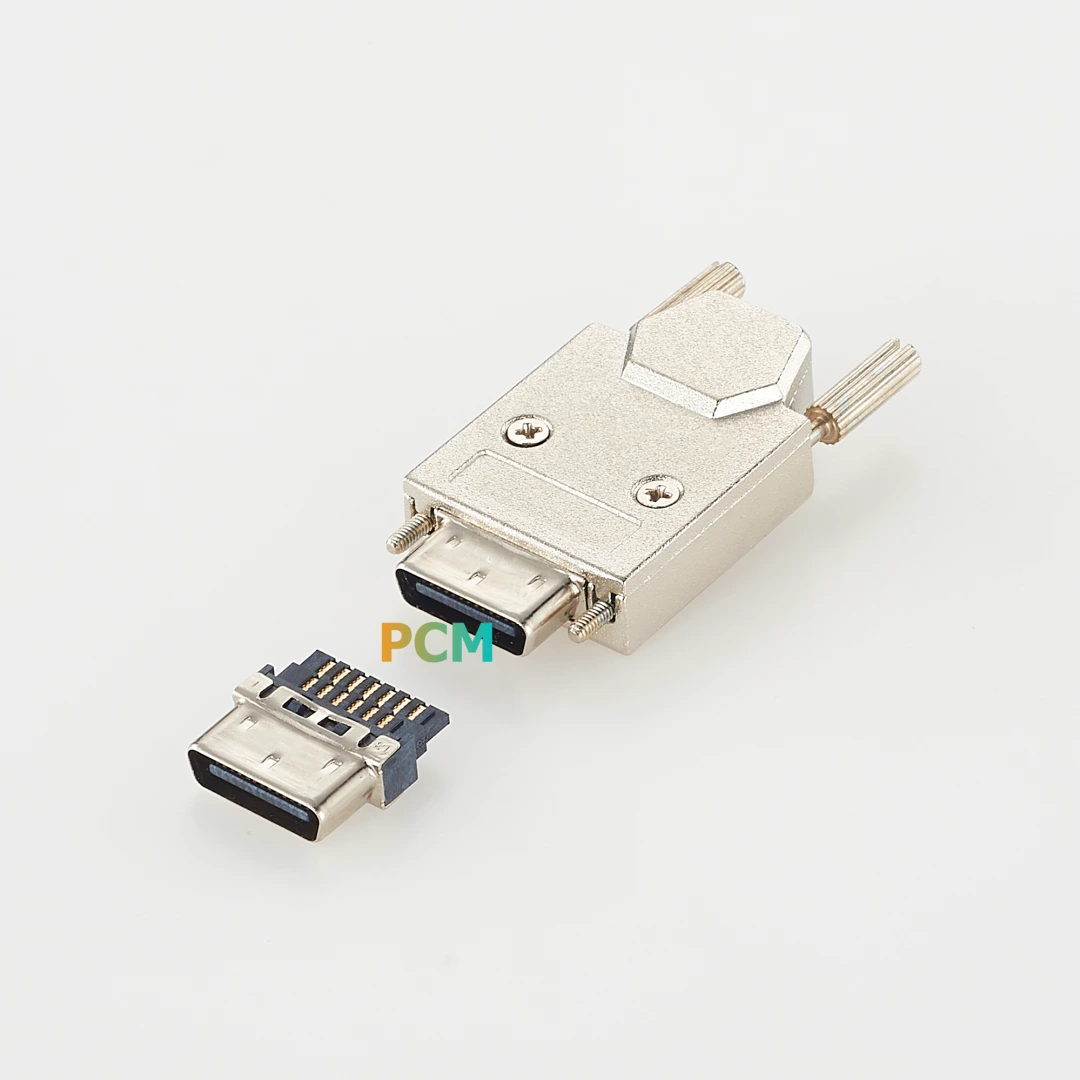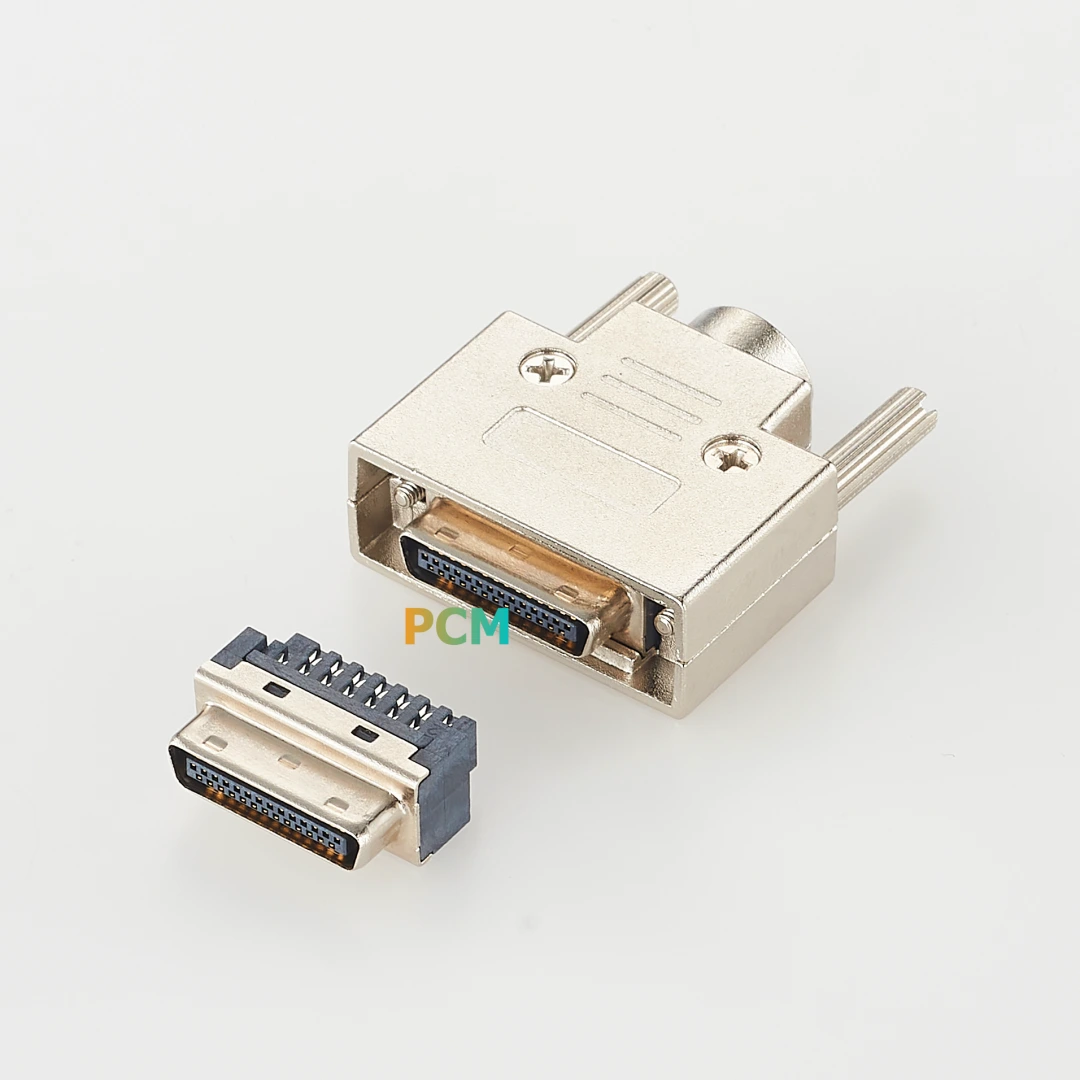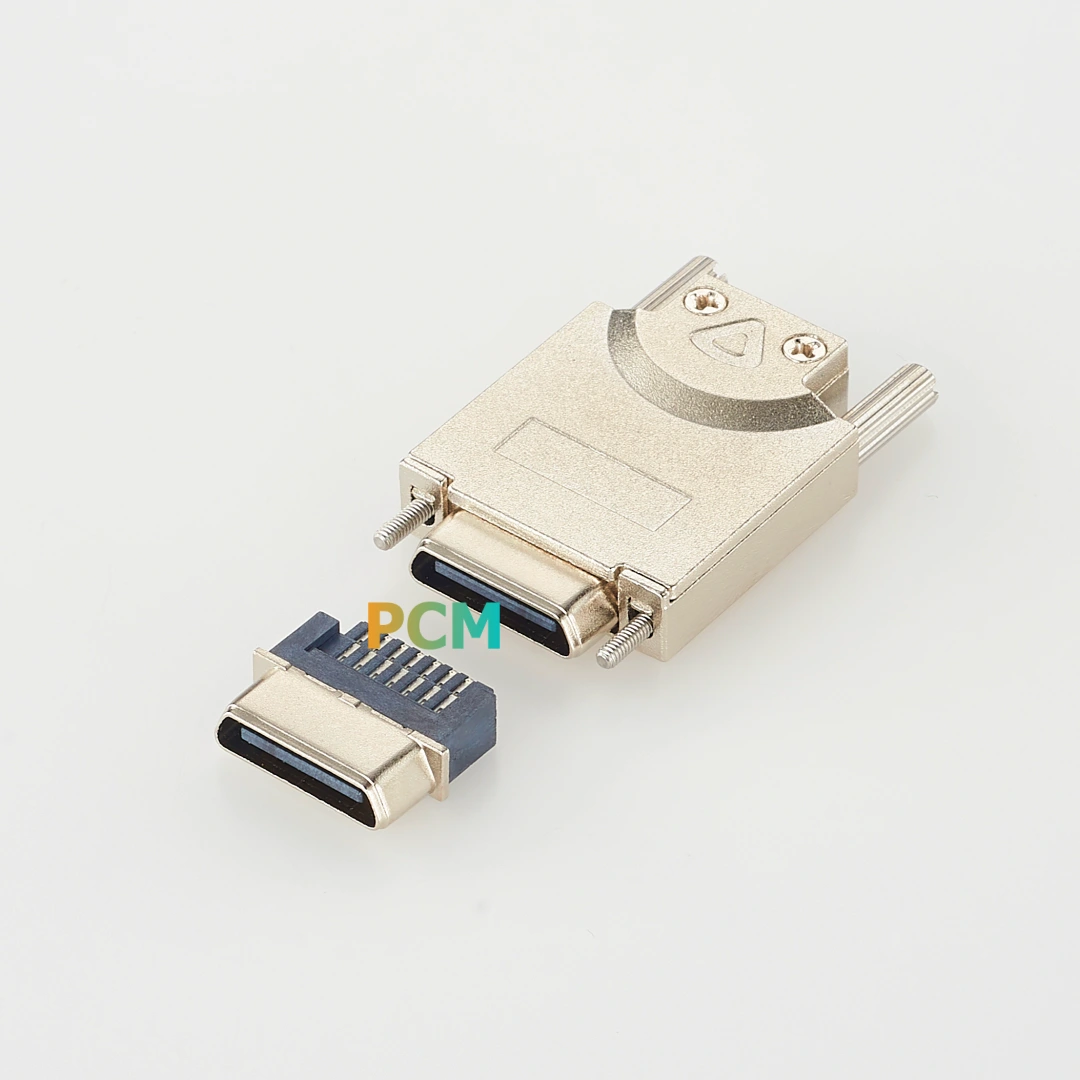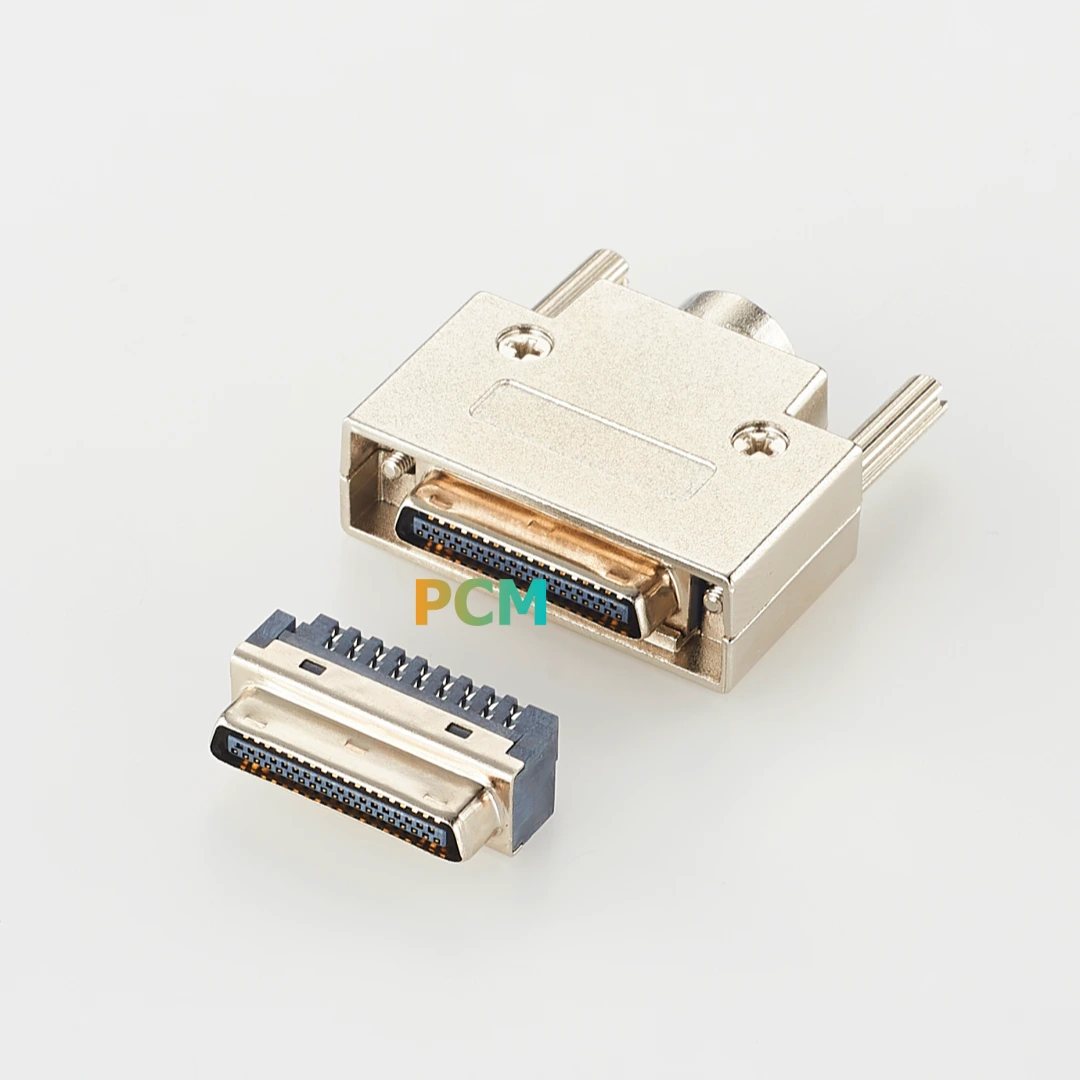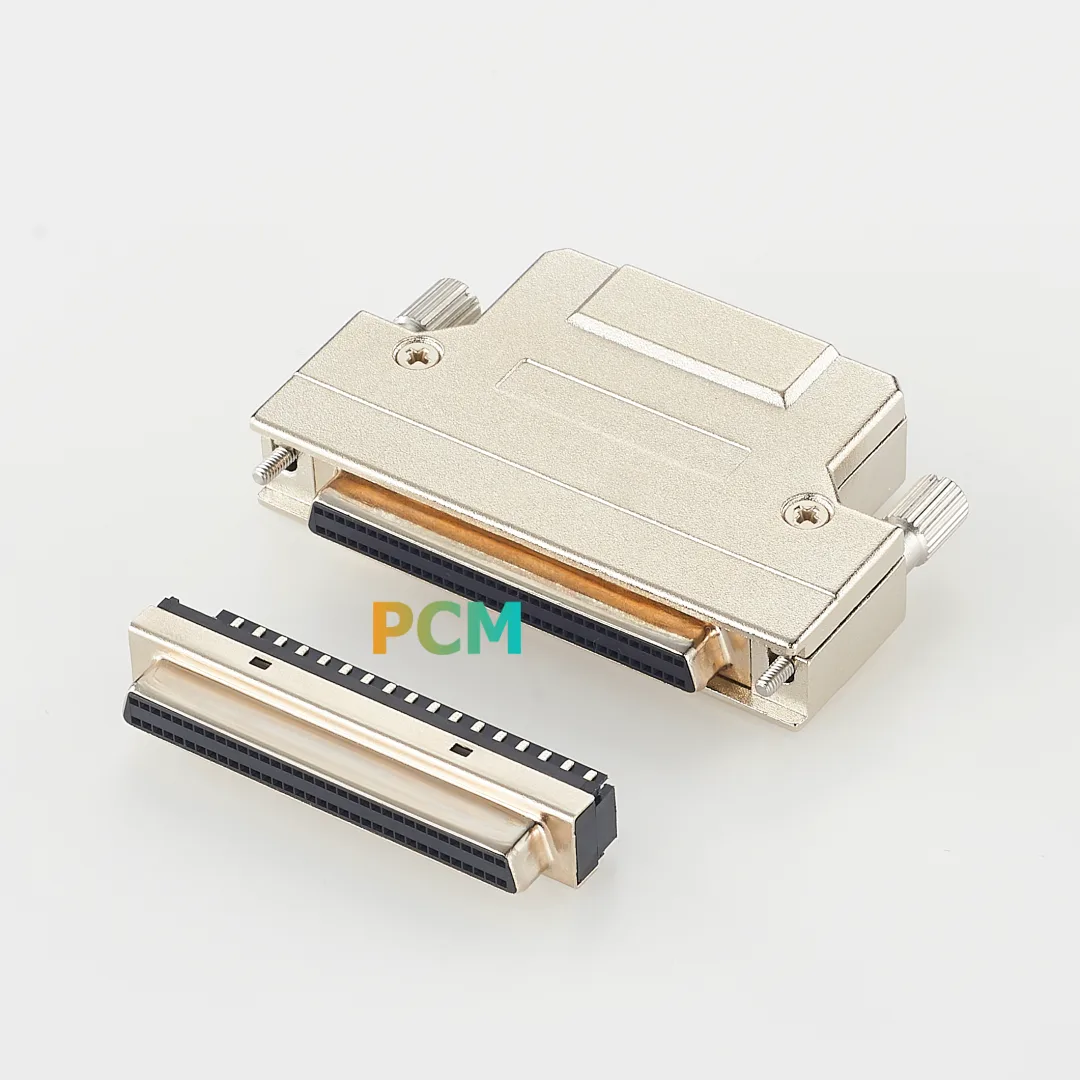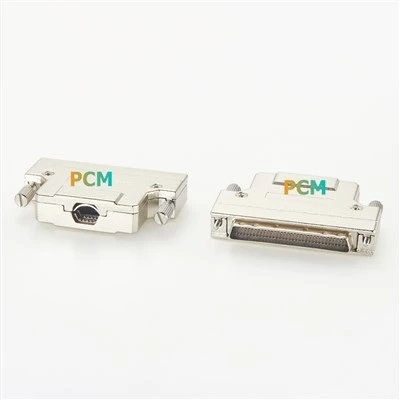
The can bus cable connector connector is plugged directly onto the CAN bus interface (SUB-D socket, 9-pin) of the CAN bus participants. The can bus cable connectors are connected using 6-pin screw terminals. A slide switch is used to set whether the connector is to be used as a node or at the segment end. The switch can also be operated in the installed condition. The setting is clearly visible. In node setting (“OFF”), the connector must be operated when the incoming and outgoing bus are connected to each other. The terminating resistor is then ineffective. As segment end (“ON”), the connector must be set on the first and last (outermost) participants of the segment respectively. In this case the terminating resistor is connected on the incoming bus, and the outgoing bus is disconnected. The CAN connectors also work in the extended ambient temperature range of -25 °C to +85 °C.
Advantages of CAN Bus Cable Connector
Speed
Can bus cable connectorhigh wire enables transmission rates of up to 1 megabit per second between a vehicle’ s electronic devices and modules.
Cost and weight savings
Reduced wiring means less labor, lower material costs, and reduced weight. A typical vehicle uses about 1,500 different copper wires totaling nearly a mile in length. Along with lifetime fuel savings from the reduced weight.
Error handling and detection
In the can bus cable connectorbus, each electronic device (or node) can bus cable connectorcommunicate with other nodes on the network. Error handling is built into the can bus cable connectorprotocol each node checks for errors in transmission and maintains its own error counter.
Durability
Robustness and reliability are always top of mind when adding new functions to a vehicle. The can bus cable connectorcommunication protocol is self-sustaining and carries signals for long periods of time with minimal maintenance. Can bus cable connectorbus cable is highly resistant to electrical disturbances and can bus cable connectorfunction reliably in high temperature conditions and demanding environments.
-
![High-Quality CANbus Cable Adapters Overview Page]() High-Quality CANbus Cable Adapters Overview PagePCM Cable is dedicated to making all types of connection cables, including CANbus Cable Adapter. We offer 17 high-quality CANbus cable adapter products for you to choose from to meet your various
High-Quality CANbus Cable Adapters Overview PagePCM Cable is dedicated to making all types of connection cables, including CANbus Cable Adapter. We offer 17 high-quality CANbus cable adapter products for you to choose from to meet your various -
![M12 A-Code CANopen Cable]() M12 A-Code CANopen CableCANopen Cable Pur Jacket M12 A-Code, M12 male to female CANOPEN cable is used for industrial field communication and various industrial automation equipment, such as sensors, actuators, PLC
M12 A-Code CANopen CableCANopen Cable Pur Jacket M12 A-Code, M12 male to female CANOPEN cable is used for industrial field communication and various industrial automation equipment, such as sensors, actuators, PLC -
![M12 Terminating Resistor for DeviceNet CANopen]() M12 Terminating Resistor for DeviceNet CANopenM12 Terminating resistor for DeviceNet CANopen Profibus is a resistor used to terminate the electrical signal transmission line in the CANopen bus network. In a CANopen network, the bus is connected
M12 Terminating Resistor for DeviceNet CANopenM12 Terminating resistor for DeviceNet CANopen Profibus is a resistor used to terminate the electrical signal transmission line in the CANopen bus network. In a CANopen network, the bus is connected -
![M12 Terminating Resistor]() M12 Terminating ResistorDeviceNet Micro-C Termination Resistors are essential in preventing impedance in cable ends. PCM Cable make this terminal resistor Gold-plated contacts for reliable electrical connections and High
M12 Terminating ResistorDeviceNet Micro-C Termination Resistors are essential in preventing impedance in cable ends. PCM Cable make this terminal resistor Gold-plated contacts for reliable electrical connections and High -
![CANopen Bus Connector SUB-D9 35 Degree]() CANopen Bus Connector SUB-D9 35 DegreeCANopen Bus Connector SUB-D9 35 Degree, 9 poles, female contacts, D-SUB connector, 9-pin socket, two cable feeds at 35° on two terminal rows for CAN Bus system, CANopen and SafetyBus-P up to 1
CANopen Bus Connector SUB-D9 35 DegreeCANopen Bus Connector SUB-D9 35 Degree, 9 poles, female contacts, D-SUB connector, 9-pin socket, two cable feeds at 35° on two terminal rows for CAN Bus system, CANopen and SafetyBus-P up to 1 -
![D-Sub 9 Pin To M12 CAN-Bus Cable]() D-Sub 9 Pin To M12 CAN-Bus CableCAN-Bus Connector D-Sub 9 Pin to M12 Cable 35 Degree Outlet, CAN-Bus Connector D-Sub 9 Pin to M12, this is pre-molded cable with M12 Connector for fast field PLC connection use. This cable has 9
D-Sub 9 Pin To M12 CAN-Bus CableCAN-Bus Connector D-Sub 9 Pin to M12 Cable 35 Degree Outlet, CAN-Bus Connector D-Sub 9 Pin to M12, this is pre-molded cable with M12 Connector for fast field PLC connection use. This cable has 9 -
![CANopen D-sub to M12 Connector]() CANopen D-sub to M12 ConnectorCANopen Fieldbus connector D-Sub 9 Pole RS232 90 degree to M12, CANopen D-sub connector M12, this is pre-molded adapter with M12 Connector for fast field PLC connection use. This cable has 9 poles,
CANopen D-sub to M12 ConnectorCANopen Fieldbus connector D-Sub 9 Pole RS232 90 degree to M12, CANopen D-sub connector M12, this is pre-molded adapter with M12 Connector for fast field PLC connection use. This cable has 9 poles, -
![M12 To DB9 CANopen Cable with Programming Port]() M12 To DB9 CANopen Cable with Programming PortCAN Bus-Connectors with screw connection Cable Outlet, CANopen connector RS232 with programming port 90°, D-Sub plug, 9-pin, Terminating resistor can be assembled outside, With this CANopen module
M12 To DB9 CANopen Cable with Programming PortCAN Bus-Connectors with screw connection Cable Outlet, CANopen connector RS232 with programming port 90°, D-Sub plug, 9-pin, Terminating resistor can be assembled outside, With this CANopen module -
![D-Sub To M12 Axial CANBus Adapter]() D-Sub To M12 Axial CANBus AdapterD-SUB connector, 9-pos. female connector, Field Bus CAN bus D-Sub to M12, axial version with two cable entries for bus system CAN, CANopen, SafetyBUS, The DB9 to M12 CanOpen connector is an efficient
D-Sub To M12 Axial CANBus AdapterD-SUB connector, 9-pos. female connector, Field Bus CAN bus D-Sub to M12, axial version with two cable entries for bus system CAN, CANopen, SafetyBUS, The DB9 to M12 CanOpen connector is an efficient -
![DB9 RS232 to M12 CANbus Cable]() DB9 RS232 to M12 CANbus CableDB9 to M12 CANOPEN cable adopts axial outlet design and is a high-performance device connection solution. Its DB9 interface has strong compatibility and is convenient for connecting to various types
DB9 RS232 to M12 CANbus CableDB9 to M12 CANOPEN cable adopts axial outlet design and is a high-performance device connection solution. Its DB9 interface has strong compatibility and is convenient for connecting to various types


Why Choose Us
Our factory
Founded in Dong Guan in 2003, PCM Cable owns about 350 workers, covering an area of 9000㎡, with 10 modern production lines and the annual production capacity is about 12 million pcs cables. Our factory has a team of excellent technical personnel with more than ten years experience.
Production equipment
Meanwhile, we own a lot of advanced production equipment and quality inspection equipment to improve production efficiency, product consistency and quality stability. Our equipment include High-frequency welding machine, Auto welding machine, Haba welding machine, Laser welding machine, laser cutting machine, temperature and humidity cycle tester, salt spray tester, SGS Test Machine, Connector Insert Force Tester ,Network Analyzer,IP67 Waterproof tester. These equipment provides a strong guarantee for the products quality and reliability.
Our product
AS-Interface Cable, CC-Link Cable, DeviceNet Cable, D-Sub Bus Connector, Profibus Cable, Can Bus Cable, M8 M12 M23 M16 AISG Cable Connector, NMEA2000 Cable Connector, PLC Programming Cable RS232, RS485, RS422, ProfiNet Cable,7/8"-16UNF Cable Connector, Servo Motor Power Cable, Encoder Cables, Control Cabinet Panel Mount Cable, Rugged Waterproof Cable, Sensor Distribution Box.
Our service
We provide customized design and manufacturing services, tailoring various connectors and wire harnesses according to customers' specific needs and application scenarios to ensure a perfect match.
CAN is a multi-master serial bus standard for connecting electronic control units (ECUs) also known as nodes (automotive electronics is a major application domain). Two or more nodes are required on the can bus cable connector to communicate. A node may interface to devices from simple digital logic e.g. PLD, via up to an embedded computer running extensive software. Such a computer may also be a gateway allowing a general-purpose computer (like a laptop) to communicate over a USB or Ethernet port to the devices on a can bus cable connector. All nodes are connected to each other through a physically conventional two-wire bus. The wires are a twisted pair with a 120 Ω (nominal) characteristic impedance.
This bus uses differential wired-AND signals. Two signals, CAN high (CANH) and CAN low (CANL) are either driven to a "dominant" state with CANH > CANL, or not driven and pulled by passive resistors to a "recessive" state with CANH ≤ CANL. A 0 data bit encodes a dominant state, while a 1 data bit encodes a recessive state, supporting a wired-AND convention, which gives nodes with lower ID numbers priority on the bus. High-speed CAN signaling drives the CANH wire towards 3.5 V and the CANL wire towards 1.5 V when any device is transmitting a dominant (0), while if no device is transmitting a dominant, the terminating resistors passively return the two wires to the recessive (1) state with a nominal differential voltage of 0 V. (Receivers consider any differential voltage of less than 0.5 V to be recessive.) The dominant differential voltage is a nominal 2 V. The dominant common mode voltage (CANH+CANL)/2 must be within 1.5 to 3.5 V of common, while the recessive common mode voltage must be within ±12 of common.
Uses a linear bus, star bus or multiple star buses connected by a linear bus and is terminated at each node by a fraction of the overall termination resistance. The overall termination resistance should be close to, but not less than, 100 Ω. Low-speed fault-tolerant CAN signaling operates similarly to high-speed CAN, but with larger voltage swings.

With both high-speed and low-speed CAN, the speed of the transition is faster when a recessive-to-dominant transition occurs since the CAN wires are being actively driven. The speed of the dominant-to-recessive transition depends primarily on the length of the CAN network and the capacitance of the wire used. High-speed CAN is usually used in automotive and industrial applications where the bus runs from one end of the environment to the other. Fault-tolerant CAN is often used where groups of nodes need to be connected together. The specifications require the bus be kept within a minimum and maximum common mode bus voltage but do not define how to keep the bus within this range.
The can bus cable connector must be terminated. The termination resistors are needed to suppress reflections as well as return the bus to its recessive or idle state. High-speed CAN uses a 120 Ω resistor at each end of a linear bus. Low-speed CAN uses resistors at each node. Other types of terminations may be used such as the Terminating Bias Circuit defined. A terminating bias circuit provides power and ground in addition to the CAN signaling on a four-wire cable. This provides automatic electrical bias and termination at each end of each bus segment. An network is designed for hot plug-in and removal of bus segments and ECUs.
Data Transmission of CAN Bus Cable Connector
Can bus cable connectordata transmission uses a lossless bitwise arbitration method of contention resolution. This arbitration method requires all nodes on the can bus cable connectornetwork to be synchronized to sample every bit on the can bus cable connectornetwork at the same time. This is why some call can bus cable connectorsynchronous.
The can bus cable connectorspecifications use the terms dominant bits and recessive bits, where dominant is a logical 0 (actively driven to a voltage by the transmitter) and recessive is a logical 1 (passively returned to a voltage by a resistor). The idle state is represented by the recessive level. If one node transmits a dominant bit and another node transmits a recessive bit then there is a collision and the dominant bit wins. This means there is no delay to the higher-priority message, and the node transmitting the lower-priority message automatically attempts to re-transmit six-bit clocks after the end of the dominant message. This makes can bus cable connectorvery suitable as a real-time prioritized communications system.
The exact voltages for a logical 0 or 1 depend on the physical layer used, but the basic principle of can bus cable connectorrequires that each node listen to the data on the can bus cable connectornetwork including the transmitting node(s) itself (themselves). If a logical 1 is transmitted by all transmitting nodes at the same time, then a logical 1 is seen by all of the nodes, including both the transmitting node(s) and receiving node(s). If a logical 0 is transmitted by all transmitting node(s) at the same time, then a logical 0 is seen by all nodes. If a logical 0 is being transmitted by one or more nodes, and a logical 1 is being transmitted by one or more nodes, then a logical 0 is seen by all nodes including the node(s) transmitting the logical 1. When a node transmits a logical 1 but sees a logical 0, it realizes that there is a contention and it quits transmitting. By using this process, any node that transmits a logical 1, when another node transmits a logical 0, loses the arbitration and drops out. A node that loses arbitration re-queues its message for later transmission and the can bus cable connectorframe bit-stream continues without error until only one node is left transmitting. This means that the node that transmits the first 1 loses arbitration. Since the 11 (or 29 for can bus cable connector2.0b) bit identifier is transmitted by all nodes at the start of the can bus cable connectorframe, the node with the lowest identifier transmits more zeros at the start of the frame, and that is the node that wins the arbitration or has the highest priority. If these two nodes transmit at the same time, each will first transmit the start bit then transmit the first six zeros of their id with no arbitration decision being made.
Industrial automation
Can bus cable connectoris used in harsh environments for communication between devices like sensors, actuators, and controllers.
Automotive
Almost every modern vehicle has a can bus cable connectorbus used for communication between the many microcontrollers involved in the vehicle's operation.
Aviation
Some aircraft use can bus cable connectorfor communication between avionics devices.
Home automation
Can bus cable connectorcan bus cable connectorbe used for communication between smart home devices.
Marine
Can bus cable connectorbus is used in some marine applications for communication between various onboard systems. Can bus cable connectorbus connectors provide a serial communication link with high noise immunity, they support real-time, high-speed (up to 1 mbps) communication between electronic control units (ecus) without a host computer.
How Can Bus Cable Connector System Work in Industrial Control Application


In the automation control system, there are several robotic arms that need to work together to assemble a product. The robotic arms are controlled by separate controllers. The robotic arm controllers need to communicate with each other to coordinate their motions and share sensor data. This is achieved using a can bus cable connector network. Each robotic arm controller has a can bus cable connector interface. The controllers send messages containing information like current position, speed, acceleration etc. Over the can bus cable connector to the other controllers. The can bus cable connector provides timely, reliable communication between the controllers with minimal wiring. This allows seamless collaboration between the robotic arms to optimize the assembly process.
In addition to the robotic arm controllers, sensors like force sensors on the robot grippers can also be connected to the can bus cable connector. Sensor data can be transmitted in real-time to the controllers. Can bus cable connector network acts as a backbone allowing all the devices to share time-critical control data smoothly and efficiently. This increases speed and precision during the manufacturing process while reducing wiring complexity. Additional devices like hmis and data loggers can also be added to the can bus cable connector network to visualize or record data. In the example, can bus cable connector is the ideal network to enable real-time communication and control between multiple devices in an industrial automation systems. The noise immunity, speed, and priority-based messaging of the can bus cable connector provide the right capabilities for such demanding applications.
Can bus cable connector is an essential communication protocol used extensively in industrial automation and control applications. The right choice of can bus cable connector connectors and cables is critical to creating a rugged, reliable, and high-performance network. Factors like data rate, cable length, and noise immunity need to be considered when selecting the appropriate cabling solution. Common connector types each have their own advantages based on the use case, from screw terminals for simplicity to aviation-grade circular connectors for extreme environments. Overall, the can bus cable connector enables real-time control,device interoperability, and reduced wiring in industrial systems. By understanding the varieties of can bus cable connector connectors and cables available, engineers can implement robust can networks that will perform reliably even in demanding industrial settings. With continued advancement in can bus cable connector technologies, we can expect its applications in automation and control to become even more diverse and business-critical.
Our factory
Founded in Dong Guan in 2003, PCM Cable owns about 350 workers, covering an area of 9000㎡, with 10 modern production lines and the annual production capacity is about 12 million pcs cables. AS-Interface Cable, CC-Link Cable, DeviceNet Cable, D-Sub Bus Connector, Profibus Cable, Can Bus Cable, M8 M12 M23 M16 AISG Cable Connector, NMEA2000 Cable Connector, PLC Programming Cable RS232, RS485, RS422, ProfiNet Cable,7/8"-16UNF Cable Connector, Servo Motor Power Cable, Encoder Cables, Control Cabinet Panel Mount Cable, Rugged Waterproof Cable, Sensor Distribution Box. Our factory has a team of excellent technical personnel with more than ten years experience. Meanwhile, we own a lot of advanced production equipment and quality inspection equipment to improve production efficiency, product consistency and quality stability. As a manufacturer specializing in connectors and customized wiring harnesses, PCM Cable is committed to providing customers with high-quality, reliable products. Currently, our products have been exported to European and American markets.

FAQ
Q: What is a CAN bus cable connector?
Q: What is the purpose of a CAN bus cable connector?
Q: How do CAN bus cable connectors differ from standard connectors?
Q: What are the key features to consider when selecting a CAN bus cable connector?
Q: Can CAN bus cable connectors be used in automotive applications?
Q: Are CAN bus cable connectors compatible with industrial automation systems?
Q: How are CAN bus cable connectors installed?
Q: Can CAN bus cable connectors support high-speed data transmission?
Q: How do CAN bus cable connectors ensure signal integrity?
Q: Are CAN bus cable connectors resistant to environmental factors?
Q: Can CAN bus cable connectors be customized for specific applications?
Q: How do CAN bus cable connectors contribute to system reliability?
Q: Are CAN bus cable connectors interchangeable between different manufacturers?
Q: Can CAN bus cable connectors be used for diagnostic purposes?
Q: How do CAN bus cable connectors handle power distribution?
Q: Are CAN bus cable connectors compliant with industry standards?
Q: Can CAN bus cable connectors be used in retrofitting existing systems?
Q: How do CAN bus cable connectors impact system scalability?
Q: Are CAN bus cable connectors suitable for high-voltage applications?
Q: How can I select the right CAN bus cable connector for my application?
PCM Cable Co., Ltd. is one of the leading can bus cable connector manufacturers and suppliers in China. We warmly welcome you to buy advanced can bus cable connector in stock here from our factory. All customized products are with high quality and low price. Contact us for quotation and free sample.
db9 can bus m12 connector, subcon-plus-can, canopen module connector for s7 1200Popular Products