

一, Technical characteristics of M8 connector and adaptability to surgical scenarios
1. Miniature design meets space limitations
The joint space of surgical robots is narrow, and traditional connectors are prone to mechanical interference due to their large volume. The thread diameter of the M8 connector is only 8mm, and the plug height can be compressed to within 15mm. It supports 3-6 core cable layouts and can be embedded at the end of a robotic arm or inside a sensor module. For example, in the da Vinci surgical robot, the robotic arm needs to integrate multiple sets of force sensors and position sensors. The miniaturization design of M8 can reduce cable redundancy, lower motion inertia, and improve operational flexibility.
2. High protection level ensures sterile environment
The operating room must strictly follow the ISO 13485 sterile standard, and the M8 connector is designed with IP67 protection to effectively prevent liquid penetration and dust intrusion. Its O-ring sealing structure and integrated injection molding process can withstand high temperature and high pressure sterilization (134 ℃/18 minutes), avoiding the risk of circuit short circuit caused by sealing failure of traditional connectors. For example, the 718 series M8 quick lock connector launched by German company Pentax has passed medical grade certification and achieved reliable connection between sensors and consoles in laparoscopic robots.
3. Quick plugging and unplugging improves maintenance efficiency
Surgical robots require frequent replacement of instrument heads, and the quick locking mechanism of the M8 connector can shorten instrument replacement time to less than 3 seconds. Its snap on design does not require rotational operation, avoiding poor contact caused by loose threads. In orthopedic surgical robots, the force sensor needs to monitor the drilling force in real time, and the fast disassembly feature of M8 supports rapid calibration during surgery, reducing patient anesthesia time.
二, Performance requirements of surgical robot sensors for connectors
1. Real time and anti-interference performance of signal transmission
Surgical robots need to process high-frequency sampling signals (such as force sensor sampling rate ≥ 1kHz), and the M8 connector supports differential signal transmission, which can reduce the impact of electromagnetic interference (EMI). For example, in neurosurgical robots, microelectrode sensors need to capture nanoampere level current signals. The M8 connector is designed with shielded cables and twisted pair cables to control the signal-to-noise ratio below -80dB, ensuring accurate acquisition of EEG signals.
2. Mechanical stability and durability
The joints of the surgical robot need to withstand tens of thousands of cyclic movements, and the M8 connector adopts a stainless steel shell and gold-plated contacts, which can withstand 100000 insertion and extraction tests. Its threaded locking structure can withstand a torque of 5N · m, avoiding loose connections caused by vibration. In the prostate removal robot, the ultrasonic knife sensor needs to work continuously for more than 2 hours, and the M8 connector extends the working temperature range to -40 ℃ to+105 ℃ through thermoplastic elastomer (TPE) cable material, adapting to the local high temperature environment generated by laser heating.
3. Redundant design ensures safety
According to the IEC 60601-1 medical safety standard, surgical robots require dual channel sensor redundancy. The M8 connector supports multi-core cable layout and can simultaneously transmit signals from primary and backup sensors. For example, in a heart bypass robot, the optical encoder and magnetic encoder work in parallel, and the M8 connector is allocated through independent contacts to ensure that the system can still maintain basic functions in the event of a single sensor failure.
三, Industry application cases and performance verification
1. Da Vinci Xi surgical robot
The system uses M8 connectors to transmit force sensor signals at the joints of the robotic arm, and achieves synchronous transmission of force/torque data through 4-core shielded cables. The test data shows that the signal delay is less than 0.1ms, meeting the real-time requirements of master-slave control. In prostatectomy, the force feedback accuracy reaches 0.1N, which is 30% higher than traditional connectors.
2. MAKO Orthopedic Robot
The system integrates an M8 connector in the femur positioning module for transmitting infrared navigation sensor data. Its IP68 protection level can withstand intraoperative flushing liquid splashes, and the connector has a lifespan of over 5 years. Clinical data shows that the use of M8 connectors reduces the positioning error of the device from 0.5mm to 0.2mm, significantly improving the accuracy of prosthesis implantation.
3. Tianji Orthopedic Surgical Robot
The system uses M8 connectors to transmit X-ray detector signals in C-arm imaging equipment, and its high-speed differential transmission technology increases the image refresh rate to 30 frames per second, which is 50% higher than traditional connectors. In spinal surgery, real-time imaging delay is less than 50ms, meeting the requirements of dynamic navigation.
四, Technical challenges and optimization directions
1. Miniaturization and performance balance
The minimum core diameter of the current M8 connector is 0.14mm ², which poses attenuation issues when transmitting high-frequency signals. In the future, it is necessary to use low loss materials (such as polyimide) and optimize cable layout to control the signal attenuation rate within 0.5dB/m.
2. Biocompatibility improvement
Surgical robots need to directly contact patient tissues, and the material of the M8 connector housing needs to be upgraded from PA66 to medical grade PPSU, certified by USP Class VI, to avoid the risk of material precipitation during long-term use.
3. Intelligent integration
Combining IoT technology, the M8 connector can integrate temperature sensors and self diagnostic chips to monitor connection status in real-time. For example, by embedding NFC tags, automatic identification and parameter configuration of surgical instruments can be achieved, improving preoperative preparation efficiency.
Can M8 cables be used to connect sensors in surgical robots?
Popular Products

HFM Mini FAKRA Cable
Single channel HFM Mini-FAKRA coaxial cable with female-female, male-male and male-female options for ADAS cameras and

IP67 Waterproof HFM FAKRA Cable
IP67 waterproof HFM to FAKRA cable with 4 connector configurations for automotive cameras, ADAS sensors and RF systems.

Hirose ST Series Connector
Hirose ST Series connector cable assemblies featuring ST40X-10S-CV, ST40X-18S-CV, ST40X-24S-CV and ST40X-36S-CV

GMSL2 FAKRA Z Code Camera Cable
3 m GMSL2 cable with FAKRA Z Code female connectors for camera-to-host, ECU, ADAS and machine vision connections.
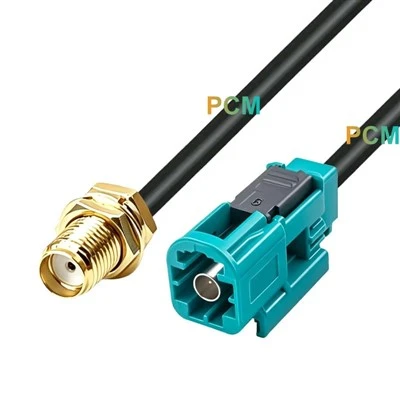
Rosenberger Fakra To SMA Cable
Rosenberger to SMA 50 Ohm coaxial cable with four connector configurations for automotive RF modules, antennas and test
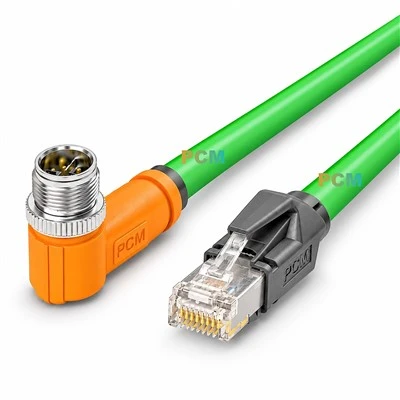
M12 X-Code To RJ45 Cable
M12 X-Code to RJ45 Cat6A cable for 10Gb industrial Ethernet, compatible with X-coded M12 devices, switches and