

一, The core challenge of M8 adapter in high-altitude environment
1. Attenuation of electrical safety and insulation performance
The decrease in air density in high-altitude areas leads to a decrease in dielectric strength, and the creepage distance and spatial distance between components inside traditional adapters need to increase with altitude. For example, if a regular power adapter has not passed high-altitude certification, there may be a risk of arc discharge or short circuit due to insulation failure when used at altitudes above 2000 meters. Although the M8 adapter does not directly involve high-voltage transmission, the insulation performance of its internal signal transmission lines still needs to meet the requirements for altitude correction in standards such as GB 4943.1-2011. Industry practice has shown that by increasing the thickness of insulation materials, using corona resistant coatings, or optimizing internal layout, M8 adapters can maintain stable performance at an altitude of 5000 meters.
2. Testing of mechanical structure and sealing performance
The large temperature difference between day and night and frequent sandstorms in high-altitude areas require higher requirements for the sealing of the adapter's housing. M8 adapters generally adopt IP67/IP68 protection level design, and their threaded locking structure (such as 8mm diameter M8 threads) can effectively prevent dust from entering. Taking TE Connectivity's on-site installable M8 connector as an example, its pre assembled waterproof screws can still maintain sealing during immersion testing, proving the reliability of the structure in dusty environments. In addition, some manufacturers use low-temperature resistant materials such as TPU and TPE to maintain dimensional stability of the adapter within a temperature range of -40 ℃ to 85 ℃, avoiding sealing failure caused by thermal expansion and contraction.
3. Balance between heat dissipation efficiency and power output
Thin air can reduce the convective heat dissipation efficiency, leading to an increase in the internal temperature of the adapter. For M8 Hybrid adapters that support data transmission (such as 1Gb/s) and power output (400W), high temperatures may cause signal attenuation or power derating. Industry solutions include optimizing the design of heat dissipation fins to increase surface area, using silicone gaskets with higher thermal conductivity, and dynamically adjusting loads through intelligent temperature control algorithms. For example, the Hangjia F20 safety fast charging has passed high-altitude certification, and its core logic lies in increasing the distance between components and strengthening the heat dissipation module to ensure full power output at an altitude of 5000 meters.
二, Potential impact of high UV environment on M8 adapter
1. Material aging and performance degradation
Ultraviolet (UV) radiation can accelerate the aging of non-metallic materials such as plastic shells and sealing rings, leading to brittleness, discoloration, or decreased sealing performance. The commonly used shell materials for M8 adapters include nickel plated brass, stainless steel, and engineering plastics (such as PA66+GF30). Among them, engineering plastics need to pass the UV aging test in UL 746C standard to ensure that they can maintain mechanical strength after long-term exposure. Some manufacturers add UV absorbers or use dual color injection molding technology to form a protective layer on the surface of the material, significantly extending its service life.
2. Reliability risks of optical components
If the M8 adapter integrates ultraviolet sterilization function (such as UVC LED), two conflicting points need to be resolved: first, the UVC band (200-280nm) has extremely strong penetration through plastics, which may damage the internal circuit; The second is that the adapter housing needs to maintain high light transmittance to ensure sterilization effectiveness. Industry solutions include: encapsulating UVC LEDs with quartz glass, adding nano titanium dioxide photocatalysts to plastics to achieve self-cleaning function, and directing UV light to the target area through structural optimization to avoid damage to internal components.
三, Industry Practice and Typical Cases
Extreme environmental applications in the field of industrial automation
In the railway signal system of the Qinghai Tibet Plateau, M8 adapters are used to connect track sensors and control cabinets. The core improvements include: using TPEE cables with stronger weather resistance, increasing the thickness of the shell to resist strong wind and sand impacts, and verifying the corrosion resistance in snowmelt environments through salt spray testing. Test data shows that the adapter has been running continuously for 3 years without any malfunctions at an altitude of 4500 meters and an average annual ultraviolet radiation twice that of ordinary areas.
2. Adaptive optimization of new energy equipment
Photovoltaic inverter manufacturers have made customized improvements to the M8 adapter for desert applications: the outer shell is coated with UV resistant material (such as fluorocarbon resin), the interior is filled with thermal conductive silicone grease to improve heat dissipation efficiency, and the sealing is verified through IEC 60068-2-5 dust test. A certain case shows that the improved adapter has a 72% lower failure rate than the ordinary model in the Dunhuang photovoltaic power station (at an altitude of 1100 meters, with an annual sunshine hours exceeding 3000 hours).
3. High altitude certification in the field of consumer electronics
The safety fast charging products launched by Hangjia, such as F20 and G45, have passed the 5000 meter altitude certification. Their core designs include increasing the component spacing to meet the creepage distance requirements, using high-temperature resistant electrolytic capacitors, and passing the altitude correction clause in the 3C mandatory certification. Tests have shown that when charging the iPhone 14 in Lhasa (at an altitude of 3650 meters), the power output of the product remains stable at 18W and the temperature rise is controlled within 5 ℃.
四, Future Technology Trends and Suggestions
Material Innovation: Developing composite materials that combine high strength, UV resistance, and self-lubricating properties to replace traditional metal shells and reduce weight and cost.
Intelligent monitoring: integrated temperature and humidity, ultraviolet intensity sensors, real-time adjustment of working parameters through edge computing, and extension of service life.
Standardization certification: Promote the establishment of testing standards for high-altitude and strong ultraviolet environments in the industry (such as IEC 60529 supplementary clauses), and standardize product claims.
Modular design: Decompose the adapter into a sealing unit, a heat dissipation unit, and an interface unit for quick customization for different environments.
Does the M8 adapter support use in high-altitude or high ultraviolet environments?
Popular Products

HFM Mini FAKRA Cable
Single channel HFM Mini-FAKRA coaxial cable with female-female, male-male and male-female options for ADAS cameras and

IP67 Waterproof HFM FAKRA Cable
IP67 waterproof HFM to FAKRA cable with 4 connector configurations for automotive cameras, ADAS sensors and RF systems.

Hirose ST Series Connector
Hirose ST Series connector cable assemblies featuring ST40X-10S-CV, ST40X-18S-CV, ST40X-24S-CV and ST40X-36S-CV

GMSL2 FAKRA Z Code Camera Cable
3 m GMSL2 cable with FAKRA Z Code female connectors for camera-to-host, ECU, ADAS and machine vision connections.
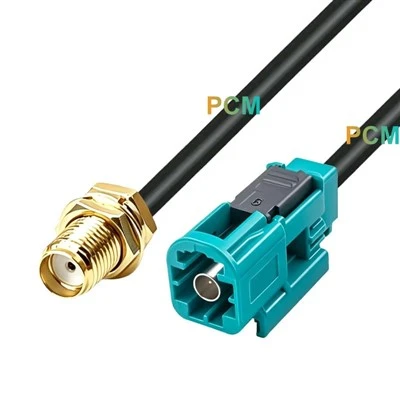
Rosenberger Fakra To SMA Cable
Rosenberger to SMA 50 Ohm coaxial cable with four connector configurations for automotive RF modules, antennas and test
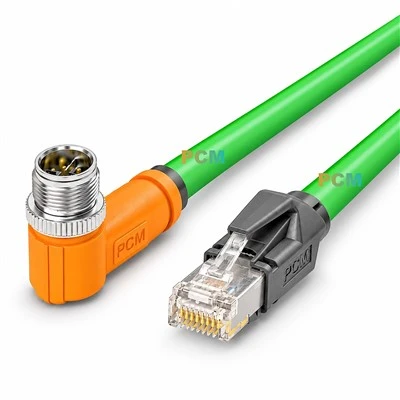
M12 X-Code To RJ45 Cable
M12 X-Code to RJ45 Cat6A cable for 10Gb industrial Ethernet, compatible with X-coded M12 devices, switches and