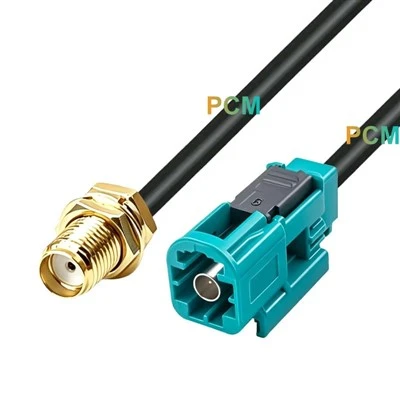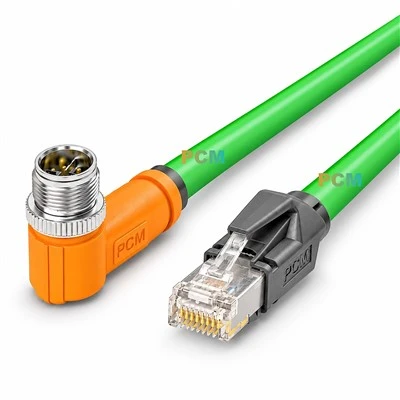
A feedthrough connector is a specialized connector used to transfer signals, power, gas, or liquid from one space to another. Its key feature is its ability to pass through panels, equipment housings, or sealed enclosures while providing standardized connections on both sides, ensuring safe, reliable, and easy-to-maintain connections between the inside and outside. This connector plays a vital role in many systems requiring sealing, isolation, or modular design.
A feedthrough connector is typically mounted on the panel of a device housing or control box, with a central thread or flange for secure attachment. Both ends of the connector are pre-installed with standard connectors, such as RJ45, USB, BNC, SMA, DB9, or M12. Users can directly plug and unplug cables without having to run them from one space to another, thus improving the overall sealing and reliability of the system.

In practical applications, feedthrough connectors are widely used in industrial automation, communications, medical equipment, aerospace, laboratory vacuum equipment, and other fields. For example, in automation control cabinets, RJ45 or USB feedthrough connectors can be used to introduce external control signals into the internal PLC control system. In radio frequency equipment, SMA or BNC feedthrough connectors ensure interference-free signal transmission within shielded cavities. In vacuum laboratory equipment, specially designed high-vacuum electrical feedthrough connectors are required to maintain system sealing.
Overall, feedthrough connectors provide a stable, secure, and efficient method for transmitting signals or energy, making them particularly suitable for scenarios requiring sealing, protection, or modularity. They not only improve equipment maintainability but also simplify system design, making them an indispensable connector component in modern engineering systems.