The FTDI USB RS485 to XLR Cable is mainly used in DMX512 stage lighting system. It can accurately convert USB signals into RS485 differential signals and combine them with lighting control software to stably output control frames that comply with the DMX512 protocol, thereby achieving precise control of stage lighting. The following is a detailed description of how it enables protocol conversion and works in the DMX lighting system:

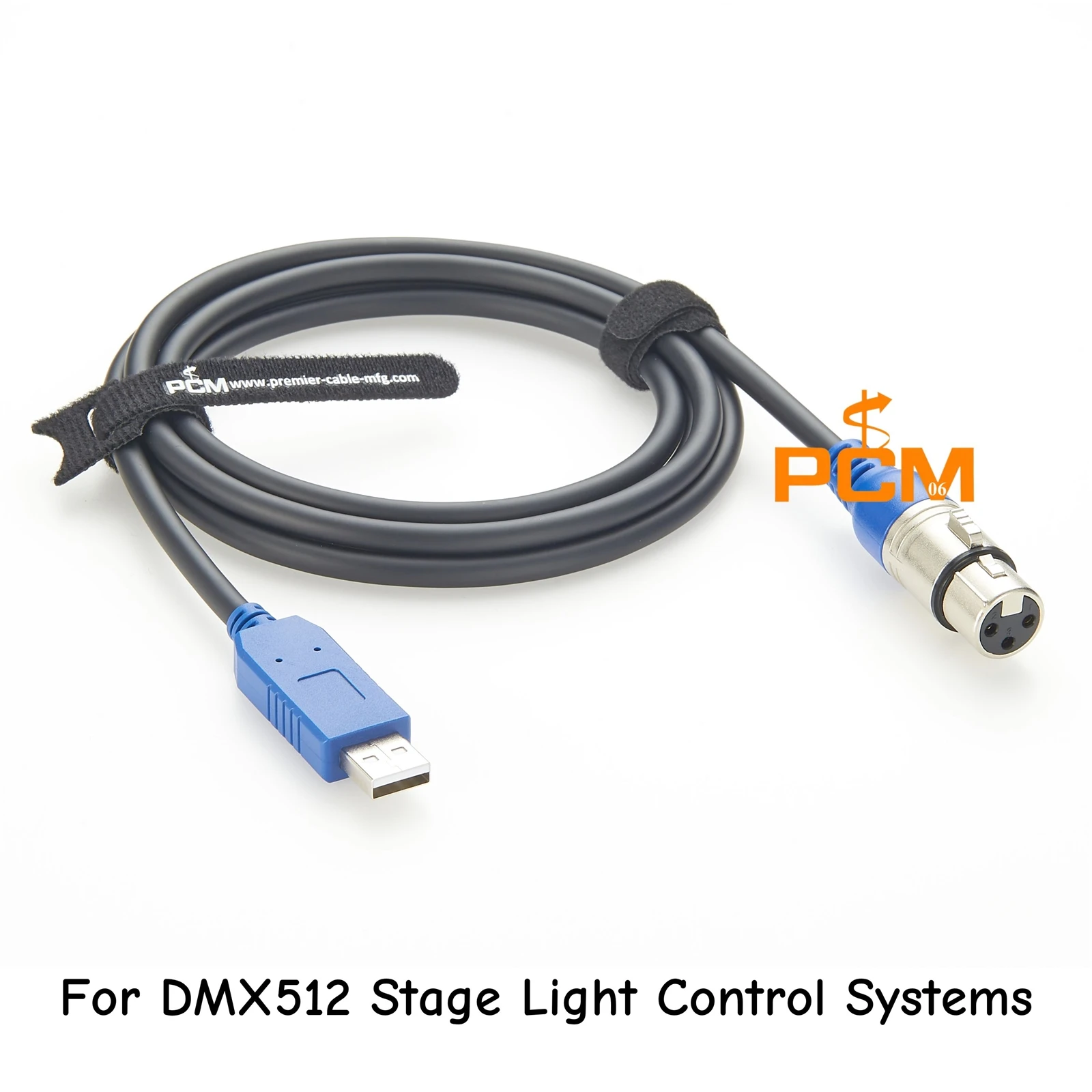
1. USB Input : The user sends lighting control commands from a PC using stage lighting software such as QLC+, Freestyler, or Lightjams. These commands include setting light colors, controlling strobe effects, dimming transitions, and operating moving head functions like pan and tilt.
2. FT232RNL Processing : The FTDI FT232RNL chip receives the USB data and converts it into UART (serial communication) format, which is then forwarded to the RS485 driver.
3. RS485 Driver : The MAX485 chip takes the UART data and converts it into RS485 differential signals, which are suitable for long-distance transmission and provide strong noise immunity-ideal for stage environments.
4. XLR Output Interface : The converted RS485 differential signal is output via a 3-pin XLR connector, where Pin 1 is Ground (GND), Pin 2 is Data−, and Pin 3 is Data+. The signal is transmitted through this interface to the DMX512 lighting network, enabling precise control and real-time synchronization of multiple lighting fixtures.
5. Fixture Execution : After receiving the RS485 differential signal, the lighting fixture analyzes it according to the DMX512 protocol content and performs corresponding actions according to the specified channel, such as dimming, color change, rotation, etc., to form a synchronous and unified stage lighting effect.


Phone Number