With the rapid advancement of industrial Ethernet connectivity, selecting the appropriate interface is critical to ensuring system reliability and optimal performance. As the demand for compact, high-speed communication continues to rise, the ix Industrial connector series-particularly the A-Key and B-Key variants-has become increasingly important in space-saving and high-speed communication systems. However, what exactly distinguishes the A Key from the B Key?
Overview of ix A Key and ix B Key
Both ix A Key and ix B Key belong to the ix Industrial connector family, designed by Hirose and Harting to meet the needs of next-generation Ethernet and fieldbus systems. Compared to traditional RJ45 connectors, ix connectors are 70% smaller, provide better vibration resistance, and support up to Cat6A (10Gbps) transmission in a compact design. And ix connectors are IEC 61076-3-124 compliant and are suitable for Machine Vision and PoE applications.
Different Keying Mechanism
The main difference between A-Key and B-Key lies in their keying machanism, effectively avoiding mismating and ensuring proper interface assignment in industrial ethernt applications, such as Industrial switches, Machine Vision, Factory automation and robotics, Power Over Ethernet (PoE), Medical devices.

ix A-Key: Intended for CAT6A Ethernet Use
PROFINET
Profibus
EtherNet/IP
EtherCAT
1000BASE-T 10GBASE-T
ix B-Key: Used for Non-Ethernet Use
In contrast, the ix B-Key is intended for non-Ethernet use such as:
Signaling
Serial Communications
Industrial Bus Communications

Product Display
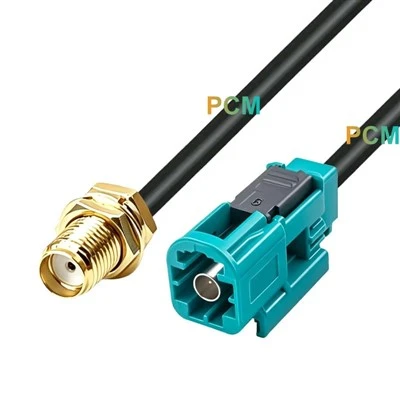
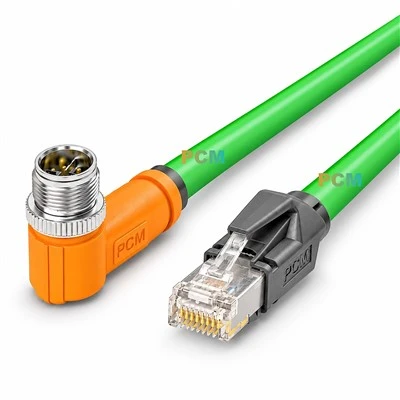
To meet diverse industrial connectivity requirements, our ix Industrial cable supports a variety of interface combinations: