RS232, RS485, and RS422 are commonly used serial communication standards, which differ in electrical characteristics, transmission distance, data rate, etc.

RS232

Electrical characteristics: single-ended signal (non-differential signal).
Signal level: logic high (-15V to -3V), logic low (+3V to +15V)

Transmission distance: The longest transmission distance is about 15 meters.
Transmission rate: Usually 20 kbps, but it can be higher in short distances.

Connector: The commonly used connector is DB9 (9-pin) or DB25 (25-pin) interface.
Topology: Point-to-point communication, usually only two devices are connected.
RS485
Electrical characteristics: differential signal, strong anti-interference ability.
Signal level: -7V to +12V.
Transmission distance: The longest transmission distance is about 1200 meters


Transmission rate: up to 10 Mbps, but the rate is inversely proportional to the transmission distance.
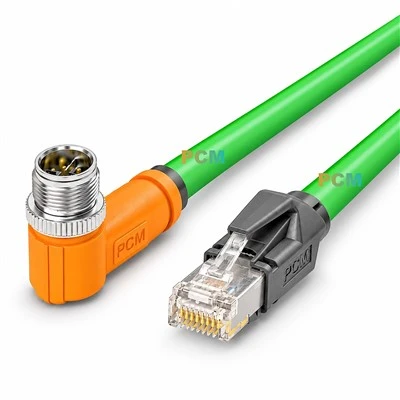
Connector: There is no fixed connector standard, usually screw terminals or RJ45, etc. are used.
Topology: Multipoint communication, up to 32 drivers and 32 receivers can be connected.
RS422

Electrical characteristics: differential signal, strong anti-interference ability.
Signal level: -7V to +7V.
Transmission distance: The longest transmission distance is about 1200 meters
Transmission rate: up to 10 Mbps, but the rate is inversely proportional to the transmission distance.
Connector: There is no fixed connector standard, usually screw terminals or RJ45, etc. are used.
Topology: Point-to-multipoint communication, one driver can connect up to 10 receivers.

Summary of the main differences
| Connection | Voltage level | Maximum transmission distance | Maximum transfer speed | Noise immunity | |
|
RS232 |
Point-to-point
|
-15V to +15V | 50 feet |
19.2 kbps to 115.2 kbps |
Lower |
|
RS485 |
Multipoint | Differential signal | 4000 feet |
10 Mbps |
High |
|
RS422 |
Point-to-multipoint | Differential signal | 4000 feet |
10 Mbps |
High |
Summary
RS232 is suitable for short-distance, low-rate point-to-point communication, suitable for short-distance, low-rate communication, such as communication between computers and modems.
RS485 is suitable for long-distance, multi-point communication, has strong anti-interference ability, and is suitable for industrial control and automation systems, building automation, and data acquisition systems.
RS422 is suitable for long-distance, point-to-multipoint communication, has strong anti-interference ability, and is suitable for systems that require higher transmission rates and reliability, such as industrial automation, aerospace, and military systems.