

1, The transmission rate is relatively low
DeviceNet is based on CAN bus technology, and its transmission rate is relatively low compared to modern high-speed communication networks. Although DeviceNet's transmission rate can reach 125Kbps to 500Kbps, which is sufficient for many industrial automation applications, it may not be able to handle scenarios that require high-speed data transmission, such as large-scale data acquisition and high-definition video transmission. The lower transmission rate limits the use of DeviceNet in certain high-end applications and also limits its potential to further expand its application areas.
2, High requirements for network stability
The stability and reliability of DeviceNet networks are crucial for the normal operation of industrial automation systems. However, the DeviceNet network has a low tolerance for faulty nodes, and once a faulty node appears in the network, it may have a significant impact on the stability and reliability of the entire network. This requires system designers to fully consider the redundancy and fault tolerance design of the DeviceNet network when deploying it, to ensure that the entire network can still maintain stable operation in the event of partial node failures. This high demand increases the complexity and cost of system design.
3, The standardization level needs to be improved
Although DeviceNet has become one of the international standards of IEC62026 and has been widely used worldwide, its standardization level still needs to be improved. There may be slight differences among different manufacturers when implementing the DeviceNet protocol, which may lead to certain obstacles in the interconnection and interoperability between devices of different brands. In addition, with the continuous development of industrial automation technology, new communication protocols and standards continue to emerge, and DeviceNet needs to constantly follow up and update to maintain its leading position in the industry. However, this also puts higher demands on the standardization work of DeviceNet.
4, Scalability is limited
The maximum number of nodes in a DeviceNet network is 64, which is sufficient in many industrial automation applications. However, in some large or complex industrial automation systems, it may be necessary to connect more equipment. At this point, the scalability of the DeviceNet network may be limited. Although network scale can be expanded by adding repeaters or bridges, this will increase the complexity and cost of the system. In addition, with the continuous development of IoT technology, more and more devices need to be connected to industrial automation networks, which puts higher demands on the scalability of DeviceNet.

What are the drawbacks of DeviceNet?
Popular Products

HFM Mini FAKRA Cable
Single channel HFM Mini-FAKRA coaxial cable with female-female, male-male and male-female options for ADAS cameras and

IP67 Waterproof HFM FAKRA Cable
IP67 waterproof HFM to FAKRA cable with 4 connector configurations for automotive cameras, ADAS sensors and RF systems.

Hirose ST Series Connector
Hirose ST Series connector cable assemblies featuring ST40X-10S-CV, ST40X-18S-CV, ST40X-24S-CV and ST40X-36S-CV

GMSL2 FAKRA Z Code Camera Cable
3 m GMSL2 cable with FAKRA Z Code female connectors for camera-to-host, ECU, ADAS and machine vision connections.
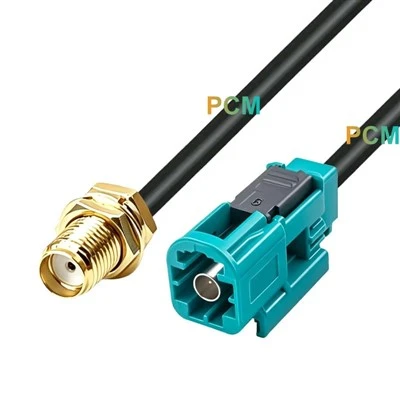
Rosenberger Fakra To SMA Cable
Rosenberger to SMA 50 Ohm coaxial cable with four connector configurations for automotive RF modules, antennas and test
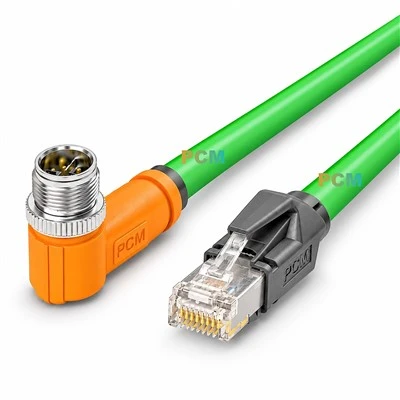
M12 X-Code To RJ45 Cable
M12 X-Code to RJ45 Cat6A cable for 10Gb industrial Ethernet, compatible with X-coded M12 devices, switches and