

1, Structural characteristics and classification
The M8 cable adapter is known for its compact structure and excellent connection performance. Structurally, it usually consists of two parts: a plug and a socket, which are tightly fitted through threaded connections. The plug part is generally pin or hole type, used for connecting with the corresponding interface of cables or equipment; The socket part is designed to match the plug, ensuring the stability of the connection and the reliability of electrical contact.
According to different application requirements, M8 cable adapters can be divided into various types. For example, according to the number of outlet ports, it can be divided into single outlet ports and double outlet ports; According to the direction of the outlet, it can be divided into straight head and elbow; According to the protection level, it can be divided into IP67 and IP68 levels, with the latter having higher waterproof and dustproof performance. In addition, there is a distinction between M8 cable adapters with and without cables. adapters with cables are typically equipped with cables of different lengths such as 1 meter, 2 meters, 5 meters, and 10 meters to meet the needs of different application scenarios.
2, Electrical performance specifications
The electrical performance specifications of the M8 cable adapter are one of its core indicators, directly related to the stability of the connection and the quality of signal transmission. The electrical performance specifications mainly include rated voltage, rated current, contact resistance, and insulation resistance.
Rated voltage: The rated voltage of M8 cable adapters is usually 30V, 60V or higher, depending on application requirements and product design. The selection of rated voltage should ensure that the adapter will not be damaged or cause safety accidents due to high voltage under normal working conditions.
Rated current: Rated current refers to the maximum current value that the adapter can withstand under continuous working conditions. The rated current range of M8 cable adapters is wide, ranging from a few amperes to tens of amperes, depending on the structure and material of the adapter. The selection of rated current should fully consider the current requirements in practical applications to ensure the stability and safety of the connection.
Contact resistance: Contact resistance is an important indicator for measuring the electrical contact performance of an adapter. The contact resistance of M8 cable adapters is usually low to ensure efficient and accurate signal transmission. The size of contact resistance is influenced by factors such as the tightness of the plug and socket fit, the quality of the contact material, and the surface treatment process.
Insulation resistance: Insulation resistance refers to the resistance value that the insulation part of an adapter can withstand under a specified voltage. The insulation resistance of M8 cable adapters is usually high to ensure good electrical insulation performance even in humid or polluted environments. The magnitude of insulation resistance is related to factors such as the type, thickness, and processing method of insulation material.
3, Environmental adaptability specifications
As a connecting device, the environmental adaptability specifications of M8 cable adapter are equally important. The environmental adaptability specifications mainly include temperature range, waterproof and dustproof level, and corrosion resistance.
Temperature range: The working temperature range of M8 cable adapters is usually wide to adapt to temperature changes in different application scenarios. For example, some high-performance M8 cable adapters can operate normally within the extreme temperature range of -40 ℃ to+85 ℃, ensuring the stability and reliability of the connection.
Waterproof and dustproof rating: Waterproof and dustproof rating is an important indicator for measuring the protective performance of adapters. M8 cable adapters typically use IP rating to indicate their waterproof and dustproof performance. For example, IP67 rated adapters can withstand short-term water immersion and prevent dust from entering; The IP68 rated adapter has higher waterproof performance, can withstand long-term water immersion and more stringent dust prevention requirements.
Corrosion resistance: In some highly corrosive environments, the corrosion resistance of M8 cable adapters is equally important. The quality of corrosion resistance mainly depends on the material selection and surface treatment process of the adapter. For example, adapters made of corrosion-resistant materials such as stainless steel or nickel plated copper, as well as adapters that have undergone special surface treatment processes, typically have better corrosion resistance.
4, Other standard specifications
In addition to the structural characteristics, electrical performance, and environmental adaptability specifications mentioned above, the M8 cable adapter also has some other important standard specifications, such as connection form, material selection, color identification, etc.
Connection form: The connection form of M8 cable adapter is usually threaded connection to ensure the stability and sealing of the connection. Threaded connections have the advantages of simple structure, easy operation and maintenance, and are widely used in various industrial fields.
Material selection: The material selection of M8 cable adapter has a significant impact on its performance and lifespan. The plug and socket parts are usually made of materials with good conductivity, such as copper plated with gold or silver, to ensure the reliability and stability of electrical contact; The outer shell is made of high-strength, corrosion-resistant materials such as nickel plated brass or stainless steel to improve the durability and protective performance of the adapter.
Color identification: In order to facilitate identification and management, M8 cable adapters usually use color identification to distinguish different specifications and uses. For example, red may represent high voltage levels or adapters for special purposes; Blue or green may represent low voltage levels or universal adapters. The specific regulations for color identification may vary depending on different manufacturers or application requirements.

What are the standard specifications for M8 cable adapters?
Popular Products

HFM Mini FAKRA Cable
Single channel HFM Mini-FAKRA coaxial cable with female-female, male-male and male-female options for ADAS cameras and

IP67 Waterproof HFM FAKRA Cable
IP67 waterproof HFM to FAKRA cable with 4 connector configurations for automotive cameras, ADAS sensors and RF systems.

Hirose ST Series Connector
Hirose ST Series connector cable assemblies featuring ST40X-10S-CV, ST40X-18S-CV, ST40X-24S-CV and ST40X-36S-CV

GMSL2 FAKRA Z Code Camera Cable
3 m GMSL2 cable with FAKRA Z Code female connectors for camera-to-host, ECU, ADAS and machine vision connections.
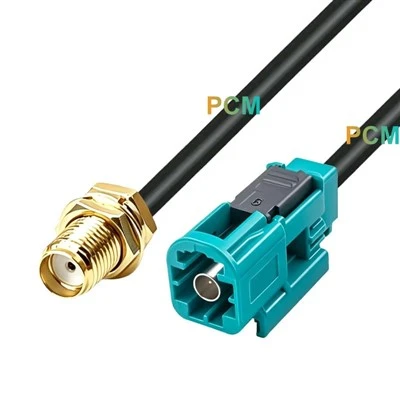
Rosenberger Fakra To SMA Cable
Rosenberger to SMA 50 Ohm coaxial cable with four connector configurations for automotive RF modules, antennas and test
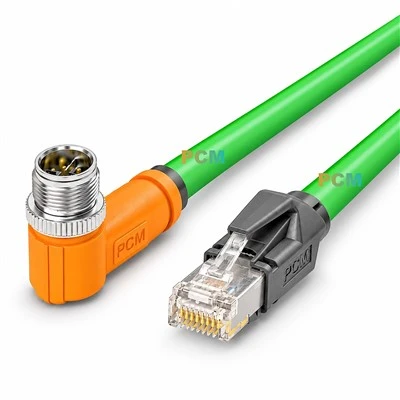
M12 X-Code To RJ45 Cable
M12 X-Code to RJ45 Cat6A cable for 10Gb industrial Ethernet, compatible with X-coded M12 devices, switches and