The Vision Inspection System is a device or system that uses image acquisition and processing technology to automatically inspect products. It is usually composed of industrial cameras, lenses, light sources, image processing software, and control systems. It can capture images in real time during the production process and determine whether the product is qualified.
In the visual inspection system, the industrial camera is responsible for capturing the image of the object being inspected, and the lens is used to focus and magnify the image; the role of the light source is to provide stable and appropriate lighting conditions to ensure clear images; the image processing software is the core part of the system, which analyzes and compares images through algorithms, such as identifying appearance defects, measuring dimensional deviations, detecting colors, verifying characters, etc.; and finally the control system sends a signal to realize alarm, remove defective products, or control the actions of other equipment.

Visual inspection is widely used in industries such as electronic manufacturing, automotive parts, food packaging, medicine, and plastic products. For example, in the electronics industry, it can be used for circuit board solder joint detection; in the food packaging industry, it is used for label identification and bottle cap missing detection; in the pharmaceutical industry, it can check whether the drug is missing or the packaging is complete.
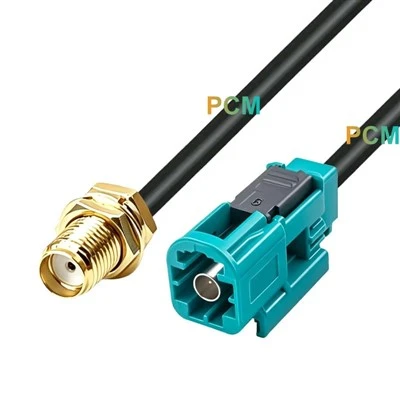
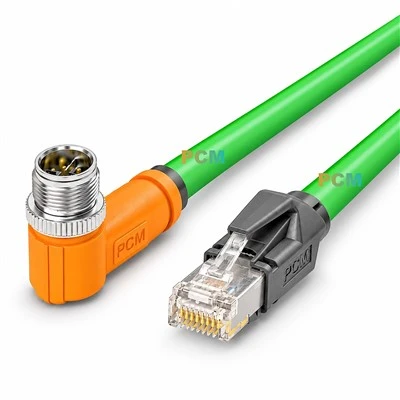
In these applications, to ensure stable connection and efficient data transmission between devices, visual inspection systems usually need to be equipped with professional industrial cables and connectors. For example, GigE cameras use Cat6/Cat6a shielded Ethernet cables with RJ45 interfaces to support high-speed image transmission over Gigabit networks; USB 3.0 or USB 3.1 cables are commonly used for high-speed USB industrial cameras, with interface types including USB-A, Micro-B or Type-C; higher-end systems may use Camera Link cables (MDR26/SDR26) or CoaXPress cables (BNC or DIN 1.0/2.3) to meet high-resolution and high-speed frame rate requirements.

In addition, the light source, sensor or I/O module in the system often uses M8 or M12 circular connectors for power supply and signal transmission, of which M12 X-coded connectors can support 10Gbps industrial Ethernet connections, while M12 A-coded connectors are used for power or control signals. Common control cables also include D-sub interface (such as DB9, DB15) cables for trigger signals and status feedback.
Compared with manual inspection, the visual inspection system has the advantages of fast speed, high accuracy, strong stability, and 24-hour uninterrupted operation, which greatly improves production efficiency and product quality consistency. At the same time, it can also record inspection data for easy traceability and statistical analysis, helping enterprises to achieve intelligent manufacturing and quality control automation.