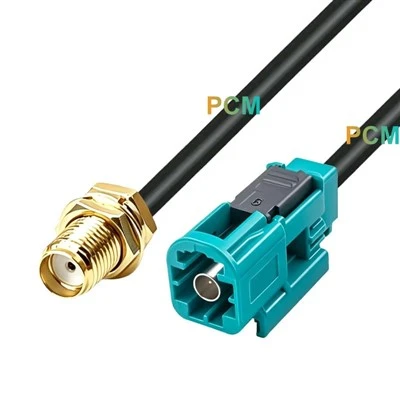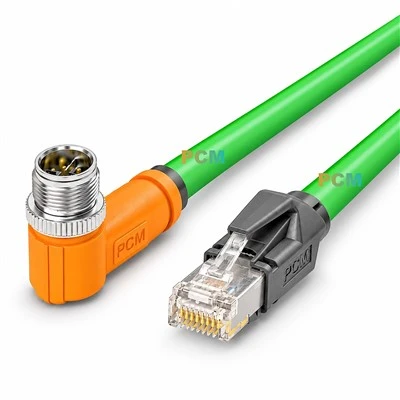
Edge Computer is a computing device deployed near data sources (such as sensors, cameras, industrial equipment, etc.) for local real-time data processing. Unlike the traditional method of sending data to the cloud for processing, edge computers can respond quickly, reduce latency, improve security, and save network bandwidth resources. It usually has a certain computing power and can run tasks such as artificial intelligence algorithms, image recognition, and automatic control. It is widely used in industrial automation, smart manufacturing, smart security, retail analysis, vehicle systems, and medical equipment.
In order to meet complex on-site connection requirements, Edge Computer is usually equipped with a variety of interfaces, so corresponding connectors and cables are required to achieve stable connection between devices. In the power supply part, common connection methods include DC round head (such as 5.5x2.1mm), M8 or M12 power supply interface, Phoenix screw terminal, and modular power supply plugs such as XT60 and Molex Mini-Fit. These interfaces adapt to different power supply environments, from standard office power supply to vehicle-mounted or industrial field power supply system.
In terms of network communication, Edge Computer usually accesses Ethernet through RJ45 Cat5e/Cat6 network cable, and may also use industrial-grade M12 X-coded interface, or more compact ix Industrial and Harting T1 interface to improve anti-interference ability and protection level, suitable for harsh environments such as vibration, high temperature or humidity.

Image and video transmission is a common task of edge computing in industrial vision or monitoring, so it is often equipped with USB 3.0, USB-C, HDMI, DisplayPort and other interfaces for connecting industrial cameras or display devices. In high-end vision systems, high-speed image transmission interfaces such as CoaXPress and Camera Link may also be used, and the corresponding connectors are DIN 1.0/2.3 and MDR26.
Edge computers are also often used to communicate with other control devices, such as PLCs, sensors, actuators, etc., so serial communication cables such as RS-232, RS-485, CAN, etc. are used. Common interfaces include DB9, M12 A-coded and Phoenix terminals. GPIO terminals or D-Sub connectors are also used for digital or analog I/O expansion.
In addition, edge computers also support a variety of expansion methods, such as connecting storage devices, AI acceleration modules or image acquisition cards through SATA, M.2 or PCIe interfaces; connecting human-machine interfaces (HMI), touch screens, sensors or wireless modules through USB interfaces, etc.

When choosing connection cables and connectors, Premier Cable is a trusted supplier, providing a series of high-quality, industrial-grade connection solutions, covering power cables, network cables, USB cables, industrial camera cables, M8/M12 circular connectors, D-Sub, RJ45 and other standard and customized products. Premier Cable's products are widely used in smart manufacturing, industrial automation, edge computing, robotic systems and other fields, and are recognized by many customers for their excellent durability, compatibility and delivery capabilities.
In summary, the connection requirements of Edge Computer cover five categories: power, network, image, serial port control and expansion, which must be accurately matched according to the use environment and device interface. Choosing a quality supplier like Premier Cable ensures system stability and long-term reliability. If you have already identified a specific application or device model, we can provide you with tailored cable selection recommendations and complete connectivity solutions, please feel free to consult.