

1, Cost composition of M8 adapter
The cost composition of the M8 adapter mainly includes raw material costs, manufacturing costs, research and development costs, sales costs, and taxes.
Raw material cost: The raw materials for M8 adapter mainly include metal shell, pins, sockets, sealing materials, etc. The price fluctuations of these raw materials directly affect the cost of M8 adapters. For example, the rise in metal prices will lead to an increase in raw material costs, thereby pushing up the cost of M8 adapters.
Manufacturing cost: Manufacturing cost includes equipment depreciation, labor costs, energy consumption, etc. during the production process. Efficient production processes and management can reduce manufacturing costs and improve production efficiency. Meanwhile, advanced production equipment and technology also contribute to improving product quality, reducing defect rates, and indirectly lowering costs.
R&D cost: The R&D cost of M8 adapter includes expenses for product design, mold development, testing and verification. With the intensification of market competition, enterprises need to constantly innovate and improve product performance to meet market demand. This requires companies to invest more resources in research and development, thereby increasing research and development costs.
Sales cost: Sales cost includes expenses for market promotion, sales channel construction, after-sales service, etc. A good marketing strategy and channel layout can increase product awareness and promote sales. High quality after-sales service can enhance customer trust and improve customer satisfaction. All of these require companies to invest a certain amount of cost.
Taxes and Fees: Taxes and fees are one of the costs that enterprises must bear. The different tax policies in different regions and countries will also have a certain impact on the cost of M8 adapters.
2, Factors affecting the cost of M8 adapter
The cost of M8 adapters is influenced by various factors, including raw material prices, production processes, production scale, market demand, etc.
Raw material prices: Raw material prices are one of the most direct factors affecting the cost of M8 adapters. The price fluctuations of raw materials such as metal shells, pins, and sockets will directly affect the cost of M8 adapters. For example, when metal prices rise, the cost of M8 adapters will also increase accordingly.
Production process: The complexity and automation of the production process have a significant impact on the cost of M8 adapters. Advanced production processes can improve production efficiency, reduce defect rates, and thus lower costs. Meanwhile, the introduction of automated production lines can also reduce labor costs and lower manufacturing costs.
Production scale: The size of the production scale also has a significant impact on the cost of M8 adapters. Large scale production can reduce costs and improve production efficiency through economies of scale. Meanwhile, large-scale production can also reduce raw material procurement costs, further lowering costs.
Market demand: Changes in market demand will also have an impact on the cost of M8 adapters. When market demand is strong, companies can increase product prices to increase profit margins. When market demand is sluggish, companies may need to stimulate sales by lowering prices, thereby compressing profit margins.
3, Cost optimization strategy for M8 adapter
In order to reduce the cost of M8 adapters and improve market competitiveness, enterprises can adopt the following optimization strategies:
Raw material cost control: By establishing long-term and stable cooperative relationships with suppliers, strive for more favorable procurement prices; At the same time, pay attention to the dynamics of the raw material market and flexibly adjust procurement strategies to reduce raw material costs.
Production process optimization: introducing advanced production technology and equipment to improve production efficiency; At the same time, continuous improvement and optimization of production processes are carried out to reduce the rate of defective products and thus lower costs.
Production scale expansion: By expanding production scale, achieving economies of scale and reducing costs. Enterprises can consider increasing production lines, expanding production facilities, and other methods to expand their production scale.
Market demand forecasting: Strengthen market research and analysis, accurately predict changes in market demand; At the same time, flexibly adjust production plans and sales strategies according to changes in market demand to increase profit margins.
What is the cost of the M8 adapter?
Popular Products

HFM Mini FAKRA Cable
Single channel HFM Mini-FAKRA coaxial cable with female-female, male-male and male-female options for ADAS cameras and

IP67 Waterproof HFM FAKRA Cable
IP67 waterproof HFM to FAKRA cable with 4 connector configurations for automotive cameras, ADAS sensors and RF systems.

Hirose ST Series Connector
Hirose ST Series connector cable assemblies featuring ST40X-10S-CV, ST40X-18S-CV, ST40X-24S-CV and ST40X-36S-CV

GMSL2 FAKRA Z Code Camera Cable
3 m GMSL2 cable with FAKRA Z Code female connectors for camera-to-host, ECU, ADAS and machine vision connections.
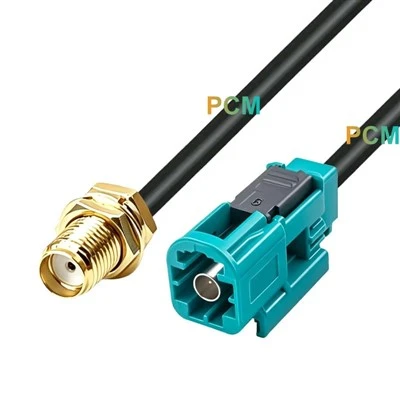
Rosenberger Fakra To SMA Cable
Rosenberger to SMA 50 Ohm coaxial cable with four connector configurations for automotive RF modules, antennas and test
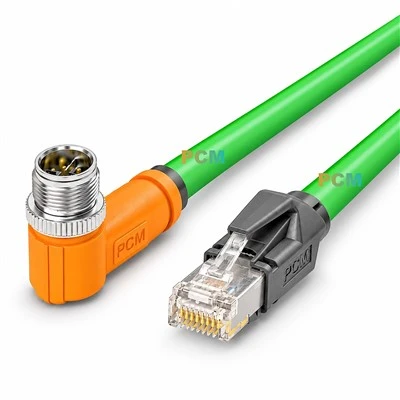
M12 X-Code To RJ45 Cable
M12 X-Code to RJ45 Cat6A cable for 10Gb industrial Ethernet, compatible with X-coded M12 devices, switches and