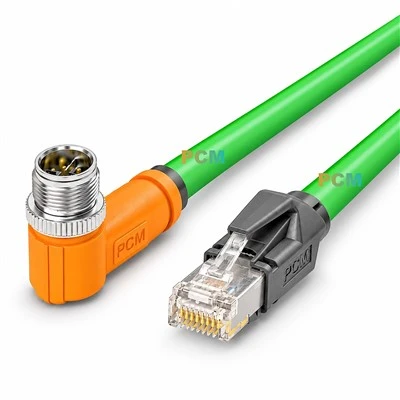
The association between the M16 AISG (Antenna Interface Standards Group) connector and base station antennas is mainly reflected in its use for connecting base station equipment and antennas to control signal transmission. Specifically, M16 AISG connectors are often used to transmit control signals, which are used to remotely manage and monitor parameters such as the direction, tilt angle, and gain setting of base station antennas.
AISG daisy chain cable is used to connect various devices in wireless communication base stations, especially for connecting the antenna control unit (ACU) and the antenna to transmit control signals.


Specifically, the main uses of AISG daisy chain cable include the following:
1. Transmitting control signals: In wireless communication base stations, the ACU is responsible for managing and controlling the antenna's pointing, tilt angle, electrical tilt, antenna gain and other parameters. AISG daisy chain cable transmits control signals defined by the AISG protocol, allowing the ACU to remotely control and adjust multiple antennas.
2. Cascade connection: Multiple antennas are usually connected in cascade, so that control signals can be transmitted on the same AISG daisy chain cable. This cascade connection allows multiple antennas in different locations or different frequency bands to be controlled through the same cable, simplifying wiring and management.


3. Management and Monitoring: AISG daisy chain cable allows operators or network administrators to centrally manage and monitor the entire base station antenna system. Through this cable connection, they can remotely adjust the antenna parameters to optimize network performance and coverage.
In short, AISG daisy chain cable is a cable specifically used to transmit control signals. It plays an important role in connection, control and management in the antenna system of wireless communication base stations, helping to optimize and maintain the operating status of wireless networks