

When connecting encoder cables, there are several key precautions to keep in mind to ensure the stability and reliability of the connection:
Clearly define cable types and specifications:
Before connecting, ensure that the cable type, specifications, and connectors used are compatible with the encoder and control system.
Pay attention to the electrical and mechanical properties of cables, such as protection level, heat resistance, etc., to ensure that they can adapt to the requirements of the working environment.
Carefully read the instruction manual:
Carefully review the wiring diagram, manual, or user manual of the encoder and control system to understand the correct wiring sequence and connection method.
Note that encoder cables from different manufacturers or models may have different color definitions and wiring methods, and do not connect based solely on color.
Turn off power:
Before making cable connections, ensure that the power supply to all relevant equipment is turned off to avoid damage or safety accidents caused by electrical contact.
Correct cable connection:
According to the wiring diagram or instructions, correctly connect each wire of the cable to ensure that there are no errors or omissions.
If using terminal connections, ensure that the terminal connections are secure and there is no looseness or poor contact.
Pay attention to cable layout:
When wiring, avoid excessive bending, stretching, or compression of the cable to prevent damage to the internal conductors or insulation layer of the cable.
Encoder cables should be kept away from equipment such as motors, transformers, frequency converters, etc. that may generate strong magnetic fields or strong electromagnetic interference to reduce interference with signal transmission.
Grounding treatment:
If the encoder cable has a grounding wire, ensure that the grounding wire is reliably grounded to improve the electrical safety and stability of the system.
Testing and Inspection:
After the connection is completed, conduct necessary tests and inspections to ensure that the cable connection is correct, stable, and can meet the working requirements of the system.
If any abnormalities or problems are found, they should be promptly investigated and resolved to avoid further damage to the system.
Keep clean and dry:
Ensure that the cable connections are kept clean and dry to prevent dust, moisture, or other pollutants from entering the interior of the connector, affecting signal transmission or causing electrical faults.
In short, when connecting the encoder cable, careful and careful operation is required to ensure that each step is correct and error free, in order to improve the stability and reliability of the system.
What Are The Precautions For Connecting Encoder Cables
Popular Products

HFM Mini FAKRA Cable
Single channel HFM Mini-FAKRA coaxial cable with female-female, male-male and male-female options for ADAS cameras and

IP67 Waterproof HFM FAKRA Cable
IP67 waterproof HFM to FAKRA cable with 4 connector configurations for automotive cameras, ADAS sensors and RF systems.

Hirose ST Series Connector
Hirose ST Series connector cable assemblies featuring ST40X-10S-CV, ST40X-18S-CV, ST40X-24S-CV and ST40X-36S-CV

GMSL2 FAKRA Z Code Camera Cable
3 m GMSL2 cable with FAKRA Z Code female connectors for camera-to-host, ECU, ADAS and machine vision connections.
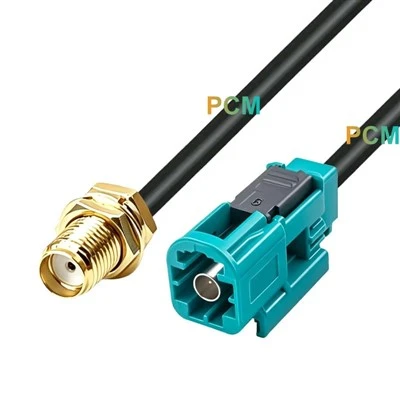
Rosenberger Fakra To SMA Cable
Rosenberger to SMA 50 Ohm coaxial cable with four connector configurations for automotive RF modules, antennas and test
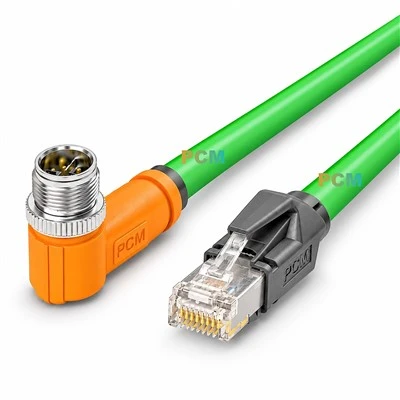
M12 X-Code To RJ45 Cable
M12 X-Code to RJ45 Cat6A cable for 10Gb industrial Ethernet, compatible with X-coded M12 devices, switches and