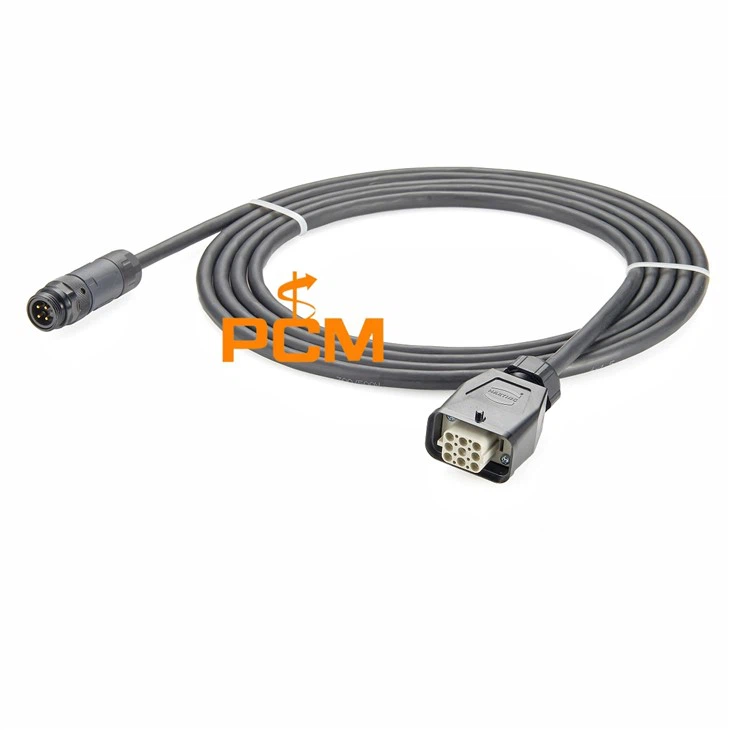

Can an M23 Encoder Cable be Used in Military Equipment?
As a supplier of M23 encoder cables, I often receive inquiries from various industries about the suitability of our products for their specific applications. One question that has come up frequently is whether an M23 encoder cable can be used in military equipment. In this blog post, I will explore this topic in detail, considering the technical requirements of military applications and the features of M23 encoder cables.
Technical Requirements of Military Equipment
Military equipment operates in some of the most demanding environments imaginable. It must withstand extreme temperatures, high levels of vibration, shock, and exposure to dust, water, and chemicals. Additionally, military systems require high - reliability communication and data transmission to ensure the proper functioning of critical components such as sensors, actuators, and control systems.
- Environmental Resistance: Military equipment may be deployed in deserts, where temperatures can soar to over 50°C, or in arctic regions, where temperatures can drop below - 40°C. The cables used in these systems must be able to maintain their electrical properties and mechanical integrity under such extreme conditions.
- Vibration and Shock Resistance: Military vehicles, aircraft, and ships are subject to significant vibration and shock during operation. Cables must be able to withstand these forces without breaking or losing their connection, as a single cable failure could lead to a system malfunction.
- Electromagnetic Compatibility (EMC): In military environments, there are numerous sources of electromagnetic interference (EMI), such as radar systems, radio transmitters, and electronic warfare equipment. Cables must be designed to minimize EMI and be immune to external interference to ensure reliable data transmission.
Features of M23 Encoder Cables
M23 encoder cables are designed to meet the requirements of industrial automation and control systems. They have several features that make them potentially suitable for military applications.


- Robust Connector Design: The M23 connector is a circular, threaded connector that provides a secure and reliable connection. It is designed to withstand mechanical stress, vibration, and shock, which are common in military environments.
- High - Quality Conductors: M23 encoder cables typically use high - quality copper conductors, which offer low resistance and excellent electrical conductivity. This ensures efficient power transmission and accurate data transfer, which is crucial for the proper functioning of military sensors and control systems.
- Protective Jackets: Many M23 encoder cables are equipped with protective jackets made of materials such as PVC, PUR, or TPE. These jackets provide resistance to abrasion, chemicals, and moisture, which helps to extend the cable's lifespan in harsh environments.
Compatibility Analysis
Let's analyze the compatibility of M23 encoder cables with military equipment based on the above - mentioned requirements.
- Environmental Compatibility: Most M23 encoder cables can operate within a wide temperature range, typically from - 20°C to 80°C. However, for military applications in extreme environments, special versions of the cables with extended temperature ratings may be required. The protective jackets of M23 encoder cables also provide a certain degree of protection against dust, water, and chemicals, but in some cases, additional sealing or shielding may be necessary.
- Mechanical Compatibility: The robust design of the M23 connector makes it well - suited for military applications where vibration and shock are common. The threaded connection ensures a secure fit, reducing the risk of the connector coming loose during operation.
- Electromagnetic Compatibility: M23 encoder cables can be shielded to provide protection against EMI. Shielded cables are designed to reduce the impact of external electromagnetic fields on the signal transmission, which is essential for maintaining the integrity of data in military systems.
Specific Military Applications
There are several military applications where M23 encoder cables could potentially be used:
- Sensor Systems: Military vehicles and aircraft are equipped with a variety of sensors, such as accelerometers, gyroscopes, and position sensors. M23 encoder cables can be used to connect these sensors to the control systems, providing accurate and reliable data transmission.
- Actuator Control: Actuators are used to control the movement of various components in military equipment, such as missile guidance systems and robotic arms. M23 encoder cables can be used to transmit control signals to these actuators, ensuring precise and reliable operation.
Our Product Range
As a supplier, we offer a wide range of M23 encoder cables to meet the diverse needs of our customers. Some of our popular products include:
- M23 To DB9 Servo Motor Encoder Cable: This cable is designed to connect M23 - equipped servo motors to DB9 interfaces, providing a convenient solution for servo motor control.
- DB15 To M23 Servo Encoder Feedback Cable: This cable is used to transmit feedback signals from servo encoders to control systems with DB15 interfaces, ensuring accurate position and speed control.
- Sensor Transducer Encoder Cable M23 To D - Sub: This cable is suitable for connecting sensors and transducers with M23 connectors to D - Sub interfaces, providing a reliable solution for sensor data transmission.
Conclusion
In conclusion, M23 encoder cables have the potential to be used in military equipment due to their robust design, high - quality conductors, and protective jackets. However, to fully meet the strict requirements of military applications, additional customization and testing may be required. Our company, as a professional M23 encoder cable supplier, has the expertise and resources to provide customized solutions for military customers.
If you are interested in using M23 encoder cables for your military applications, we invite you to contact us for further discussion and procurement. We can work closely with you to understand your specific requirements and provide the most suitable cable solutions.
References
- "Military Standards and Specifications for Electrical Cables", Defense Logistics Agency, USA
- "Industrial Automation and Control Systems: Cable Selection and Installation", IEEE Transactions on Industrial Electronics