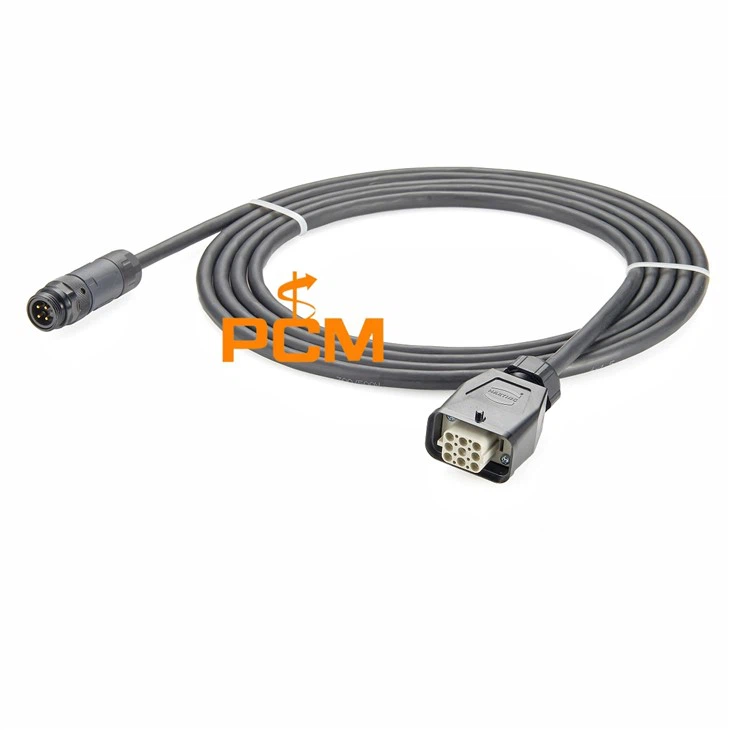

As a supplier of M23 Interbus cables, I've received numerous inquiries regarding the suitability of these cables for railway applications. This blog aims to comprehensively explore this question, considering various aspects such as technical specifications, environmental requirements, and industry standards.
Technical Specifications of M23 Interbus Cables
M23 Interbus cables are known for their robust design and reliable performance. These cables typically feature high - quality conductors that ensure efficient signal transmission. The M23 connectors are designed to provide a secure and stable connection, which is crucial for maintaining the integrity of the data transfer.
The cable's insulation materials are carefully selected to offer excellent electrical insulation properties. This helps in preventing signal interference and ensures that the data transmitted through the cable is accurate. For example, the Interbus - S Cable Male To Female M23 Connector is designed with precision to fit snugly and provide a reliable connection between different components.
In terms of electrical characteristics, M23 Interbus cables usually have a specific impedance value that is carefully matched to the connected devices. This impedance matching is essential for minimizing signal reflections and ensuring optimal signal quality. Additionally, the cables are designed to handle a certain range of voltages and currents, which are important factors to consider in railway applications where the electrical systems can be complex.
Railway Application Requirements
Railway applications have some unique requirements that need to be met for any cable to be considered suitable. Firstly, the cables must be able to withstand harsh environmental conditions. Railways operate in various climates, from extreme cold in winter to high temperatures in summer. The cables need to be resistant to temperature variations, which can cause expansion and contraction of materials.
Secondly, railway environments are often exposed to mechanical stress. The cables may be subject to vibrations, shocks, and bending during the operation of trains. They need to have good mechanical strength to avoid damage. For example, the M23 Overmolded Remote Bus Cable Right Angle is designed with an overmolded structure that provides additional protection against mechanical stress.


Another important requirement is electromagnetic compatibility (EMC). Railways are filled with various electrical and electronic devices that generate electromagnetic fields. The cables need to be able to operate without being affected by these fields and also not generate excessive electromagnetic interference themselves. This is crucial for the proper functioning of the railway's communication and control systems.
Compatibility Analysis
Temperature Resistance
M23 Interbus cables are often manufactured with materials that have good temperature resistance. Many of these cables can operate within a wide temperature range, typically from - 40°C to +85°C or even wider in some cases. This temperature range is generally sufficient for most railway applications, as trains operate in a variety of climates around the world. For example, in cold regions, the cables need to remain flexible and maintain their electrical properties at low temperatures, while in hot regions, they should not degrade due to high - temperature exposure.
Mechanical Resistance
The mechanical design of M23 Interbus cables makes them suitable for withstanding the mechanical stress in railway applications. The connectors are designed to be durable and resistant to vibrations and shocks. The overmolded cables, such as the M23 Overmolded Remote Bus Cable Right Angle, provide extra protection to the cable core, reducing the risk of damage from bending and pulling.
Electromagnetic Compatibility
To meet the EMC requirements of railway applications, M23 Interbus cables are often shielded. The shielding helps to reduce the impact of external electromagnetic fields on the cable's signal transmission and also prevents the cable from emitting excessive electromagnetic interference. This is essential for ensuring the reliable operation of the railway's control and communication systems, which rely on accurate data transmission.
Industry Standards and Certifications
In the railway industry, there are strict standards and certifications that cables must meet. For example, the EN 50155 standard is widely used in Europe for electrical equipment used on railway rolling stock. This standard specifies requirements for the performance, safety, and reliability of electrical equipment, including cables, under various environmental and operational conditions.
Our M23 Interbus cables are designed and tested to meet these industry standards. We ensure that the cables undergo rigorous testing procedures to verify their compliance with the relevant standards. For example, the cables are tested for temperature resistance, mechanical strength, and EMC performance to ensure that they can be safely and effectively used in railway applications.
Case Studies
There have been several successful applications of M23 Interbus cables in railway projects. In some railway signaling systems, these cables have been used to connect various sensors and control units. The reliable signal transmission provided by the M23 Interbus cables has ensured the accurate operation of the signaling systems, which is crucial for the safety of train operations.
In another case, the M23 Power Supply Cable for Remote Bus Module has been used to power remote bus modules in railway control systems. The stable power supply provided by these cables has contributed to the reliable operation of the control systems, even in challenging railway environments.
Conclusion
Based on the above analysis, M23 Interbus cables can indeed be used in railway applications. Their technical specifications, such as electrical characteristics, temperature resistance, mechanical strength, and EMC performance, make them suitable for the unique requirements of the railway industry. Moreover, their compliance with industry standards and successful case studies further prove their suitability.
If you are involved in a railway project and are considering using M23 Interbus cables, we are here to provide you with high - quality products and professional technical support. We understand the importance of reliable cables in railway applications and are committed to meeting your needs. Contact us to start a procurement discussion and find the best cable solutions for your project.
References
- EN 50155: Railway applications - Electronic equipment used on rolling stock
- Technical documentation of M23 Interbus cables