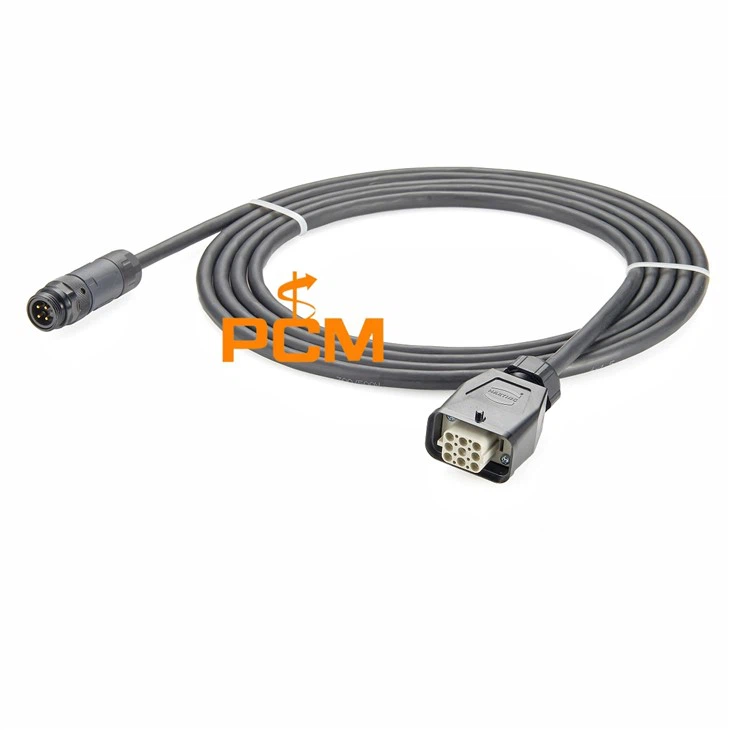

In the world of industrial connectivity, M12 cable adapters play a crucial role in ensuring reliable and efficient data and power transmission. As a seasoned supplier of M12 cable adapters, I've encountered numerous inquiries regarding the differences between male and female M12 cable adapters. This blog post aims to provide a comprehensive understanding of these differences, which can be invaluable for both engineers and procurement professionals in making informed decisions.
Physical Design
The most apparent difference between male and female M12 cable adapters lies in their physical design. The male M12 cable adapter features protruding pins. These pins are the conductive elements that transfer electrical signals or power. They are carefully designed to fit precisely into the corresponding receptacles of the female adapter. The number and arrangement of these pins can vary depending on the specific application and the type of M12 connector standard being used.
On the other hand, the female M12 cable adapter has receptacles or sockets. These sockets are designed to accept the pins of the male adapter. The interior of the sockets is engineered to make a secure and stable electrical connection with the pins. The shape and size of the sockets are precisely matched to the pins of the male adapter to ensure proper mating and reliable performance.
The housing of both male and female adapters also has distinct characteristics. Male adapters typically have a more straightforward, cylindrical housing that protects the pins. The housing may have a threaded exterior for easy and secure connection to the female adapter. Female adapters, in contrast, often have a more complex housing design to accommodate the sockets. They may also have a threaded interior to engage with the male adapter's threaded exterior, creating a tight and stable connection.
Electrical Connection
When it comes to electrical connection, the male and female M12 cable adapters work in tandem. The pins of the male adapter are the contact points that carry the electrical current or signal. They are made of high - quality conductive materials, such as copper or brass, to minimize resistance and ensure efficient power and data transfer.
The sockets of the female adapter are designed to make a firm and reliable connection with the pins. When the male and female adapters are mated, the pins slide into the sockets, creating a low - resistance electrical path. The contact between the pins and sockets is critical for maintaining signal integrity, especially in high - speed data transmission applications.
In some cases, the design of the pins and sockets can affect the electrical performance. For example, the surface finish of the pins and sockets can impact the contact resistance. A smooth and clean surface finish can reduce resistance and improve the overall electrical performance. Additionally, the spring - loaded design of some sockets can ensure a consistent and reliable connection, even in environments with vibration or mechanical stress.
Application Scenarios
Male and female M12 cable adapters are used in a wide range of application scenarios, and the choice between them depends on the specific requirements of the system.


In industrial automation, male M12 cable adapters are often used to connect sensors to control systems. Sensors typically have female connectors, and the male adapter on the cable allows for easy connection. For example, in a manufacturing plant, a proximity sensor may have a female M12 connector. A male M12 cable adapter can be used to connect the sensor to a programmable logic controller (PLC), enabling the PLC to receive data from the sensor.
Female M12 cable adapters, on the other hand, are commonly used on control devices or equipment. For instance, a motor drive may have a male M12 connector, and a female M12 cable adapter can be used to connect a power or signal cable to the motor drive. This configuration allows for flexibility in cable routing and connection.
In the field of networking, male M12 cable adapters are used to connect network devices such as switches and routers. They can be used to connect Ethernet cables to these devices, enabling high - speed data transfer. Female M12 cable adapters are often used on network cables themselves, allowing for easy connection to the male connectors on the devices.
Compatibility and Standards
It is essential to ensure compatibility between male and female M12 cable adapters. M12 connectors follow specific standards, such as the IEC 61076 - 2 - 101 standard. These standards define the mechanical, electrical, and environmental characteristics of the connectors.
When selecting male and female M12 cable adapters, it is crucial to choose products that comply with the relevant standards. For example, the pin configuration of the male and female adapters must match. There are different pin configurations available, such as 3 - pin, 4 - pin, 5 - pin, 8 - pin, and 12 - pin. Using adapters with mismatched pin configurations can lead to improper connection and malfunction of the system.
The mating force and torque requirements are also specified in the standards. Over - tightening or under - tightening the male and female adapters during connection can affect the electrical performance and the mechanical integrity of the connection. Therefore, it is important to follow the recommended installation procedures to ensure a proper and reliable connection.
Conclusion
In conclusion, understanding the differences between male and female M12 cable adapters is essential for anyone involved in the design, installation, or procurement of industrial connectivity solutions. The physical design, electrical connection, application scenarios, and compatibility standards all play a significant role in the performance and reliability of these adapters.
As a supplier of M12 cable adapters, we are committed to providing high - quality products that meet the diverse needs of our customers. Whether you need male or female M12 cable adapters for industrial automation, networking, or other applications, we have the expertise and the product range to meet your requirements.
If you are interested in learning more about our M12 cable adapters or would like to discuss your specific needs, please feel free to contact us for procurement and further discussions. We look forward to working with you to find the best connectivity solutions for your projects.
References
- IEC 61076 - 2 - 101 Standard on M12 Connectors
- Technical documentation from leading M12 connector manufacturers
- Industry research reports on industrial connectivity solutions
For more information about M12 connectors, you can visit M12 Connectors Overview.