

1, Structural characteristics of M8 cable adapter
The M8 cable adapter, with its compact size (diameter of 8mm) and diverse connection forms, has become the preferred connection solution in the field of industrial automation. Its structure usually includes the tail body, gasket, shaped gel (also known as sealing ring), front end components, and other parts. These components together constitute the high waterproof and dustproof rating (such as IP67) of the M8 cable adapter, ensuring reliable connection in various harsh environments.
2, Installation method of M8 cable adapter
The installation method of M8 cable adapter mainly varies depending on its design type (such as non stripping type and screw crimping type).
Non stripping type: This type of adapter is designed to simplify the installation process. Users only need to remove the cable sheath, then thread the cable into the tail body, washer, and shaped adhesive in sequence, and finally rotate and combine the front end components with the tail body. This installation method does not require stripping the insulation layer inside the cable, thereby reducing installation time and complexity.
Screw crimping type: For the screw crimping type M8 cable adapter, the installation process is slightly more complicated. The user needs to first remove the cable protective cover and the protective cover of a single cable, then insert the stripped cable into the adapter and use tools such as a hex wrench to tighten the screws to complete the crimping. This method provides a more secure connection and is suitable for applications that require significant mechanical stress and vibration.
3, The role of specialized tools in the installation of M8 cable adapters
The use of specialized tools such as hex wrenches and wire strippers is crucial during the installation process of M8 cable adapters.
Improve installation efficiency: Specialized tools can ensure the accuracy and efficiency of the installation process. For example, a hex wrench can quickly and accurately tighten screws, avoiding loose or damaged connections caused by manual tightening.
Ensure connection quality: The use of specialized tools helps achieve good electrical connections and mechanical fixation. Proper crimping can ensure low resistance and high stability between cables and adapters, thereby improving the reliability and durability of signal transmission.
Reduce installation risks: Using specialized tools can reduce risks during the installation process, such as cable damage caused by misoperation, adapter deformation, etc. These risks not only affect the performance of the connector, but may also pose a threat to the stable operation of the entire system.
4, Alternative solutions for non specialized tools and their limitations
Although specialized tools play an important role in the installation of M8 cable adapters, in some cases, engineers and technicians may consider using non specialized tools for installation. These alternative solutions include but are not limited to:
Ordinary wrench or pliers: Without a hex wrench, some technicians may attempt to use ordinary wrenches or pliers to tighten screws. However, this method may lead to issues such as screw damage, loose connections, or adapter deformation.
Manual wire stripping: For the non stripping M8 cable adapter, although it is theoretically possible to manually strip the cable sheath, this method often fails to ensure the uniformity and accuracy of wire stripping. Manual wire stripping may also cause damage to the insulation layer inside the cable, thereby affecting electrical performance.
Other homemade tools: Some technicians may try using homemade tools for installation, such as simple tools modified from screwdrivers, hammers, etc. However, these homemade tools often lack the necessary precision and stability to ensure installation quality and safety.
Although non specialized tools may be used as alternative solutions in certain emergency situations, they are not recommended as the preferred tool for installing M8 cable adapters in the long run. This is because non specialized tools often cannot provide the same accuracy and efficiency as specialized tools, thereby increasing the risks and uncertainties during the installation process.

Do M8 cable adapters require specialized tools for installation?
Popular Products

HFM Mini FAKRA Cable
Single channel HFM Mini-FAKRA coaxial cable with female-female, male-male and male-female options for ADAS cameras and

IP67 Waterproof HFM FAKRA Cable
IP67 waterproof HFM to FAKRA cable with 4 connector configurations for automotive cameras, ADAS sensors and RF systems.

Hirose ST Series Connector
Hirose ST Series connector cable assemblies featuring ST40X-10S-CV, ST40X-18S-CV, ST40X-24S-CV and ST40X-36S-CV

GMSL2 FAKRA Z Code Camera Cable
3 m GMSL2 cable with FAKRA Z Code female connectors for camera-to-host, ECU, ADAS and machine vision connections.
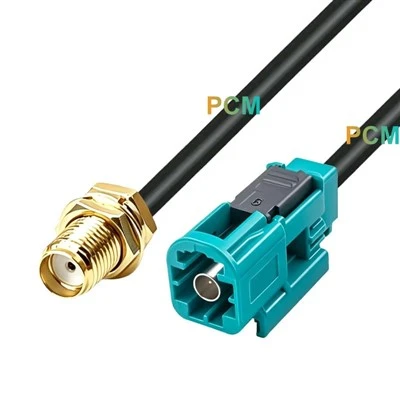
Rosenberger Fakra To SMA Cable
Rosenberger to SMA 50 Ohm coaxial cable with four connector configurations for automotive RF modules, antennas and test
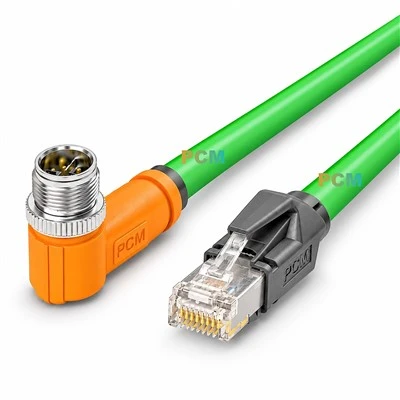
M12 X-Code To RJ45 Cable
M12 X-Code to RJ45 Cat6A cable for 10Gb industrial Ethernet, compatible with X-coded M12 devices, switches and