

一, The core challenge of M8 adapter wiring in robot scenarios
1. Miniaturization and high-density integration
Modern robot joints require the integration of 12+signal/power channels within a limited space, such as the humanoid robot developed by MIT laboratory, which uses an M8 adapter to achieve 12 core signal transmission for a single joint. This design requires wiring tools to have high-precision operation capabilities, avoiding damage to small wire cores (such as 0.08mm ² ultra-fine wires) or causing contact point displacement.
2. Dynamic environmental reliability
The robot joints need to withstand 20G continuous vibration and 50G impact, which puts strict requirements on the wiring firmness of the M8 adapter. For example, the third-order point damping structure connector used by the Boston Dynamics Atlas robot requires specialized tools to ensure that the contact resistance fluctuation is ≤ 3m Ω to prevent signal interruption caused by vibration.
3. Adaptability to the entire environment
The extreme working conditions from -40 ℃ extreme cold to 125 ℃ high temperature require wiring tools to be able to adapt to connector housings of different materials (such as modified PUR, nickel plated brass, or nano ceramic coatings) to avoid contact point loosening caused by thermal expansion and contraction.
二, Robot specific M8 adapter wiring tool system
1. Basic wiring tools
Stripper: It needs to support precise stripping of multi strand copper core wires with an area of 0.08-2.5mm ² to avoid damaging the wire core. For example, the Japanese OKI brand wire stripper adopts an adjustable blade design that can adapt to the commonly used AWG28-12 wire specifications of robots.
Wire crimping pliers: For screw crimping terminals of M8 adapters, adjustable torque wire crimping pliers are required. The 221 series crimping pliers produced by WAGO in Germany have a torque range of 0.5-1.5N · m, which can prevent terminal deformation caused by excessive crimping force.
Insulation sleeve: Made of high-temperature resistant (150 ℃+) and UV resistant fluororubber material, ensuring long-term insulation in outdoor robot applications.
2. Precision installation tools
Hexagonal wrench set: For the anti loosening design of the robot specific M8 adapter, a 0.9-1.5mm hexagonal wrench is required. For example, the 0.9mm hex wrench provided by Lelutong for UL 2238 certified M8 connectors can accurately control the tightening torque of screws to 0.8N · m.
Positioning fixture: In the flexible joint assembly of humanoid robots, laser positioning fixtures are required to ensure the alignment accuracy of M8 adapters and sensors/motors is ≤± 0.15mm. If the visual positioning system used by Fanuc collaborative robots can correct assembly deviations in real time.
Torque driver: For high vibration scenarios, a digital torque driver (such as Wiha XT series from Germany) should be used to set a fixed torque value to avoid insufficient or excessive tightening force caused by manual operation.
3. Special environment adaptation tools
Low temperature lubricant: In an extremely cold environment of -40 ℃, molybdenum disulfide based lubricant should be applied to the screw threads to prevent slipping caused by metal embrittlement.
High temperature sealant: For 125 ℃ high temperature working conditions, silicon-based high-temperature resistant sealant (such as Dow Corning 732 series from the United States) should be used to fill the connector gaps to prevent sealing failure caused by thermal expansion.
Anti static tools: In the assembly of cleanroom robots, ESD safety tweezers and anti-static wristbands should be used to avoid electrostatic breakdown of small electronic components.
三, Industry Practice and Typical Cases
1. Joint assembly of humanoid robots
The Uber X humanoid robot adopts the M8/M12 series multi-core connectors certified by Lelutong UL 2238, and its assembly process requires:
Use a 0.9mm hex wrench to tighten the screw with a torque of 0.8N · m;
Ensure connector insertion accuracy of ± 0.1mm through laser positioning fixtures;
Use a third-order point damping structure test bench to verify that the contact resistance fluctuation under vibration environment is ≤ 3m Ω.
2. Wiring of industrial robot servo motors
The M8 adapter wiring between the servo motor and driver of the KUKA KR CYBERTECH nano series industrial robot requires:
Use torque adjustable crimping pliers (0.5-1.2N · m) to crimp the terminals;
Use a multimeter to detect contact resistance ≤ 5m Ω;
Adopting IP68 grade sealing sleeve to prevent coolant from entering.
3. Rapid replacement of collaborative robot sensors
The UR5e collaborative robot adopts a quick detachable M8 adapter design, and its wiring tool requirements are:
Equipped with non stripping crimping terminals, supporting sensor replacement within 30 seconds;
Use a test pen with LED indicator lights to verify the quality of signal transmission;
Use magnetic tool trays to prevent the loss of small parts.
Does the M8 adapter used by robots require special wiring tools?
Popular Products

HFM Mini FAKRA Cable
Single channel HFM Mini-FAKRA coaxial cable with female-female, male-male and male-female options for ADAS cameras and

IP67 Waterproof HFM FAKRA Cable
IP67 waterproof HFM to FAKRA cable with 4 connector configurations for automotive cameras, ADAS sensors and RF systems.

Hirose ST Series Connector
Hirose ST Series connector cable assemblies featuring ST40X-10S-CV, ST40X-18S-CV, ST40X-24S-CV and ST40X-36S-CV

GMSL2 FAKRA Z Code Camera Cable
3 m GMSL2 cable with FAKRA Z Code female connectors for camera-to-host, ECU, ADAS and machine vision connections.
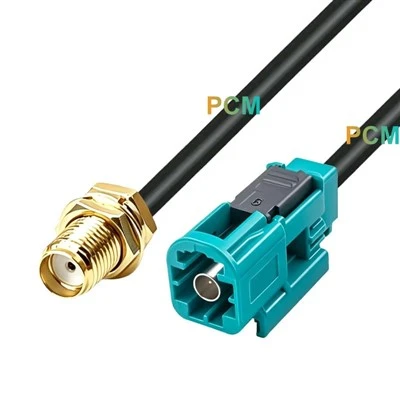
Rosenberger Fakra To SMA Cable
Rosenberger to SMA 50 Ohm coaxial cable with four connector configurations for automotive RF modules, antennas and test
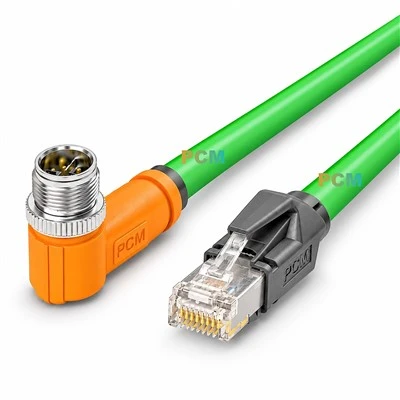
M12 X-Code To RJ45 Cable
M12 X-Code to RJ45 Cat6A cable for 10Gb industrial Ethernet, compatible with X-coded M12 devices, switches and