

1, The technical principle and classification of automatic locking mechanism
The locking mechanism of M8 connectors is mainly divided into two categories: mechanical locking and magnetic locking, among which mechanical locking occupies the mainstream market. According to the differences in operation methods, mechanical locking can be further subdivided into the following types:
Thread locking
Physical connection is achieved through M8 × 1.0 standard thread, and the nut needs to be manually rotated to a specific position to trigger the internal locking structure. This design is widely used in high vibration scenarios such as aerospace and rail transportation. For example, the stainless steel gland threaded connector launched by Binder can withstand 10000 insertion and extraction cycles without loosening in environments ranging from -40 ℃ to+105 ℃.
Buckle locking
Using spring steel plates or plastic buckles for quick connection, typical cases include the push-pull self-locking connector launched by Haoting. This type of product triggers the closure of the buckle through the axial force when the plug is inserted. When unlocking, only the side button needs to be pressed, which shortens the operation time by 70% compared to traditional threaded connections. It is suitable for scenarios such as AGV cars and collaborative robots that require frequent insertion and removal.
Spring locking
The use of spring pre tension to maintain connection status is common in the field of high-speed data transmission. For example, TXGA's 4-core M8 connector uses a built-in spring to push the steel ball into the plug groove, achieving a locking torque of 0.5N · m. It also supports IP68 protection level and can be immersed in a water depth of 1 meter for 72 hours.
Magnetic locking
The use of neodymium iron boron strong magnets for non-contact adsorption is mainly applied in special scenarios such as medical equipment and wireless charging. Although this technology can avoid mechanical wear, it has the risk of adsorption force being affected by temperature (magnetic force decreases by about 2% for every 10 ℃ increase) and metal debris adsorption. Currently, it has not been widely adopted in the industrial field.
2, The industry application value of automatic locking mechanism
Improve connection reliability
In strong vibration environments such as steel smelting and mining machinery, traditional threaded connections may experience increased contact resistance due to looseness, leading to signal distortion or equipment shutdown. The automatic locking connector maintains a constant contact pressure through mechanical structure or magnetic force, such as the anti rotation thread profile technology introduced by Moore Electronics, which can improve the insertion and extraction stability to 10000 cycles, which is three times higher than traditional products.
Optimize operational efficiency
In scenarios such as automotive assembly lines and 3C product testing that require rapid line changes, automatic locking of connectors can shorten equipment debugging time. Taking the 718 series quick locking connector launched by Electric Bee Optimal as an example, its insertion and removal time has been reduced from 15 seconds for traditional threaded connections to 3 seconds, saving 2.8 hours of labor per day on a single production line.
Reduce maintenance costs
The automatic locking mechanism reduces human operation errors and extends the service life of the connector. For example, JPC Connectivity's M8 Hybrid solution uses single pair Ethernet (SPE) to transmit data and power, coupled with an automatic locking structure, reducing the frequency of wire harness replacement from 4 times per year to 1 time and reducing maintenance costs by 65%.
3, Technical Challenges and Development Trends
Environmental adaptability optimization
Plastic buckles may fail to lock due to thermal deformation in high temperature (>85 ℃) environments; High humidity (>85% RH) conditions may cause a decrease in magnetic locking adsorption force. The current solution includes:
Using high temperature resistant engineering plastics such as PPS and PEEK
Apply three proof paint on the surface of magnetic components
Develop dual locking structure (such as thread+buckle composite design)
Miniaturization and Integration
With the development of industrial equipment towards miniaturization, M8 connectors are evolving from 4-core to 8-core and 12 core. For example, the 8-core micro connector launched by Husman in 2025 has a diameter of only 10mm, achieves automatic locking through optimized spring layout, and supports 10Gbps data transmission.
Intelligent upgrade
Some manufacturers have begun to explore intelligent locking technology, such as:
Integrated pressure sensor monitoring lock status
Implementing Connection Parameter Traceability through NFC Chip
Develop self diagnostic function to issue warnings before lock failure
4, Typical application case analysis
Automotive manufacturing field
Tesla's Shanghai Gigafactory uses Binder's M8 automatic locking connector for welding robot sensor signal transmission. The connector maintains a contact resistance of<5m Ω under 0.5g vibration acceleration through a spring locking structure, reducing the welding quality defect rate from 0.3% to 0.05%.
Food processing industry
The IP69K protection level M8 connector launched by Mu'er Electronics adopts a stainless steel cover and automatic locking thread design, which can withstand 100 bar high-pressure water gun flushing and achieve 0 connection failures per shift in dairy production lines.
new energy sector
The Ningde Times battery module testing line uses TXGA's magnetic locking M8 connector, which achieves fast docking through a 1200mT strong magnet, reducing the testing time of single-mode groups from 8 minutes to 3 minutes and increasing annual production capacity by 40%.
Does the M8 connector have an automatic locking mechanism?
Popular Products

2 Way Tyco AMP Superseal Extension Cable
The 2-Way Superseal Connector Extension Lead (2m, 16 AWG) is a waterproof extension harness specifically designed for

1.5mm AMP Superseal Automotive Cable 1 Pin
The AMP Superseal Automotive Cable (1-Pin) is assembled using Tyco's AMP Superseal 1.5mm series connectors; it is
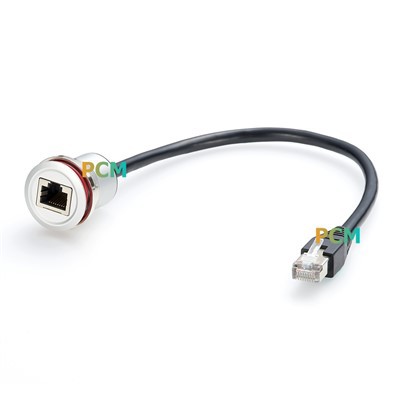
RJ45 8P8C Panel Mount Extension Cable
The RJ45 8P8C panel-mount extension cable supports stable Ethernet data transmission and is suitable for networking
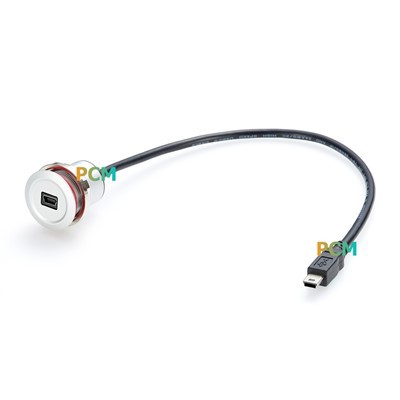
Mini USB B Male To Female Panel Mount Cable
The Mini USB-B Male-to-Female Panel Mount Cable supports stable data transmission and charging, making it suitable for
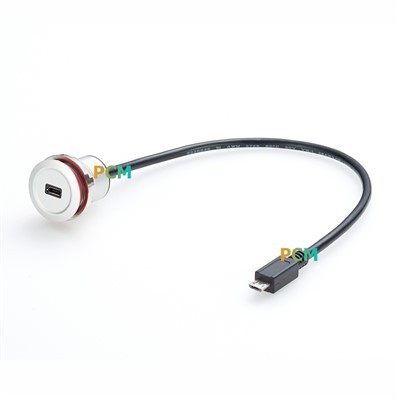
Micro USB B Panel Mount Cable
The Micro USB-B panel-mount cable supports stable data transmission and charging capabilities, making it suitable for
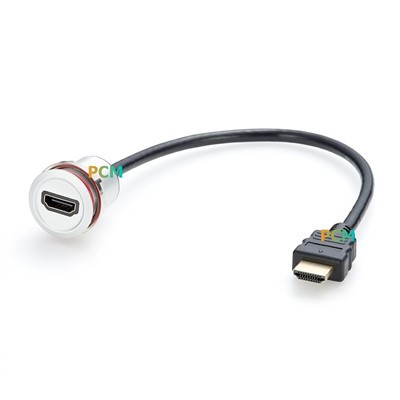
HDMI 19Pin Panel Mount Cable
The HDMI 19-pin panel-mount cable supports stable transmission of high-definition audio and video signals; it is