

1, Technical characteristics of M8 adapter in long-distance signal transmission
Signal transmission capability: M8 adapter supports multiple signal transmission methods, including analog signals, digital signals, etc. The signal transmission capability of M8 adapter is one of the key factors in long-distance signal transmission. Generally speaking, M8 adapters are capable of transmitting signals within a certain frequency range, depending on their internal structure and material selection.
Attenuation and interference: During long-distance signal transmission, signal attenuation and interference are inevitable issues. By optimizing the internal structure and circuit design, using high-performance conductive materials and shielding technology, the M8 adapter can effectively reduce signal attenuation and interference, ensuring signal stability and reliability.
Power support: Some M8 adapters also have power transmission function, which can provide power support for devices while transmitting signals. This provides a solution to the power supply problem of equipment in long-distance signal transmission.
2, Performance of M8 adapter in long-distance signal transmission
Signal stability: In long-distance signal transmission, the M8 adapter exhibits good signal stability. By optimizing the internal structure and circuit design, the M8 adapter can effectively reduce signal attenuation and interference, ensuring accurate signal transmission. In addition, the M8 adapter also has good waterproof, dustproof, and anti-corrosion performance, which can maintain stable connection in harsh environments and further improve signal stability.
Transmission distance: The performance of the M8 adapter in long-distance signal transmission also depends on its transmission distance. Generally speaking, M8 adapters can support signal transmission distances within a certain range. Beyond this range, signal attenuation and interference will significantly increase, thereby affecting the stability and reliability of the signal. Therefore, when choosing an M8 adapter, it is necessary to make a reasonable choice based on the actual application scenario and transmission distance.
Application flexibility: The M8 adapter has multiple pin configurations and connection methods, which can be flexibly combined and applied according to actual needs. This enables the M8 adapter to adapt to different application scenarios and requirements in long-distance signal transmission, improving the flexibility and convenience of applications.
3, Challenges and Solutions in Practical Applications
Although the M8 adapter has shown good performance in long-distance signal transmission, it still faces some challenges in practical applications. For example, signal attenuation and interference issues in long-distance signal transmission, equipment power supply issues, and reliability and durability issues of connectors. To address these challenges, the following solutions can be taken:
Signal enhancement and compensation: In long-distance signal transmission, signal enhancement and compensation techniques can be used to reduce signal attenuation and interference. For example, using signal amplifiers, filters, and other devices to enhance the strength and stability of signals.
Distributed power supply: For equipment that requires long-distance power supply, a distributed power supply scheme can be adopted to reduce power transmission losses and interference. For example, setting up multiple power nodes in the transmission line to provide stable power support for the equipment.
Choosing high-quality connectors: Choosing high-quality and highly reliable M8 adapters is the key to ensuring the stability and reliability of long-distance signal transmission. When choosing an M8 adapter, factors such as its internal structure, material selection, shielding performance, and durability need to be considered.

How does the M8 adapter perform in long-distance signal transmission?
Popular Products

HFM Mini FAKRA Cable
Single channel HFM Mini-FAKRA coaxial cable with female-female, male-male and male-female options for ADAS cameras and

IP67 Waterproof HFM FAKRA Cable
IP67 waterproof HFM to FAKRA cable with 4 connector configurations for automotive cameras, ADAS sensors and RF systems.

Hirose ST Series Connector
Hirose ST Series connector cable assemblies featuring ST40X-10S-CV, ST40X-18S-CV, ST40X-24S-CV and ST40X-36S-CV

GMSL2 FAKRA Z Code Camera Cable
3 m GMSL2 cable with FAKRA Z Code female connectors for camera-to-host, ECU, ADAS and machine vision connections.
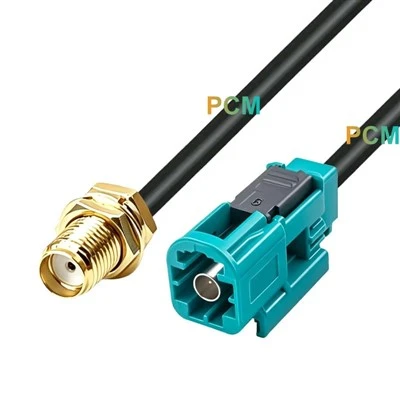
Rosenberger Fakra To SMA Cable
Rosenberger to SMA 50 Ohm coaxial cable with four connector configurations for automotive RF modules, antennas and test
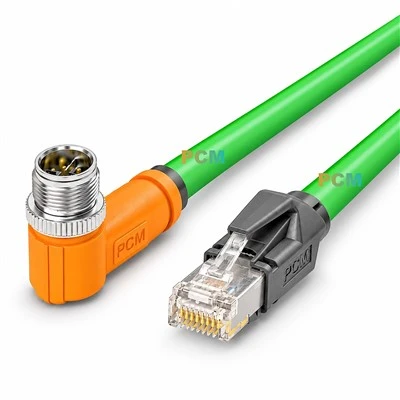
M12 X-Code To RJ45 Cable
M12 X-Code to RJ45 Cat6A cable for 10Gb industrial Ethernet, compatible with X-coded M12 devices, switches and