

1, The Causes and Effects of EMI Interference
Electromagnetic interference refers to any electromagnetic phenomenon that may degrade the performance of equipment, transmission channels, or systems. In industrial environments, there are numerous sources of EMI interference, such as motors, transformers, high-frequency switching power supplies, etc. These interference sources can generate electromagnetic fields, which can affect surrounding electronic devices through radiation or conduction, leading to signal distortion, data transmission errors, and even device damage. For M8 connectors, if their anti-interference ability is insufficient, interference signals may be introduced during transmission, affecting the performance of the entire system.
2, EMI anti-interference design of M8 connector
In order to address the challenge of EMI interference, the M8 connector has taken various measures in its design to improve its anti-interference ability.
Shielding design: M8 connectors typically use a metal shell and shielding layer design, which can effectively block the interference of external electromagnetic fields. Some high-end M8 connectors also use multi-layer shielding technology to further improve their anti-interference ability.
Filter design: Inside the connector, a filter circuit may also be integrated. These filtering circuits can filter out high-frequency interference signals, ensuring the purity of the transmitted signal.
Contact design: The contact part of the M8 connector has also been carefully designed to ensure good electrical connection. Good contact can reduce contact resistance and minimize interference signals caused by poor contact.
3, Evaluation of EMI anti-interference performance of M8 connector
Evaluating the EMI anti-interference capability of M8 connectors usually requires consideration from the following aspects:
Shielding effectiveness: By testing the shielding effectiveness of the connector, one can understand its ability to block external electromagnetic fields. Generally speaking, the higher the shielding effectiveness, the stronger the anti-interference ability of the connector.
Filtering performance: For M8 connectors with integrated filtering circuits, their filtering performance needs to be tested to ensure that they can effectively filter out high-frequency interference signals.
Contact resistance: The size of the contact resistance also affects the anti-interference ability of the connector. Lower contact resistance can reduce interference signals caused by poor contact.
Practical application testing: In addition to laboratory testing, it is also necessary to test the anti-interference ability of M8 connectors in actual application environments. This can provide a more comprehensive understanding of its performance in practical applications.
4, Application case of M8 connector in EMI anti-interference
The M8 connector has been widely used in industrial automation, sensor connections, and other fields due to its excellent EMI anti-interference ability. Here are some typical application cases:
Industrial automation: In industrial automation systems, the connection between sensors and actuators needs to be stable and reliable. The M8 connector, with its excellent anti-interference ability, can ensure that signals are not affected by external interference during transmission, thereby ensuring the stable operation of the system.
Rail transit: In the field of rail transit, train control systems have extremely high requirements for the reliability and anti-interference ability of signal transmission. As an important component in the train control system, the M8 connector's excellent anti-interference ability provides strong guarantees for the safe operation of the train.
Medical equipment: In medical equipment, the accuracy and stability of signal transmission are directly related to the safety of patients' lives. The M8 connector ensures the stability and accuracy of signal transmission in medical equipment with its reliable anti-interference capability.

What is the EMI anti-interference ability of M8 connector?
Popular Products

HFM Mini FAKRA Cable
Single channel HFM Mini-FAKRA coaxial cable with female-female, male-male and male-female options for ADAS cameras and

IP67 Waterproof HFM FAKRA Cable
IP67 waterproof HFM to FAKRA cable with 4 connector configurations for automotive cameras, ADAS sensors and RF systems.

Hirose ST Series Connector
Hirose ST Series connector cable assemblies featuring ST40X-10S-CV, ST40X-18S-CV, ST40X-24S-CV and ST40X-36S-CV

GMSL2 FAKRA Z Code Camera Cable
3 m GMSL2 cable with FAKRA Z Code female connectors for camera-to-host, ECU, ADAS and machine vision connections.
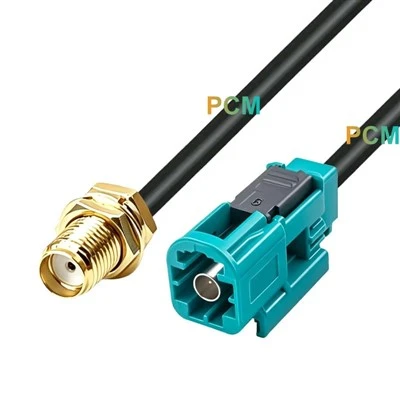
Rosenberger Fakra To SMA Cable
Rosenberger to SMA 50 Ohm coaxial cable with four connector configurations for automotive RF modules, antennas and test
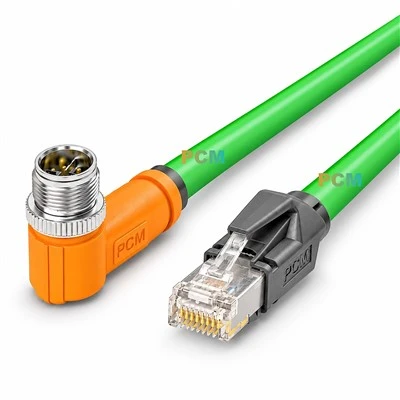
M12 X-Code To RJ45 Cable
M12 X-Code to RJ45 Cat6A cable for 10Gb industrial Ethernet, compatible with X-coded M12 devices, switches and