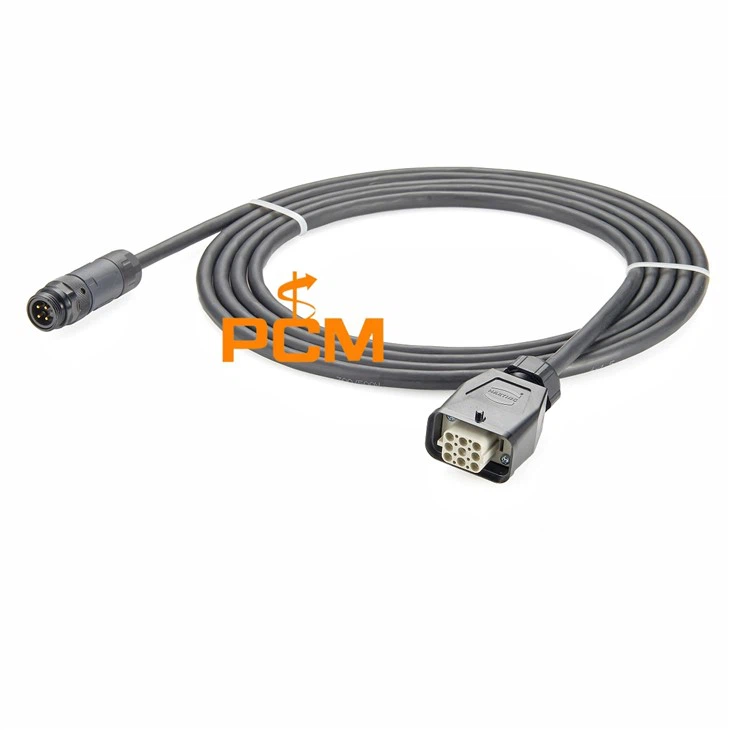

As a supplier of AISG RET cables, I often encounter inquiries from customers about the suitability of these cables for high - temperature environments. In this blog post, I'll delve into the technical aspects of AISG RET cables and discuss whether they can be used in high - temperature settings.
Understanding AISG RET Cables
AISG RET cables, or Antenna Interface Standards Group Remote Electrical Tilt cables, are crucial components in modern wireless communication systems. They are designed to control the electrical tilt of antennas remotely, which is essential for optimizing signal coverage and performance. These cables are used in a wide range of applications, from small - scale cellular base stations to large - scale telecommunication networks.
The Remote Electrical Tilt RET Control Cable is a common type of AISG RET cable. It provides a reliable connection between the control unit and the antenna, allowing for precise adjustment of the antenna's tilt angle. Another popular option is the Molded AISG Control Cable Assembly 8 PIN DIN, which offers a more robust and durable solution with its molded design. Additionally, the RET AISG Y Splitter Cable 8 Pin Male To Female is used when multiple antennas need to be controlled from a single source.
Factors Affecting Cable Performance in High - Temperature Environments
Several factors determine whether an AISG RET cable can be used in high - temperature environments.
Insulation Material
The insulation material of the cable plays a vital role in its high - temperature performance. Most AISG RET cables use insulation materials such as polyethylene (PE), polyvinyl chloride (PVC), or fluoropolymers. PE and PVC are commonly used due to their cost - effectiveness and good electrical properties. However, they have limited high - temperature resistance. PE typically has a maximum operating temperature of around 70 - 80°C, while PVC can withstand temperatures up to 60 - 70°C.
On the other hand, fluoropolymers like polytetrafluoroethylene (PTFE) have excellent high - temperature resistance. PTFE can operate at temperatures up to 260°C without significant degradation of its electrical and mechanical properties. Cables with PTFE insulation are more suitable for high - temperature environments but are also more expensive.
Conductor Material
The conductor material also affects the cable's performance in high - temperature settings. Copper is the most commonly used conductor material in AISG RET cables due to its high electrical conductivity. However, copper has a positive temperature coefficient of resistance, which means its resistance increases with temperature. As the resistance increases, the power loss in the cable also increases, leading to reduced efficiency.
Some high - temperature applications may require the use of conductors with better high - temperature properties, such as silver - plated copper. Silver has a lower temperature coefficient of resistance than copper, which helps to maintain a more stable electrical performance at higher temperatures.
Cable Construction
The construction of the cable, including the shielding and jacketing, can also impact its high - temperature performance. A well - designed shielding layer can protect the cable from electromagnetic interference (EMI) and radio - frequency interference (RFI), which can be more severe in high - temperature environments. The jacketing material should also have good high - temperature resistance to prevent cracking and degradation.
Testing and Certification
To ensure that an AISG RET cable can be used in high - temperature environments, it is essential to look for cables that have been tested and certified for such conditions. Many cable manufacturers conduct high - temperature testing to determine the cable's maximum operating temperature, electrical performance at elevated temperatures, and mechanical integrity after exposure to high temperatures.


Certifications such as UL (Underwriters Laboratories) and CSA (Canadian Standards Association) provide assurance that the cable meets certain safety and performance standards. For high - temperature applications, cables with UL 1685 or CSA C22.2 No. 210.1 certifications are often preferred as they indicate that the cable has been tested for use in high - temperature environments.
Case Studies
Let's look at some real - world examples to understand the performance of AISG RET cables in high - temperature environments.
In a desert - based cellular base station, the ambient temperature can reach up to 50 - 60°C during the day. A network operator installed AISG RET cables with PVC insulation. Initially, the cables worked fine, but after a few months of operation, the PVC insulation started to degrade, leading to signal interference and cable failures. The operator then replaced the cables with ones having PTFE insulation. The new cables showed no signs of degradation even after a year of operation in the high - temperature environment, ensuring reliable antenna control and network performance.
Conclusion
In conclusion, whether an AISG RET cable can be used in high - temperature environments depends on several factors, including the insulation material, conductor material, cable construction, and testing and certification. While standard cables with PE or PVC insulation may not be suitable for extremely high - temperature settings, cables with PTFE insulation and high - quality conductors can provide reliable performance in such conditions.
If you are looking for AISG RET cables for high - temperature applications, we are here to help. We offer a wide range of cables with different insulation materials, conductor types, and constructions to meet your specific requirements. Contact us to discuss your project needs and let's find the best cable solution for you.
References
- "Handbook of Electrical and Electronic Insulating Materials" by S. Bhattacharya
- "Cable Engineering: Design, Installation, and Maintenance" by R. C. Dorf