

1, The importance of corrosion resistance performance of M8 adapter
Corrosion is an undeniable issue in the use of electronic devices. Corrosion not only causes damage to metal components, but also reduces insulation performance, thereby affecting the electrical characteristics of connectors. For M8 adapters, due to their widespread use in industrial control, automation, transportation, and other fields, they often face harsh environments such as humidity, salt spray, and corrosive gases. Therefore, having good corrosion resistance is particularly important.
2, Factors affecting the corrosion resistance of M8 adapters
Environmental factors: Humidity, salt spray, corrosive gases, and other environmental factors are the main factors affecting the corrosion resistance of M8 adapters. In humid environments, the surface of the adapter is prone to forming a water film, which accelerates the corrosion of the metal parts; Salt spray environment will cause electrochemical corrosion to the metal parts of the adapter; Corrosive gases may react chemically with adapter materials, reducing their corrosion resistance.
Material selection: The material selection of the adapter has a decisive impact on its corrosion resistance performance. The selection of materials for contacts and insulators is particularly important. For example, metal materials such as stainless steel and copper alloys, as well as special engineering plastics as insulation materials, all have good corrosion resistance.
Surface treatment: In order to improve the corrosion resistance of the adapter, manufacturers usually apply coatings such as gold plating, nickel plating, etc. on the contact surface. Electroplated layers can not only improve the conductivity of connectors, but also provide corrosion protection.
3, Material selection for corrosion resistance of M8 adapter
Metal materials: In the metal part of the M8 adapter, commonly used materials include brass, phosphor bronze, beryllium bronze, etc. Brass is easy to process and has a lower cost, but its elasticity and fatigue resistance are relatively poor; Phosphorus bronze has higher hardness than brass and can maintain long-term elasticity, making it suitable for contact parts with working temperatures below 300 ℃; Beryllium bronze has excellent mechanical properties and resistance to mechanical fatigue, making it ideal for applications with frequent insertion and extraction and high reliability requirements.
Insulation material: Insulation is the part of a connector used to isolate contacts and prevent short circuits. Common insulation materials include PBT (polybutylene terephthalate), nylon, ABS (acrylonitrile butadiene styrene copolymer), as well as PC (polycarbonate) and LCP (liquid crystal polymer). These materials have good mechanical strength, heat resistance, and chemical stability, which can effectively prevent corrosion and short circuits.
External coating material: The external protective layer (coating material) of the cable also has a significant impact on its corrosion resistance. Common exterior materials include PVC (polyvinyl chloride), polyethylene (PE), and polypropylene (PP). These materials all have good dielectric properties and chemical resistance, which can to some extent protect the adapter from external environmental corrosion.
4, Testing method for corrosion resistance of M8 adapter
To evaluate the corrosion resistance of M8 adapters, a series of rigorous tests are usually conducted. These tests include salt spray test, constant humidity test, alternating humidity test, vibration and impact test, etc.
Salt spray test: Suspend the connector in a temperature controlled test chamber and spray a specified concentration of sodium chloride solution with compressed air to form a salt spray atmosphere. Evaluate the corrosion resistance of connectors by observing their performance in salt spray environments.
Constant humidity and heat test: Testing connectors in a constant humidity and heat environment to simulate their working conditions in a humid environment. The test conditions are usually relative humidity of 90%~95%, temperature of+40 ± 20 ℃, and the test time is carried out according to the product specifications.
Alternating damp heat test: Compared with constant damp heat test, alternating damp heat test is more rigorous. It simulates the working condition of the connector in an alternating humid and hot environment to further verify its corrosion resistance.
Vibration and impact tests: These tests are used to verify the robustness of the mechanical structure and electrical contact reliability of electrical connectors. In the impact test, the peak acceleration, duration, impact pulse waveform, and electrical continuity interruption time should be specified.
5, Performance of corrosion resistance of M8 adapter in practical applications
In practical applications, the corrosion resistance of M8 adapters has been widely verified. For example, in the field of industrial automation, M8 adapters often face harsh environments such as humidity and oil pollution, but with their good corrosion resistance, they can still maintain stable electrical characteristics and connection reliability. In addition, in the field of transportation, M8 adapters are widely used for connecting vehicle batteries. Due to the harsh working environment of vehicle batteries, such as corrosive gases and humidity, it is particularly important to choose an M8 adapter with good corrosion resistance.

Is the M8 adapter corrosion-resistant?
Popular Products
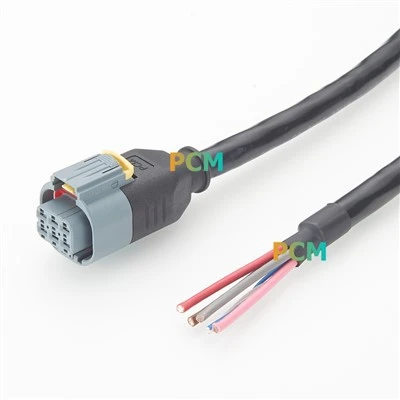
Tyco 1745078-1 Automotive Cable
The Tyco 1745078-1 Automotive Cable is an assembly featuring the AMP 6-position 1745078-1 connector, designed for
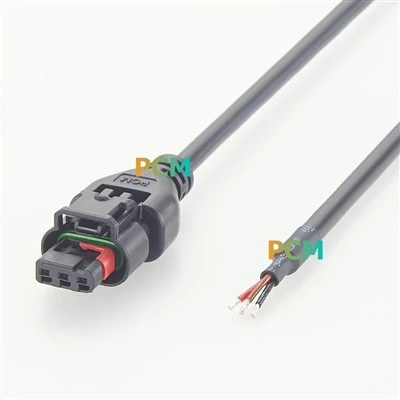
TE Connectivity 1488991 Cable
The TE Connectivity 1488991 is a 3-position, sealed automotive connector housing with IP67 protection, designed to

5 Pole LED Linear Light Connector 400V 10A
PCM-LBK-5P 5 Pole LED Linear Light ConnectorA plug-and-base connector assembly for LED linear lighting systems with

7 Pole Pluggable Luminaire Connector 450V 16A
PCM-2067-7P 7 Pole Pluggable Luminaire ConnectorA 7-pole plug-in connector for internal lighting equipment and

5 Pole Pluggable Luminaire Connector 450V 16A
PCM-2067-5P 5 Pole Pluggable Luminaire ConnectorA detachable 5-pole connector designed for internal wiring in LED

5 Pole Push-In Luminaire Terminal Block 450V 20A
935-5P 5 Pole Push-In Lighting Terminal Block5-pole quick wiring connector for LED drivers, luminaires and internal