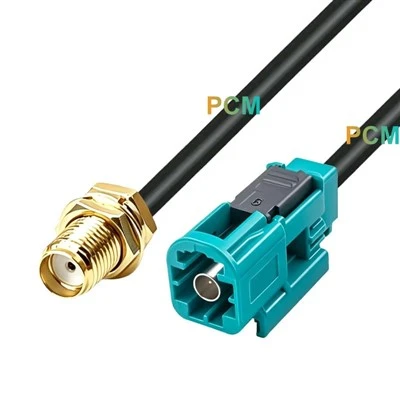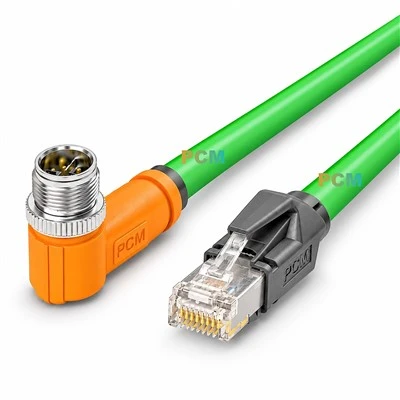
Although DIN connectors and Power DIN connectors are similar in appearance, they are different in their design purposes and application scenarios. The following are the main differences between them:
Design purpose
- DIN connector:
Purpose: Originally defined by the German Institute for Standardization (DIN), DIN connectors are mainly used for low-current signal transmission such as audio, video, and data communication.
Typical applications: Commonly used in audio equipment (such as early sound systems), MIDI interfaces, computer keyboards, video equipment, etc.
Current capability: Generally used to transmit low-current signals or data, not suitable for direct transmission of high-power power.
- Power DIN connector:
Purpose: Specially designed for power transmission, suitable for devices that require stable current transmission.
Typical applications: Widely used in power adapters, power connections between devices, etc., commonly found in industrial equipment, communication equipment, and some audio equipment.
Current capability: Designed to carry higher currents, suitable for providing power connections, so it is more suitable for power transmission than ordinary DIN connectors.
Pin Configuration
- DIN Type Connector:
Number of Pins: Usually 3 to 8 pins, the pins can be arranged in a circular or other shape, depending on the specifications and purpose of the connector.
Pin Arrangement: Mostly used to transmit analog or digital signals, the voltage difference between the pins is usually low.
- Power DIN Connector:
Number of Pins: Usually 2 to 8 pins, but these pins are designed to carry higher currents and voltages.
Pin Arrangement: Designed specifically for power transmission, sometimes there are additional ground pins to enhance safety and stability of power transmission.


Physical Design and Durability
- DIN Type Connector:
Physical Design: Mostly circular design, small and lightweight, suitable for applications with low plug-in and unplug frequency.
Durability: Generally moderately durable, not designed for use in high current or harsh environments.
- Power DIN Connector:
Physical Design: More rugged design, usually with thicker shell and tighter contact to ensure safe and reliable power transmission.
Durability: In order to adapt to the needs of high current transmission, more durable materials and designs are usually used to withstand higher plug-in and unplug frequencies and harsh environments.
Application scenarios
DIN connector: Suitable for occasions where low-power signals need to be transmitted, such as audio equipment, computer interfaces, consumer electronics, etc.
Power DIN connector: Suitable for devices that need to transmit power, such as power adapters, power cord connections, industrial power connections, etc.
Summary
Although DIN connectors and Power DIN connectors may be similar in appearance, their design purposes and current carrying capacity make them suitable for different application scenarios. DIN connectors are more suitable for signal transmission, while Power DIN connectors are designed for power transmission and are suitable for devices that require stable power.