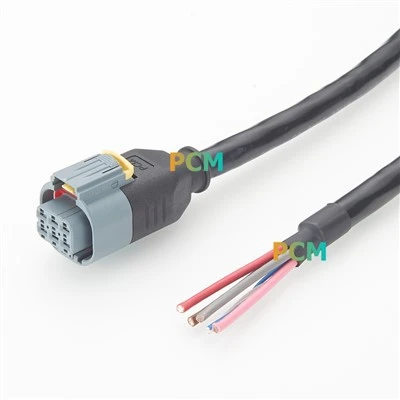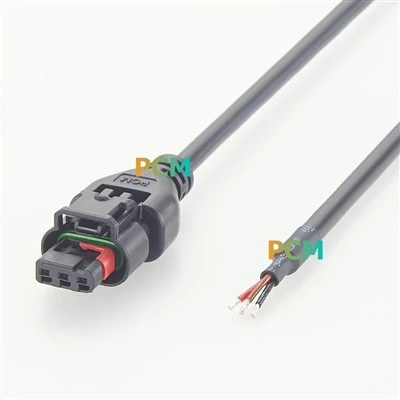
DT Series Connector: Specs, Pin Types, and Installation Guide
If you work with automotive wiring harnesses, off-road vehicles, marine systems, or industrial equipment, you have likely come across the DT Series connector. It appears in product catalogs, technical manuals, and wiring diagrams across industries - and for good reason. DT Series connectors are purpose-built to handle demanding environments where standard connectors simply fail.
The DT Series form factor has become an industry-wide standard, with cross-compatible products available from multiple manufacturers. At Premier Cable, we supply the full range of DT-compatible connectors and harness assemblies - and we created this guide to help engineers and procurement teams understand the specifications, series differences, compatibility, and installation best practices behind this connector platform. Whether you are designing a new harness or sourcing replacement components, this guide covers what you need to know.
💡 Key Takeaways
- The DT Series is a sealed, rectangular multi-pin connector designed for harsh environments including moisture, vibration, and extreme temperatures.
- Rated for 13A per contact, supporting 14–20 AWG wire, and operable from -55°C to +125°C.
- Available in 2, 3, 4, 6, 8, and 12 cavity configurations to match wiring harness complexity.
- DT differs from DTM (miniature, lower amperage), DTP (high current), and DTHD (heavy-duty) - each series targets a different load and size requirement.
- The DT form factor is an open industry standard with cross-compatible supply from multiple manufacturers. Premier Cable offers the full DT-compatible product range with OEM-grade certifications.
- Widely used in automotive sensors, off-road equipment, marine wiring, agriculture machinery, and industrial controls.
Contents
- What Is the DT Series Connector?
- Key Features of DT Series Connectors
- Structural Components of a DT Connector
- DT Series Specifications
- DT vs DTM vs DTP vs DTHD: What Is the Difference?
- DT Series Compatibility: Amphenol AT and Third-Party Manufacturers
- Common Applications of DT Series Connectors
- How to Install a DT Series Connector (Step-by-Step)
- How to Select the Right DT Series Connector
- Why Choose DT Series Over Standard Connectors
- What to Check Before Buying
- Frequently Asked Questions
- Final Thoughts
01 · What Is the DT Series Connector?
The DT Series connector is a sealed, rectangular electrical connector engineered for cable-to-cable applications in environments where moisture, dust, vibration, and temperature extremes are everyday realities. It has become one of the most widely adopted industrial connector form factors in North America.
Unlike general-purpose connectors found in consumer electronics or light commercial wiring, the DT Series is built to rigorous environmental protection and mechanical durability standards. The design prioritizes field serviceability - technicians can assemble, inspect, and repair connections without specialized equipment, which matters significantly in mobile and off-road applications.
Because the DT form factor is now an established industry standard, multiple suppliers produce cross-compatible housings, contacts, and seals. This open ecosystem gives buyers sourcing flexibility and long-term supply security - which is one of the reasons we at Premier Cable chose to build our connector product line around this platform.
The DT Series sits in the middle of the connector family range: smaller and lighter than the heavy-duty DTHD series, but more capable in terms of current and wire gauge than the miniature DTM Series - making it the most widely deployed configuration across automotive, agricultural, and marine industries.

02 · Key Features of DT Series Connectors
Several design characteristics set DT Series connectors apart from conventional connectors. Understanding these features helps explain why the format has become a standard choice across so many demanding industries.
1. Environmental Sealing
Each DT connector cavity is sealed with individual silicone wire seals at the back of the housing, while the mating interface is sealed by a face seal. This dual-sealing approach gives DT connectors their IP68 rating, meaning the connector can withstand continuous immersion in water at depth. Dust, moisture, road spray, and pressure washing do not compromise the connection.
2. Vibration Resistance
Mechanical vibration is one of the primary causes of electrical connector failure in mobile applications. The DT Series addresses this through its Wedgelock secondary locking system, which prevents contacts from backing out under vibration. Additionally, the thermoplastic housing material absorbs shock without cracking.
3. Wedgelock Secondary Lock
The Wedgelock is a plastic component that inserts into the rear of the housing after contacts have been inserted. It acts as a mechanical backup to the primary contact retention latch, effectively double-locking each contact in position. This secondary retention feature is a defining characteristic of the DT Series and a key reason it is trusted in safety-critical applications.
4. Field Serviceability
DT connectors can be assembled and repaired in the field using standard crimping tools. Contacts can be extracted and replaced individually without scrapping the entire connector. This repairability reduces downtime and lowers long-term maintenance costs - an important factor in equipment that operates far from service facilities.
03 · Structural Components of a DT Connector
A complete DT Series connector assembly consists of four primary components. Each plays a specific role in the connector's performance.
Housing
The outer body of the connector, manufactured from a high-strength thermoplastic (typically nylon-based). The housing defines the cavity count and arrangement, provides the mating interface, and houses the primary contact retention latches. It is dimensionally stable across the full operating temperature range and resistant to most fuels, oils, and cleaning chemicals.
Pins and Sockets (Contacts)
The electrical contacts that carry current. DT Series uses Size 16 contacts, available in both pin (male) and socket (female) configurations. Standard contacts are nickel-plated for general-purpose use; gold-plated contacts are available for low-level signal applications where contact resistance stability is critical. Contacts are stamped and formed from copper alloy to provide the spring force and conductivity required at the rated current.
Wedgelock
A secondary locking component made from thermoplastic that inserts into the rear of the housing after contacts are loaded. It physically prevents individual contacts from backing out under vibration or tensile pull. The Wedgelock must be installed before the connection is considered complete - it is not optional.
Silicone Rubber Seals
Each wire position has an individual wire seal - a small silicone grommet that seals around the wire insulation at the rear of the housing. The mating face of the connector uses a flat interface seal. Together, these seals create the connector's IP68 environmental rating. Wire seals are sized by wire gauge and must match the wire being used.
Wire Seal Selection by Wire Gauge
Using the correct wire seal for your specific wire gauge is critical - an undersized seal will not compress properly, and an oversized seal will not create an effective moisture barrier. The following table provides the standard wire seal assignments for DT Series connectors.
| Wire Gauge (AWG) | Wire Seal Color Code | Seal Inner Diameter | Typical Use |
|---|---|---|---|
| 14 AWG | Blue | ~2.8 mm | Higher-current circuits (lighting, relays) |
| 16 AWG | Gray / White | ~2.4 mm | Standard power circuits |
| 18 AWG | Green | ~2.0 mm | Mid-range sensor and control wiring |
| 20 AWG | Orange / Red | ~1.7 mm | Low-current signal lines |
Note: Color codes may vary slightly between manufacturers. Always verify the seal inner diameter against the insulation outer diameter of the specific wire you are using. When in doubt, request a sample kit to confirm fit before production orders.

DT Series connector exploded view - housing, contacts, Wedgelock, and wire seals
04 · DT Series Specifications
The following table summarizes the key electrical and mechanical specifications for DT Series connectors. These parameters are consistent across manufacturers producing to the DT standard.
| Parameter | Specification |
|---|---|
| Contact Size | Size 16 |
| Current Rating (per contact) | 13A at 25°C (see derating note below) |
| Wire Gauge Range | 14–20 AWG |
| Operating Temperature | -55°C to +125°C (-67°F to +257°F) |
| Environmental Rating | IP68 (per IEC 60529) |
| Mating Durability | 100+ mating cycles |
| Available Cavity Counts | 2, 3, 4, 6, 8, 12 |
| Housing Material | High-strength thermoplastic |
| Contact Material | Copper alloy |
| Contact Plating | Nickel (standard) / Gold (signal-grade) |
| Secondary Lock | Wedgelock (positive retention) |
| Mounting Style | Cable-to-cable |
| Supply Base | Multiple manufacturers - cross-compatible (verify fit per application) |

Temperature derating: The 13A current rating is specified at an ambient temperature of 25°C. At elevated temperatures, the allowable current must be derated to prevent the contact and wire insulation from exceeding their thermal limits. As a general guideline, derate by approximately 20–25% at 85°C ambient and 40–50% near the maximum operating temperature of 125°C. Always refer to the manufacturer's derating curve for exact values in safety-critical designs.
These specifications apply to the DT Series standard across manufacturers. Always confirm against the specific supplier's datasheet before finalizing a design, particularly for regulated or safety-critical applications.
Understanding the DT Part Number System
DT Series connectors follow a structured part number convention. Understanding this system allows you to quickly identify any connector's role, cavity count, and type from its part number alone.
| Part Number | Type | Cavities | Role |
|---|---|---|---|
| DT04-2P | Receptacle | 2 | Receives plug; typically on device/panel side |
| DT06-2S | Plug | 2 | Cable-side; mates with receptacle |
| DT04-3P | Receptacle | 3 | 3-way receptacle |
| DT06-3S | Plug | 3 | 3-way plug |
| DT04-4P | Receptacle | 4 | 4-way receptacle |
| DT06-4S | Plug | 4 | 4-way plug |
| DT04-6P | Receptacle | 6 | 6-way receptacle |
| DT06-6S | Plug | 6 | 6-way plug |
| DT04-8P | Receptacle | 8 | 8-way receptacle |
| DT06-8S | Plug | 8 | 8-way plug |
| DT04-12P | Receptacle | 12 | 12-way receptacle |
| DT06-12S | Plug | 12 | 12-way plug |
Decoding the part number: DT04 = receptacle housing, DT06 = plug housing. The number after the dash is the cavity count. The suffix letter indicates contact gender: P = pin cavities, S = socket cavities. Mating pairs always use opposite suffixes (e.g., DT04-6P mates with DT06-6S).
05 · DT vs DTM vs DTP vs DTHD: What Is the Difference?
The DT connector family spans four main series, each designed for different load and size requirements. Selecting the wrong series is a common mistake - this comparison clarifies the key differences.
| Feature | DT Series | DTM Series | DTP Series | DTHD Series |
|---|---|---|---|---|
| Contact Size | Size 16 | Size 20 | Size 12 | Size 4 / Size 8 |
| Current Rating | 13A | 7.5A | 25A | 100A – 150A |
| Wire Gauge | 14–20 AWG | 20–24 AWG | 12–14 AWG | 4–8 AWG |
| Cavity Count | 2–12 | 2–12 | 2–4 | 1–2 |
| Size / Profile | Medium | Miniature | Medium-Large | Heavy-duty |
| Best For | General wiring harnesses | Sensor & signal wiring | Power distribution | High-power circuits |
| Typical Applications | Automotive, off-road, marine | ECU signals, control systems | Battery, motor leads | Starter circuits, battery cables |
Rule of thumb: Use DTM for low-current signal lines in compact packaging. Use DT for the majority of harness work - sensors, lighting, control circuits. Use DTP where moderate high-current connections (up to 25A) are required. Use DTHD for very high current circuits like battery interconnects or starter systems. Never use a series outside its rated current and wire gauge range.

DT connector family side by side - DT, DTM, DTP, and DTHD compared
Not sure which series fits your application? Our engineering team can help you match the right connector to your circuit requirements - current rating, cavity count, and environmental specs.
Get Technical Support → | Browse DT Series Products05b · DT Series Compatibility: Third-Party and Amphenol AT
The DT Series form factor is an open industry standard. Multiple manufacturers - including Amphenol (AT Series) - produce connectors that are dimensionally and electrically interchangeable with the original, sharing the same contact size, housing geometry, and Wedgelock interface.
Amphenol AT Series: Cross-Compatibility with DT
Yes - in most configurations. The Amphenol AT Series shares the DT Series contact size (Size 16), housing geometry, cavity arrangements (2, 3, 4, 6, 8, 12 way), and Wedgelock interface. AT plugs mate with DT receptacles and vice versa. Contacts and wire seals are cross-compatible across the same cavity count and wire gauge range.
The key specifications remain consistent: 13A per contact, 14–20 AWG wire range, IP68 environmental sealing, and the same operating temperature range of -55°C to +125°C. For the majority of wiring harness applications, the two series are interchangeable - though we recommend verifying fit in your specific application before committing to mixed-brand production assemblies.
DT ↔ Amphenol AT Cross-Reference Table
The following table maps the most common DT part numbers to their Amphenol AT equivalents. These pairs are dimensionally and electrically interchangeable.
| Cavities | DT Receptacle | AT Receptacle | DT Plug | AT Plug |
|---|---|---|---|---|
| 2 | DT04-2P | AT04-2P | DT06-2S | AT06-2S |
| 3 | DT04-3P | AT04-3P | DT06-3S | AT06-3S |
| 4 | DT04-4P | AT04-4P | DT06-4S | AT06-4S |
| 6 | DT04-6P | AT04-6P | DT06-6S | AT06-6S |
| 8 | DT04-8P | AT04-8P | DT06-8S | AT06-8S |
| 12 | DT04-12P | AT04-12P | DT06-12S | AT06-12S |
What to Verify Before Mixing Brands
Interchangeability is reliable at the housing and contact level, but verify the following before mixing brands in a single harness:
- Cavity count: Confirm the specific 2/3/4/6/8/12-way configuration matches exactly.
- Wire seal sizing: Wire seals are gauge-specific. Use the seal specified for your wire gauge regardless of housing brand.
- Contact plating: Nickel and gold-plated contacts from different manufacturers are interchangeable within the same plating type.
- Application certifications: For regulated industries (marine, automotive OEM), confirm the replacement product carries equivalent certifications.
Premier Cable DT-Compatible Products

06 · Common Applications of DT Series Connectors
The DT Series is one of the most versatile industrial connectors available. Its combination of environmental sealing, current capacity, and mechanical durability makes it suitable for a wide range of industries and use cases.
Automotive and Light Vehicle Wiring
DT connectors are extensively used in automotive applications for sensor wiring, lighting harnesses, body control module connections, and powertrain ancillaries. Their sealed design handles the temperature cycling, moisture, and vibration that automotive wiring experiences over years of operation.
Off-Road and Heavy Equipment
Construction equipment, mining vehicles, forestry machinery, and military vehicles all rely on DT connectors for electrical systems that must function reliably under extreme mechanical stress and exposure to mud, water, dust, and chemical contamination.
Marine Applications
Saltwater is one of the most corrosive environments for electrical connections. The IP68 rating and silicone rubber seals of the DT Series make it a trusted choice for marine wiring including bilge pumps, navigation lighting, engine management systems, and onboard electronics.
Agricultural Machinery
Tractors, combines, and precision agriculture equipment must function through wet field conditions, chemical exposure, and rough terrain. DT connectors provide the sealed, vibration-resistant connections that agricultural OEMs specify for both in-cab electronics and implement connections.
Industrial Control Systems
In industrial settings, DT connectors appear in control panel wiring, sensor connections on automated machinery, and field instrumentation where the connector must be both environmentally protected and easily serviceable during maintenance.
07 · How to Install a DT Series Connector (Step-by-Step)
Correct installation is critical to getting the full performance and sealing capability of a DT connector. The following steps describe proper field assembly.
Tools Required:
- Wire stripper
- DT Series crimping tool (CERTI-CRIMP or equivalent, sized for Size 16 contacts and the specific wire gauge)
- Pick tool or contact extraction tool (for corrections)
Strip the Wire
Strip approximately 5–6 mm (3/16 inch) of insulation from the end of each wire. Avoid nicking the conductor strands - damaged strands reduce the effective cross-section and create a potential failure point. Slide the individual wire seal onto the wire before crimping the contact - it cannot be added afterward.
Crimp the Contact
Place the stripped wire end into the barrel of the correct pin or socket contact. Position the contact in the appropriate nest of the crimping tool. Confirm the wire seal is seated correctly against the contact barrel. Apply the crimp - a properly crimped contact will have a consistent, closed crimp barrel with no visible gaps and no loose strands. Perform a firm manual pull test to confirm the wire is secured.
Insert Contacts into the Housing
Orient the contact correctly (pins into plug housing, sockets into receptacle housing). Push the contact straight into the correct cavity from the rear of the housing until you feel and hear a positive click. This click confirms the primary retention latch has engaged. After inserting all contacts, perform a gentle pull test on each wire to confirm retention.
Install the Wedgelock
Once all contacts are confirmed seated, insert the Wedgelock into the rear of the housing. The Wedgelock should snap firmly into place. This is a required step - the Wedgelock provides secondary retention and completes the assembly. Do not skip it. Mate the plug and receptacle until the external latch clicks into the locked position.

Step-by-step DT Series connector installation - crimping contacts and installing the Wedgelock
Need connectors, contacts, or complete assembly kits? We supply DT-compatible components individually or as pre-packaged kits - housings, contacts, wire seals, and Wedgelocks included.
View DT Series Kits → | Request Free Samples08 · How to Select the Right DT Series Connector
Choosing the correct DT connector configuration comes down to three decisions. Work through them in order.
Step 1: Confirm the Current Requirement
Calculate the maximum current each wire in your circuit will carry. The DT Series is rated at 13A per contact. If any circuit requires more than 13A continuously, you need a higher-capacity series such as DTP (25A) or DTHD (100A+). Do not derate the connector by applying a circuit above its rated limit.
Step 2: Confirm the Cavity Count
Count the number of wires that need to pass through a single connector body. DT Series is available in 2, 3, 4, 6, 8, and 12 cavity configurations. Choose the smallest cavity count that accommodates all required circuits. Unused cavities should be sealed with cavity plugs to maintain the IP68 rating.
Step 3: Select the Contact Plating
For standard power and lighting circuits, nickel-plated contacts are the correct choice. For low-level signal circuits - such as sensor outputs, data lines, or communications signals where contact resistance consistency is critical - choose gold-plated contacts. Gold plating maintains stable low-resistance contact even at very low signal levels, while nickel is optimized for power-level circuits.
09 · Why Choose DT Series Over Standard Connectors
When engineers and technicians specify DT Series connectors instead of standard non-sealed connectors, they are making a calculated decision based on total cost of ownership and reliability.
Environmental Protection
Standard connectors are not sealed. Over time, moisture, road grime, and chemicals penetrate the mating interface, causing oxidation, corrosion, and intermittent connections. A corroded connector in an engine management system or lighting circuit can mean vehicle downtime, warranty claims, and field failures. DT connectors eliminate this failure mode through design.
Mechanical Durability
Non-sealed connectors with standard contact retention typically rely on friction or a single latch. Under vibration - which is continuous in mobile equipment - contacts can work loose over thousands of operating hours. The DT Wedgelock system prevents this mechanically.
Long Service Life
Rated for 100+ mating cycles and an operating life designed for the full service life of heavy vehicles and industrial equipment, DT connectors do not need to be replaced simply because they have been connected and disconnected multiple times.
Repairability
Standard connectors are often discarded and replaced as assemblies when a single wire fails. The DT Series allows individual contact extraction and replacement without disturbing the rest of the harness - saving time and material cost in the field.
Industry Standardization
Because DT connectors are so widely used, technicians across the automotive, agricultural, and marine industries already know how to work with them. This reduces training requirements and ensures replacement parts are readily available globally.
10 · What to Check Before Buying
Purchasing DT Series connectors - especially from online marketplaces - requires attention to a few important factors. Getting these wrong means buying components that either fail in the field or do not work at all.
1. Verify Certifications and Traceability
The DT Series form factor is widely imitated, and quality varies significantly between suppliers. When sourcing from any manufacturer - OEM or third-party - request certification documentation relevant to your application: RoHS, REACH, UL, or industry-specific approvals. Reputable suppliers such as Premier Cable provide full traceability documentation and meet the certification requirements expected by automotive, marine, and industrial buyers.
2. Wire Gauge Compatibility
The DT Series supports 14–20 AWG. Using wire outside this range will result in either a poor crimp (wire too small) or inability to seat the wire seal (wire too large). Always confirm wire gauge before ordering contacts and wire seals.
3. Cavity Count
Order the housing with the exact cavity count your application requires. Undersizing forces multiple connectors where one would work. Oversizing wastes space and requires cavity plugs in every unused position to maintain sealing.
4. Contact Plating Selection
Specify nickel for power circuits and gold for signal circuits. Using nickel contacts on low-level signal lines (such as sensor outputs at millivolt levels) can introduce contact resistance variation that affects measurement accuracy.
5. Tooling Compatibility
The DT Series requires the appropriate crimping tool for the contact size and wire gauge. Using an incorrect crimp tool - or a generic tool not rated for Size 16 contacts - will produce unreliable crimps that may pass initial inspection but fail under vibration and thermal cycling. Invest in the correct tooling; it pays back immediately in reduced rework.
11 · Frequently Asked Questions
What is a DT Series connector used for?
What is the difference between DT and DTM connectors?
Are DT Series connectors waterproof?
What wire gauge does the DT Series support?
How many pins does a DT connector have?
What crimping tool do I need for DT connectors?
Can DT connectors be used in marine applications?
Where can I source DT-compatible connectors for OEM or bulk orders?
12 · Final Thoughts
The DT Series connector has earned its reputation as the standard for demanding electrical wiring applications. Its combination of IP68 sealing, Size 16 contacts rated at 13A, Wedgelock secondary retention, and field-serviceable design addresses the real failure modes that affect wiring in harsh environments - moisture ingress, vibration-induced loosening, and contact corrosion.
Understanding the difference between DT, DTM, DTP, and DTHD allows you to match the right connector to each circuit in your design. Following proper installation procedure - correct strip length, matched wire seals, full contact seating, and Wedgelock installation - ensures you get the full performance the connector is designed to deliver.
Whether you are sourcing for OEM production or aftermarket replacement, what matters is dimensional compliance with the DT standard, certified materials, and a supplier who can support your volume, lead time, and documentation requirements.
The right connector, correctly installed, should outlast the equipment it is built into.
Premier Cable supplies the full range of DT-compatible connectors, contacts, wire seals, and Wedgelocks - available in all standard cavity configurations (2 to 12 way) with RoHS/REACH certification and full traceability documentation. We support sample orders, bulk OEM procurement, and custom harness assembly.