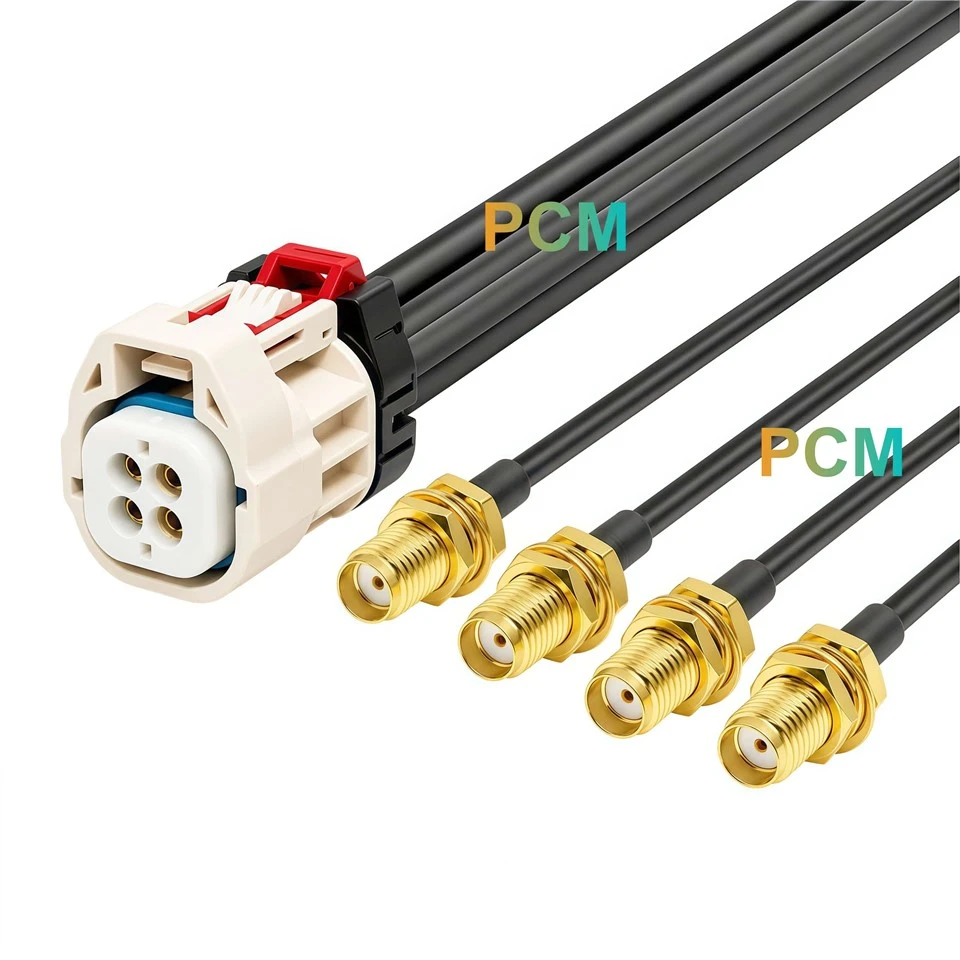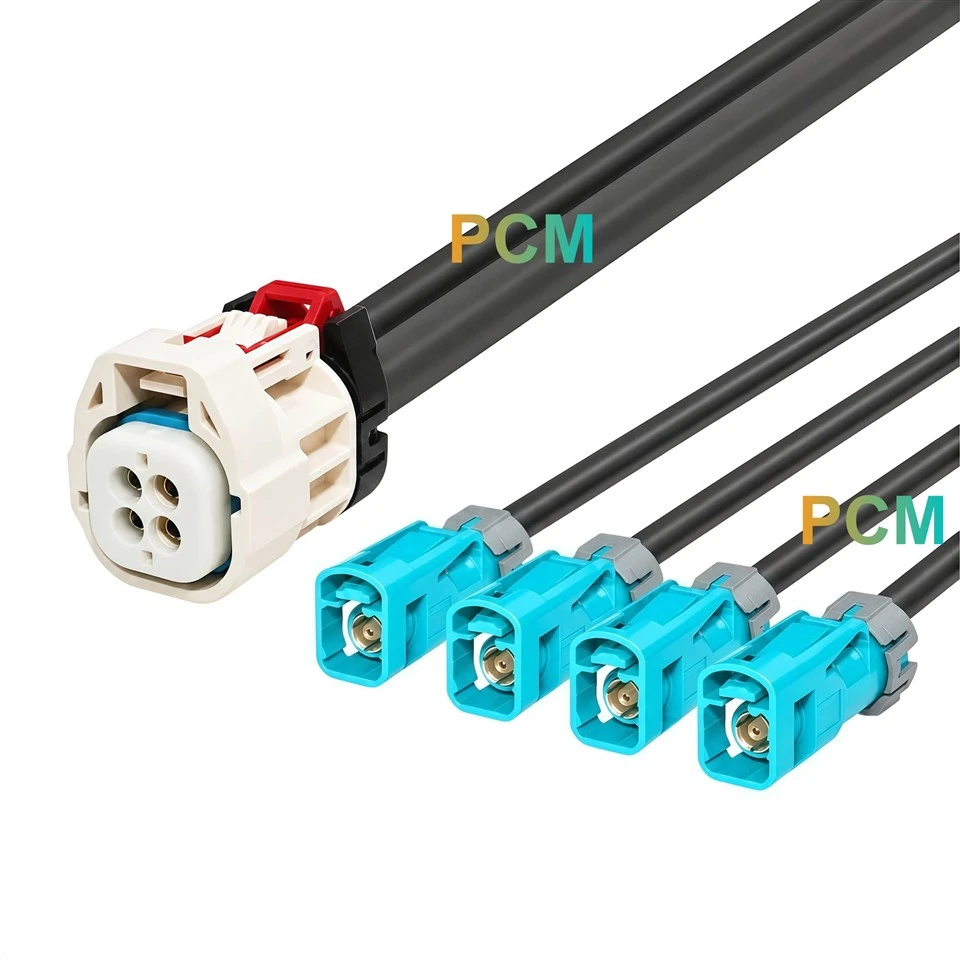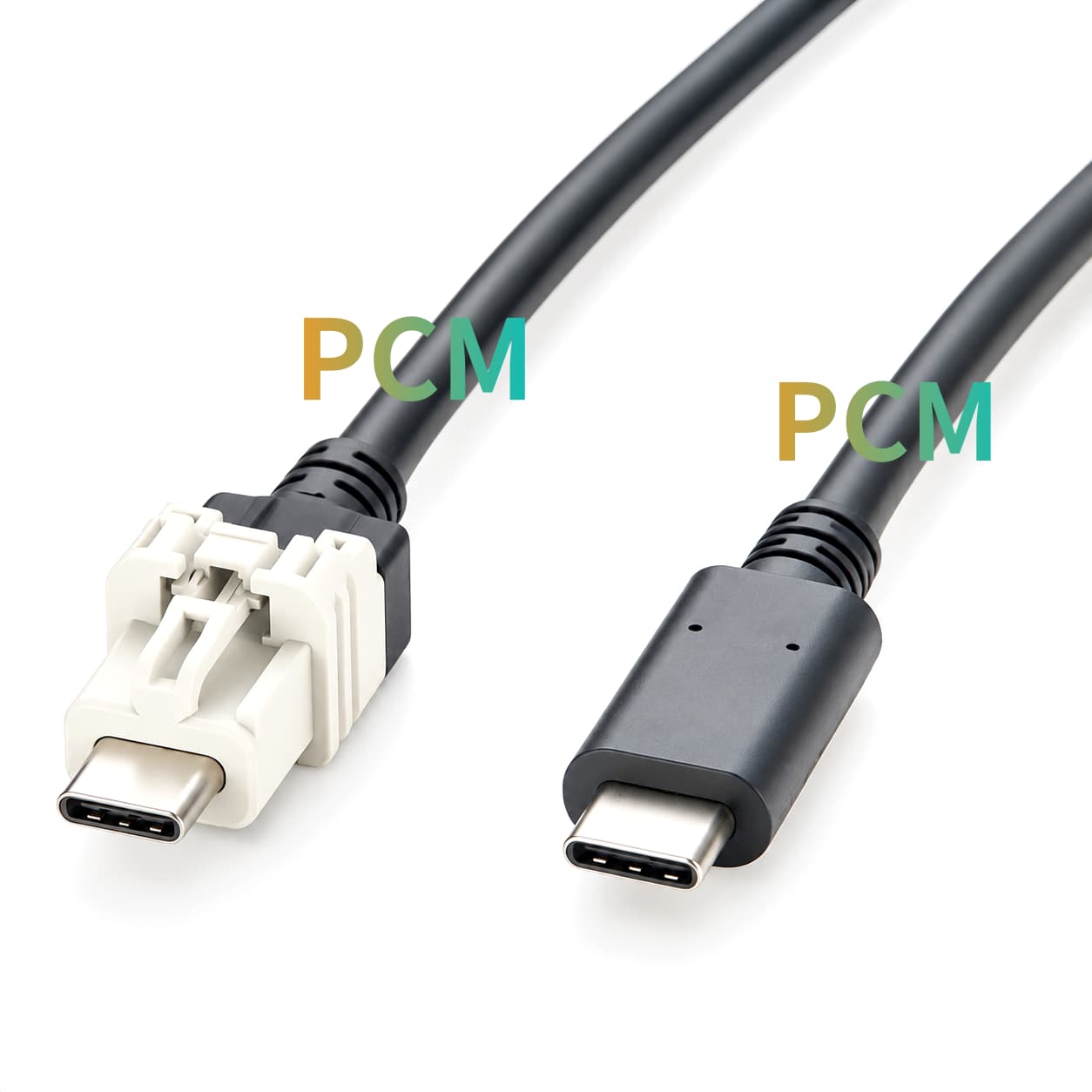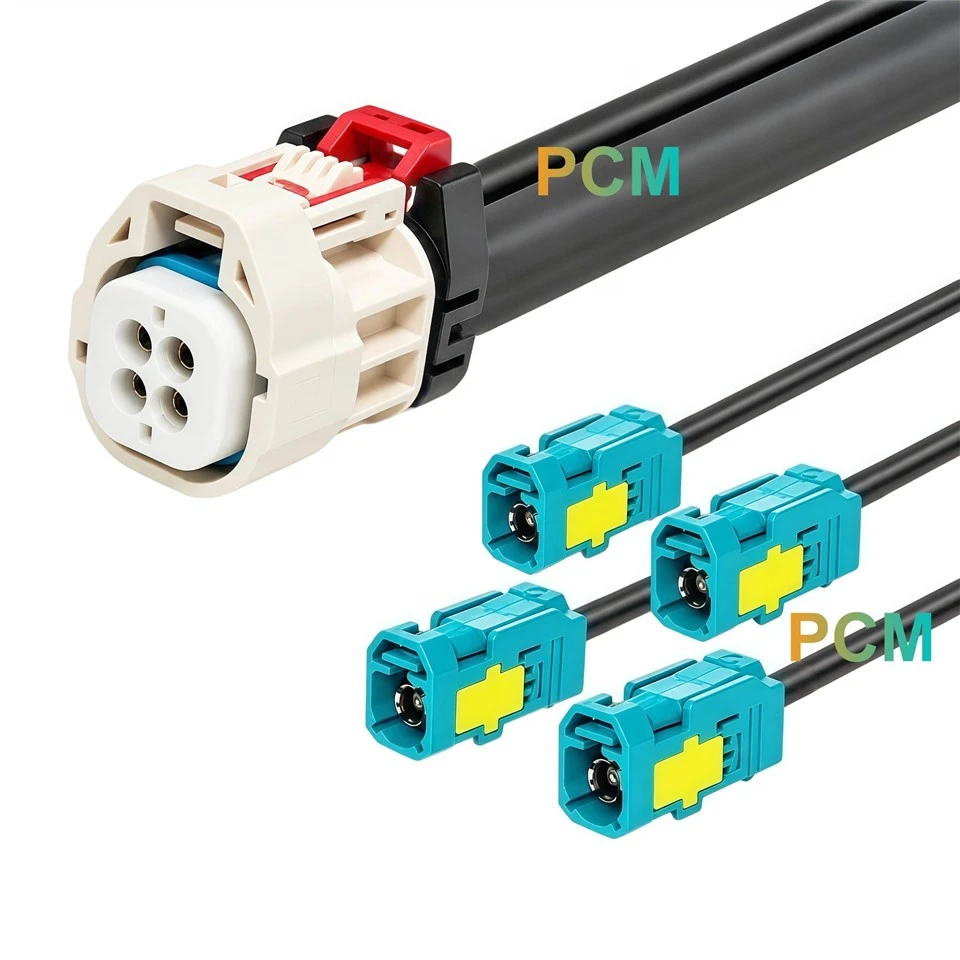
Hybrid Cable vs Separate Power, Encoder and Ethernet Cables
5 reasons servo systems, robots and automation equipment are moving from separate power, feedback and Ethernet cables to integrated hybrid cable assemblies.
📋 Contents
Why Separate Servo Cables Create Design Problems
In many servo systems, one motion axis may require a motor power cable, an encoder or feedback cable, and an Ethernet or communication cable. This separate-cable architecture is familiar, but it also creates more cable glands, more connectors, more routing space, and more potential failure points.
For machine builders, the real challenge is not only electrical connection. It is cabinet space, wiring labor, EMC protection, maintenance access, cable routing, and long-term field reliability. In compact robots, servo motor housings, control cabinets, CNC machines, and automated production cells, three separate cable runs can quickly become a design limitation.
Buyer focus: The sourcing question is not only "which servo cable do I need?" but also "can power, feedback signal and Ethernet communication be integrated into one reliable industrial cable assembly?"

What Is a Hybrid Cable?
A hybrid cable is a cable assembly that combines multiple electrical functions in one cable structure. Instead of using separate cables for motor power, encoder feedback, and industrial Ethernet communication, a hybrid cable integrates different conductors, shielding layers, signal contacts, and data transmission paths into one managed assembly.
In servo drives and industrial robots, hybrid cable assemblies are used to simplify machine wiring and reduce the number of external cable runs. Depending on the connector system, a hybrid interface may carry high-current power, signal feedback, and CAT5 Ethernet communication through one rugged industrial connector.
5 Reasons to Consolidate into One Hybrid Cable
1. Less wiring space inside cabinets and machines
Control cabinets, robot bases, servo motor housings and machine panels all have limited space. Every additional cable requires routing space, bending radius, cable glands, clamps, labels and service access. One hybrid cable can reduce cable congestion and create a cleaner wiring layout.
2. Faster installation and lower assembly labor
Each separate cable requires stripping, routing, termination, testing and labeling. In production equipment, wiring labor can become a major cost. A hybrid cable assembly reduces the number of cable runs and connector operations, helping machine builders improve assembly efficiency and reduce wiring mistakes.
3. Fewer connection points and lower failure risk
Connectors, terminals and field terminations are common failure points in industrial environments. Vibration, moisture, incorrect assembly and repeated maintenance can all affect connection reliability. Consolidating power, signal and data into one hybrid interface can reduce the total number of connection points.
4. Cleaner routing for moving robot arms and drag-chain systems
Moving systems such as robotic arms, linear axes and drag-chain installations require careful cable routing. Too many separate cables increase bending stress and make cable management more difficult. A hybrid cable helps simplify the cable path and makes the routing more organized.
5. Better integration for modern servo drives and industrial Ethernet
Modern servo systems increasingly require high-speed communication, feedback signals and reliable power delivery at the same time. Hybrid cable assemblies support this trend by combining power, signal and Ethernet transmission in one compact industrial interface.
When Separate Cables Still Make Sense
Hybrid cables are useful, but they are not the correct answer for every machine. Separate power, encoder and Ethernet cables may still be preferred when the system requires independent replacement, different routing paths, or complete physical separation between high-power and sensitive signal circuits.
Engineering note: Hybrid cable selection should be based on the actual machine layout, voltage/current requirement, EMC environment, cable length, maintenance strategy and internal wiring design.
Where M23 Hybrid Connectors Fit In
M23 hybrid connectors are widely used when machine builders need a rugged circular connector for integrated power, signal and Ethernet transmission. They are suitable for servo drives, servo motors, industrial robots, control cabinets, CNC machines, packaging equipment, conveyors and motion control systems.
A typical M23 hybrid connector can support power contacts, signal contacts and 4-pin CAT5 Ethernet transmission in one compact interface. With IP67 protection, 360° EMC shielding, shock and vibration resistance, and a wide operating temperature range, this connector type is designed for harsh industrial environments.
Premier Cable M23 Hybrid Cable Options
Premier Cable supplies M23 hybrid cable assemblies for robotics, servo drives and industrial automation equipment. The following two configurations cover common machine-building requirements: panel-mount internal wiring and direct device-to-device connection.

Premier Cable PCM-S-0748
M23 Hybrid Panel-Mount Cable, 0.5 m to Open End
This cable is designed for equipment that needs a fixed M23 hybrid interface on the machine panel, motor housing, robot joint or control box. The open end allows internal soldering, crimping, terminal connection or PCB integration.
M23 flange / chassis panel-mount connector
0.5 m open cable end for custom internal wiring
Power, signal and CAT5 Ethernet in one interface
Suitable for robot joints, servo motor housings and control boxes

Premier Cable PCM-S-0747
M23 Hybrid Male-to-Male Cable, 2 m
This fully terminated M23 male-to-male cable is used for direct device-to-device connection, such as servo drive to motor, control cabinet to robot arm, or automation equipment interconnects.
M23 male to M23 male cable assembly
2 m standard cable length
Power, signal and CAT5 Ethernet transmission
Plug-and-play connection with no open-end termination required
How Buyers Choose the Right Cable Structure
When choosing between separate cables and hybrid cables, buyers should confirm the machine layout, connector position, wiring method, voltage/current requirement, Ethernet requirement and maintenance strategy.
RFQ Checklist for M23 Hybrid Cable Assemblies
To quote the correct cable assembly, please confirm the following details:
Connector type: panel mount, male-to-male, female-to-male or open end
Cable length
Pin assignment
Power rating: voltage and current
Signal definition
Ethernet requirement
Shielding requirement
Panel cutout and mounting method
Internal termination method
Application environment
Quantity
Drawing, photo or original sample if available
Typical Applications
M23 hybrid cable assemblies are used in equipment where power, feedback signal and Ethernet communication must be routed together in a compact and reliable way.
Servo Drives & Motors
Servo drive to motor connection
Encoder feedback wiring
Motor brake and signal circuits
Motion control axis wiring
Industrial Robotics
Robot joint wiring
Robot arm modules
Actuator and control unit connection
Compact internal cable routing
Industrial Automation
Control cabinets
CNC machines
Packaging equipment
Conveyors and automated sorting systems
Need an M23 Hybrid Cable for Your Servo or Robotics Project?
Premier Cable supplies M23 hybrid cable assemblies for power, signal and Ethernet transmission in industrial automation systems. Whether you need a panel-mount open-end cable for internal machine wiring or a male-to-male cable for direct device connection, we can support standard and customized cable assembly requirements.
M23 hybrid panel-mount cable to open end
M23 hybrid male-to-male cable assembly
Power, signal and CAT5 Ethernet integrated connection
IP67 industrial cable assembly options
Custom cable length, pin assignment and internal wiring support
Project-based cable assembly support for robotics and servo systems
Frequently Asked Questions
What is the difference between a hybrid cable and separate servo cables?
A hybrid cable combines multiple functions such as power, feedback signal and Ethernet communication in one cable assembly. Separate servo cables use individual cables for motor power, encoder feedback and network communication.
Can a hybrid cable carry power and Ethernet together?
Yes. Industrial hybrid cable assemblies can be designed with separated power contacts, signal contacts and Ethernet data pairs inside one connector system. Proper shielding and connector design are important for stable signal transmission.
Where are M23 hybrid connectors commonly used?
M23 hybrid connectors are commonly used in servo drives, servo motors, industrial robots, control cabinets, CNC machines, packaging equipment, automated production lines and motion control systems.
Should I choose a panel-mount open-end cable or a male-to-male cable?
Choose a panel-mount open-end cable when you need a fixed interface on the machine housing and custom internal wiring. Choose a male-to-male cable when you need a direct plug-and-play connection between two compatible M23 hybrid interfaces.
Can Premier Cable customize M23 hybrid cable assemblies?
Yes. Premier Cable can support custom M23 hybrid cable assemblies with different lengths, connector types, pin assignments, shielding structures and open-end wiring requirements based on customer drawings or application needs.
Source M23 Hybrid Cable Assemblies
Premier Cable supplies M23 hybrid cable assemblies for servo drives, industrial robots, control cabinets, CNC machines, packaging equipment, conveyors and custom automation systems. Contact us with your drawings, photos or specifications to confirm the correct cable configuration.