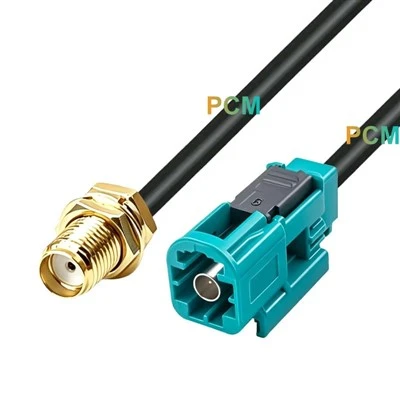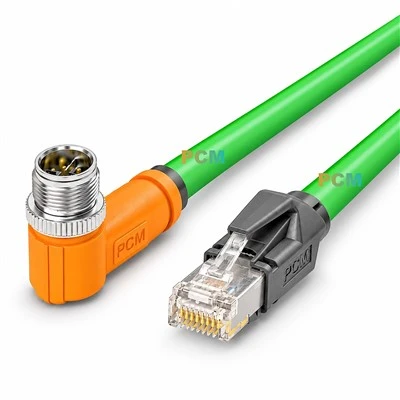
There are many types of cables for industrial cameras. According to different application scenarios and camera interface types, common cables include:
USB cables
USB 2.0/3.0/3.1/3.2 cables: commonly used for medium and low-speed industrial cameras, providing stable transmission rates and convenient connection methods.
USB Type-C cables: widely used in recent years, with high bandwidth, reversible pluggable features, suitable for high-speed transmission needs.


GigE Ethernet cables
Cat5e/Cat6/Cat6A network cables: used for GigE Vision cameras, suitable for long-distance transmission (usually up to 100 meters), and support high-speed data transmission.
Cat7/Cat8 network cables: for ultra-high-speed transmission needs, support higher bandwidth and stronger anti-interference capabilities.


Camera Link cables
Standard Camera Link cables: support high-bandwidth industrial camera transmission, usually used in application scenarios requiring high resolution and high frame rate, with the ability to transmit multi-channel synchronous signals.
Mini Camera Link cables: small in size, more suitable for compact devices.
CoaXPress Cable
BNC Cable: Supports ultra-high-speed data transmission, up to 12 Gbps bandwidth, suitable for long-distance transmission, and supports high-resolution and high-frame-rate image data.
HDMI/DVI Cable

HDMI Cable: Used for high-resolution image transmission, suitable for the connection between display terminal equipment and industrial cameras.
DVI Cable: Supports high-resolution display, usually used for image output of industrial cameras.
SFP+ Fiber Optic Cable
Used for long-distance high-speed data transmission, optical fiber has the advantages of strong anti-interference ability and long transmission distance, suitable for large-scale industrial monitoring and image acquisition systems.
FireWire (IEEE 1394) Cable

Common in some old industrial cameras, supports medium- and high-speed data transmission, and the interface is mostly 6-pin or 9-pin design.
These cables are selected according to different interface types, data transmission rates, and transmission distance requirements.