

1, Mechanical structure: millimeter level precision and modular design
The mechanical structure of the M8 cable adapter follows the M8 × 1.0 standard thread specification, which enables reliable connection in a compact space with a diameter of only 8mm. Its core mechanical parameters include:
Shell size: The diameter of the adapter shell is 8mm, and the length varies depending on the number of pins. For example, the typical length of a 4-pin straight head adapter is 30-35mm, while models with shielding layers may increase to 40mm to accommodate the shielding layer grounding structure.
Pin configuration: Supports 3-to-8-core signal transmission, commonly configured as 3-pin (power+signal+ground), 4-pin (dual signal+power+ground), and 5-pin (RS-485 communication+power). The pin spacing is 2.5mm, in compliance with IEC 61076-2-101 standard, ensuring signal isolation under high-density wiring.
Interface form: divided into two physical structures: straight head and elbow. The straight head adapter is suitable for straight wiring scenarios, such as sensor connections at robot joints; The elbow adapter optimizes space utilization through a 90 ° angle design and is commonly used in equipment panel installation.
Coupling method: Adopting a threaded locking structure, the male and female heads are screwed together through M8 × 1.0 threads, combined with anti misplacement design (such as female head gap and male head protrusion), to ensure connection stability even in vibration environments.
Case: In the joint wiring of KUKA KR CYBERTECH nanorobot, a customized M8 4-pin straight head adapter is used. Through miniaturization design, the adapter volume is reduced by 40%, reducing the inertia of the robotic arm by 15% and significantly improving the motion accuracy.
2, Electrical parameters: precise adaptation in low-power scenarios
The electrical parameter design of M8 cable adapter is closely focused on the requirements of industrial sensors and actuators, and its core indicators include:
Rated current: 0.5A to 4A (some customized models can reach 6A), covering the power supply needs of low-power devices such as encoders and temperature sensors. For example, the joint sensors of the Fanuc CR-35iA collaborative robot use M8 adapters to transmit 0-10V analog signals, with a working current of only 2A.
Rated voltage: 24V to 250V AC/DC, supporting a wide range of scenarios from sensor power supply to small motor control. In the automotive welding robot, the M8 adapter supplies power to the solenoid valve of the end effector through 24V DC, while transmitting EtherCAT bus signals.
Signal integrity: Adopting gold-plated contacts (contact resistance<5m Ω) and shielding layer design to ensure the anti-interference ability of high-frequency signal transmission. For example, the Siemens SIRIUS M8 smart connector has a built-in temperature sensor that transmits connection status data through IO Link protocol, with a signal packet loss rate of less than 0.001%.
Insulation performance: The insulation resistance exceeds 100M Ω, in compliance with IEC 60332-2-2 standard, to prevent the risk of short circuit caused by insulation failure.
Data: In the joint wiring test of ABB YuMi dual arm robot, an M8 adapter was used to transmit RealTime Ethernet signals, achieving 0.5ms level synchronous control and reducing latency by 60% compared to traditional solutions.
3, Environmental adaptability: stability guarantee under extreme working conditions
The vibration, humidity, oil pollution, and electromagnetic interference in industrial sites pose strict requirements for the reliability of connectors. The M8 cable adapter achieves full scene coverage through the following design:
Protection level: The basic model reaches IP67 (dustproof and waterproof), which can withstand immersion in water up to 1 meter deep; Customized models support IP69K (high-pressure water gun flushing), suitable for scenarios with strict cleaning requirements such as food processing and chemical industry.
Temperature resistance range: operating temperature range of -40 ℃ to+105 ℃, covering extreme environments such as Arctic cold storage and Middle Eastern refineries. For example, the stainless steel cover type M8 adapter launched by Moore Electronics can maintain structural stability in high-temperature cleaning processes in the food processing industry.
Anti vibration design: The threaded coupling structure is matched with a nickel plated copper shell, and the insertion and extraction torque reaches 1.5N · m. It can still maintain stable connection under ± 5G vibration environment. In the KUKA KR QUANTEC series heavy-duty robots, the M8 adapter integrates power supply, brake control, and safety bus through an 8-core design, reducing single joint wiring time from 45 minutes to 8 minutes.
Electromagnetic compatibility: The shielding layer design ensures that the EMC performance meets the IEC 61326-1 standard, effectively suppressing interference in factory environments with dense frequency converters and servo drives.
Practice: Yaskawa Electric's MOTOMAN-GP series robots use M8 adapters to build a "modular interface system" that supports quick replacement of end effectors, reducing equipment downtime by 70% and saving over 2 million yuan in annual maintenance costs.
4, Industry Certification and Standards: Global Quality Endorsement
The production of M8 cable adapters must strictly follow international and industry standards, and its core certifications include:
IEC 61076-2-101: defines the dimensions, electrical performance, and testing methods of circular connectors to ensure interchangeability worldwide.
EN 60529: Requirements for testing the protection level (IP code), such as IP67, which requires passing a 1-meter immersion test.
UL 94: Material Flammability Certification ensures the safety of adapter housings in fire risk scenarios.
ISO 10993-1: A specialized standard for medical devices that requires adapter materials to pass biocompatibility testing and be suitable for scenarios such as surgical robots.
Case: TE Connectivity's M8 harness configurator has passed ISO 13485 medical certification, and its customized adapter has been applied to da Vinci surgical robots, achieving 0.1mm precision control.
What are the standard sizes and specifications for M8 cable adapters?
Popular Products

HFM Mini FAKRA Cable
Single channel HFM Mini-FAKRA coaxial cable with female-female, male-male and male-female options for ADAS cameras and

IP67 Waterproof HFM FAKRA Cable
IP67 waterproof HFM to FAKRA cable with 4 connector configurations for automotive cameras, ADAS sensors and RF systems.

Hirose ST Series Connector
Hirose ST Series connector cable assemblies featuring ST40X-10S-CV, ST40X-18S-CV, ST40X-24S-CV and ST40X-36S-CV

GMSL2 FAKRA Z Code Camera Cable
3 m GMSL2 cable with FAKRA Z Code female connectors for camera-to-host, ECU, ADAS and machine vision connections.
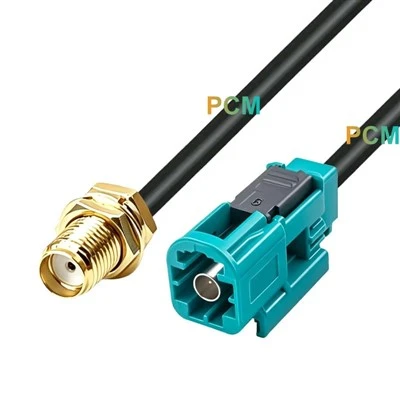
Rosenberger Fakra To SMA Cable
Rosenberger to SMA 50 Ohm coaxial cable with four connector configurations for automotive RF modules, antennas and test
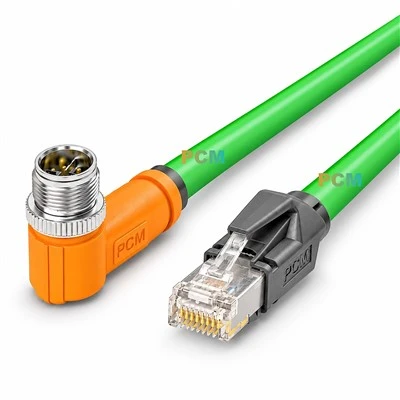
M12 X-Code To RJ45 Cable
M12 X-Code to RJ45 Cat6A cable for 10Gb industrial Ethernet, compatible with X-coded M12 devices, switches and