Automotive Ethernet Cable Selection Guide: How to Choose the Right Cable for ADAS, ECU and Vehicle Networks
A practical guide to selecting an automotive Ethernet cable assembly based on data rate, connector interface, cable length, shielding, installation environment and vehicle application requirements.
Selection principle: Do not select an automotive Ethernet cable by connector appearance alone. The required protocol, target data rate, mating connector, cable construction, link length, shielding and installation conditions must be considered as one complete channel.
Contents
1. What Is an Automotive Ethernet Cable?
An automotive Ethernet cable is a vehicle-grade data link used to connect electronic modules through an Ethernet-based network. Unlike the four-pair Ethernet cables commonly used in offices, many in-vehicle Ethernet standards transmit data over a single balanced twisted pair. This helps reduce cable weight and bundle size while providing the bandwidth needed by cameras, sensors, gateways, domain controllers and other vehicle electronics.
The term automotive Ethernet cable assembly describes more than the bulk cable. A finished assembly includes the selected automotive connectors, terminals, cable, shielding and strain-relief design, together with the required pinout, coding, orientation and length. Its performance therefore depends on the complete assembly. A connector family associated with high-speed transmission does not, by itself, guarantee that every cable made with that connector supports the same protocol or data rate.
This is one of the main differences between a high-speed automotive Ethernet harness and a conventional vehicle wire harness. A traditional harness may primarily distribute power or carry lower-bandwidth control signals. An Ethernet link must also preserve controlled electrical characteristics across the cable, terminals, connector transitions and any inline or breakout points. Pair geometry, impedance, shielding continuity, insertion loss and installation routing can all influence signal integrity.
For that reason, a purchasing specification should distinguish the required Ethernet standard from the physical connector family. It should also state whether the cable is intended for a production vehicle, a prototype, a test bench or a media-converter setup. These details help the manufacturer select an appropriate connector, cable and assembly process instead of relying on a visually similar product.
For purchasing or engineering selection, begin with the devices being connected. Confirm the protocol and target link speed, identify the mating connector at each device, determine the required cable length and routing, and then evaluate environmental requirements such as temperature, vibration, moisture and electromagnetic interference. This approach is more reliable than choosing a cable from its product name or connector shape.
2. Why Are Vehicles Moving Toward Automotive Ethernet?
Modern vehicles exchange far more data than earlier electrical architectures. Multiple cameras, radar modules, LiDAR, digital displays, infotainment systems and software-defined functions can generate or consume continuous high-bandwidth data. Automotive Ethernet gives vehicle designers a scalable network technology for moving this information between sensors, ECUs, gateways and central computing platforms.
CAN and LIN remain useful for many control functions and are not simply replaced in every vehicle. The practical difference is that automotive Ethernet can provide substantially more bandwidth where sensor fusion, diagnostics, software updates, video transport or ECU aggregation requires it. In many architectures, several network technologies operate together, with gateways managing communication between different domains.
| Network | Typical Strength | Common Vehicle Role | Selection Perspective |
|---|---|---|---|
| LIN | Simple, cost-sensitive local control | Actuators, switches and local sub-networks | Suitable when high data throughput is not required |
| CAN / CAN FD | Reliable real-time control communication | Powertrain, body control and distributed ECUs | Continues to serve control-oriented traffic |
| Automotive Ethernet | Scalable high-bandwidth data networking | ADAS, gateways, cameras, diagnostics and central compute | Selected by protocol, speed, channel and connector requirements |
Why this matters to cable selection: A camera link, an ECU link and a gateway backbone may all be described as vehicle data connections, but they can require different protocols, data rates, connector systems and cable constructions.
3. Automotive Ethernet Cable Types by Data Requirement
The most useful way to compare automotive Ethernet cable types is to start with the network requirement rather than the connector brand. The same vehicle may use several Ethernet speeds, and the selected connector and cable must be qualified for the intended link.
100BASE-T1 Automotive Ethernet Cable
A 100BASE-T1 cable provides a 100 Mb/s single-pair Ethernet link. It is commonly considered for sensors, ECUs, diagnostics and other vehicle nodes whose data demand fits within the available bandwidth. The connector, cable and channel still need to meet the project electrical and environmental requirements.
1000BASE-T1 Automotive Ethernet Cable
A 1000BASE-T1 cable provides a 1 Gb/s single-pair link and is often selected where cameras, ADAS processing, gateways or ECU aggregation create higher traffic. Moving from 100 Mb/s to 1 Gb/s is not only a cable change; the PHYs, connectors and complete link must support the target standard.
Multi-Gig Automotive Ethernet Cable
Multi-Gig links are considered for high-resolution sensor aggregation, central computing and next-generation vehicle backbones. At these speeds, cable construction, connector transitions, shielding, assembly length and routing become increasingly important. Specify the exact required rate instead of using "high speed" as the only criterion.
Related Automotive High-Speed Cable Families
After the link requirement is defined, compare connector families according to the mating interfaces on the equipment, the intended protocol and available cable construction.


4. Automotive Ethernet Connector Selection
The correct automotive Ethernet connector is usually determined by the hardware at both ends of the link. If the ECU, camera or gateway already has a specified header, begin with its manufacturer part number, coding and mating interface. For a new design, evaluate space, orientation, sealing, bandwidth and service requirements before selecting the connector family.
| Connector Family | Typical Selection Context | What to Confirm |
|---|---|---|
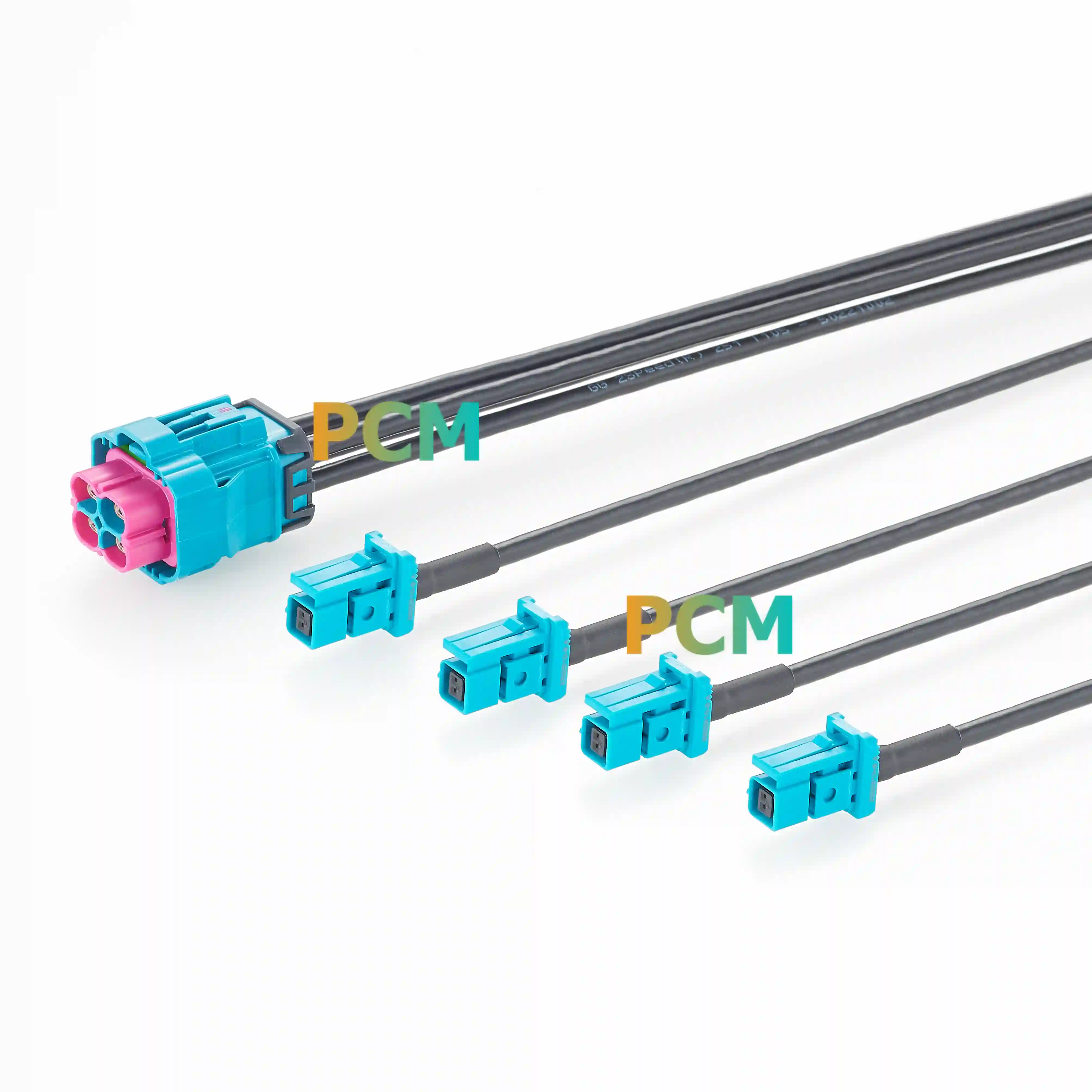
| H-MTD | Compact high-speed connections for vehicle modules, ADAS and higher-bandwidth network links | Port count, coding, orientation, required protocol and target data rate |
| MATEnet | Single-pair automotive Ethernet links between ECUs, gateways, cameras and sensors | Coding, mating part number, 100BASE-T1 or 1000BASE-T1 requirement and cable construction |
| HSD | Camera, display, infotainment, USB, LVDS and selected vehicle data links | Protocol, pin count, coding, power contacts, impedance and device interface |
| HSAutoLink | USB, LVDS, A2B and other high-speed in-vehicle module connections | Mating header, signal type, wiring, shielding and cable length |
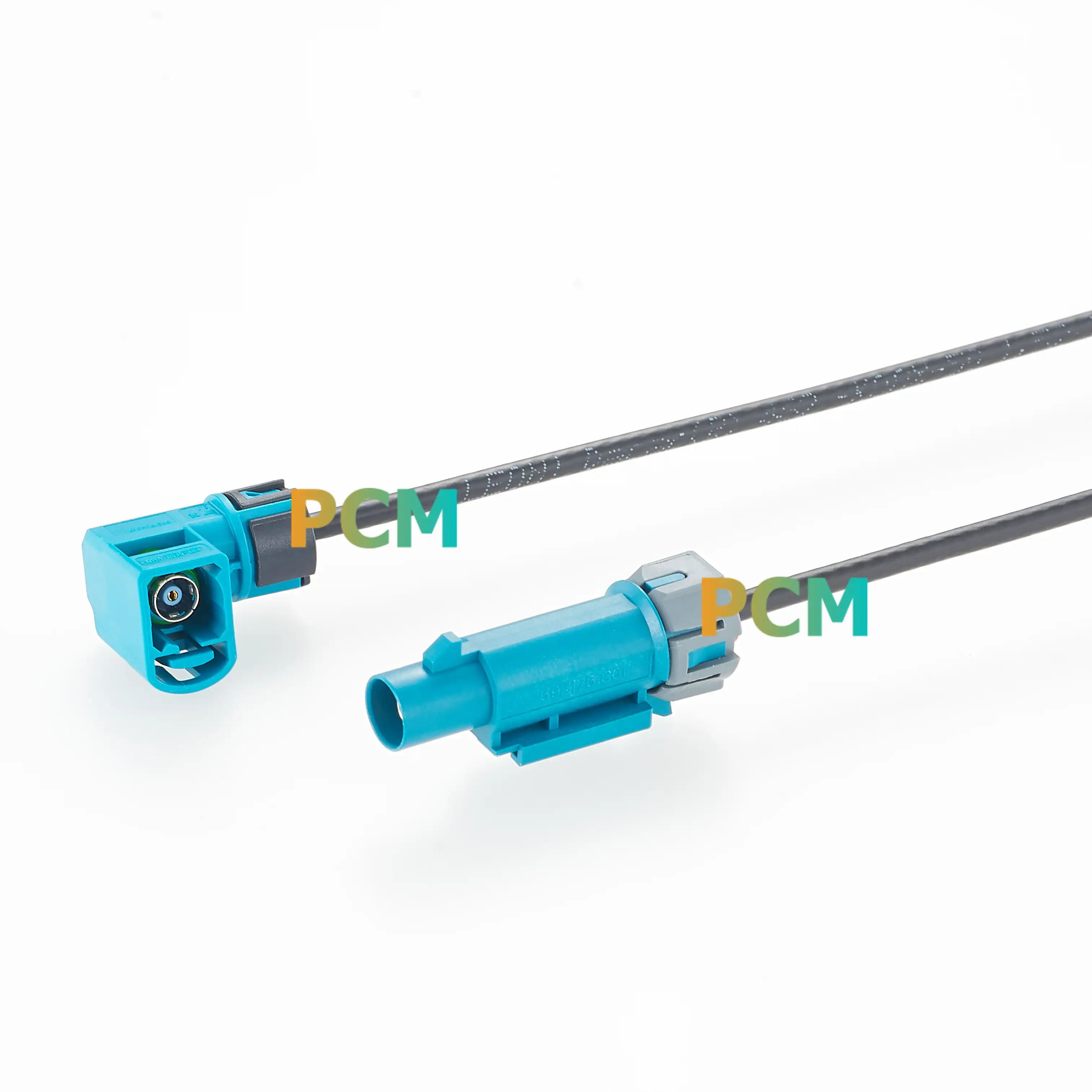
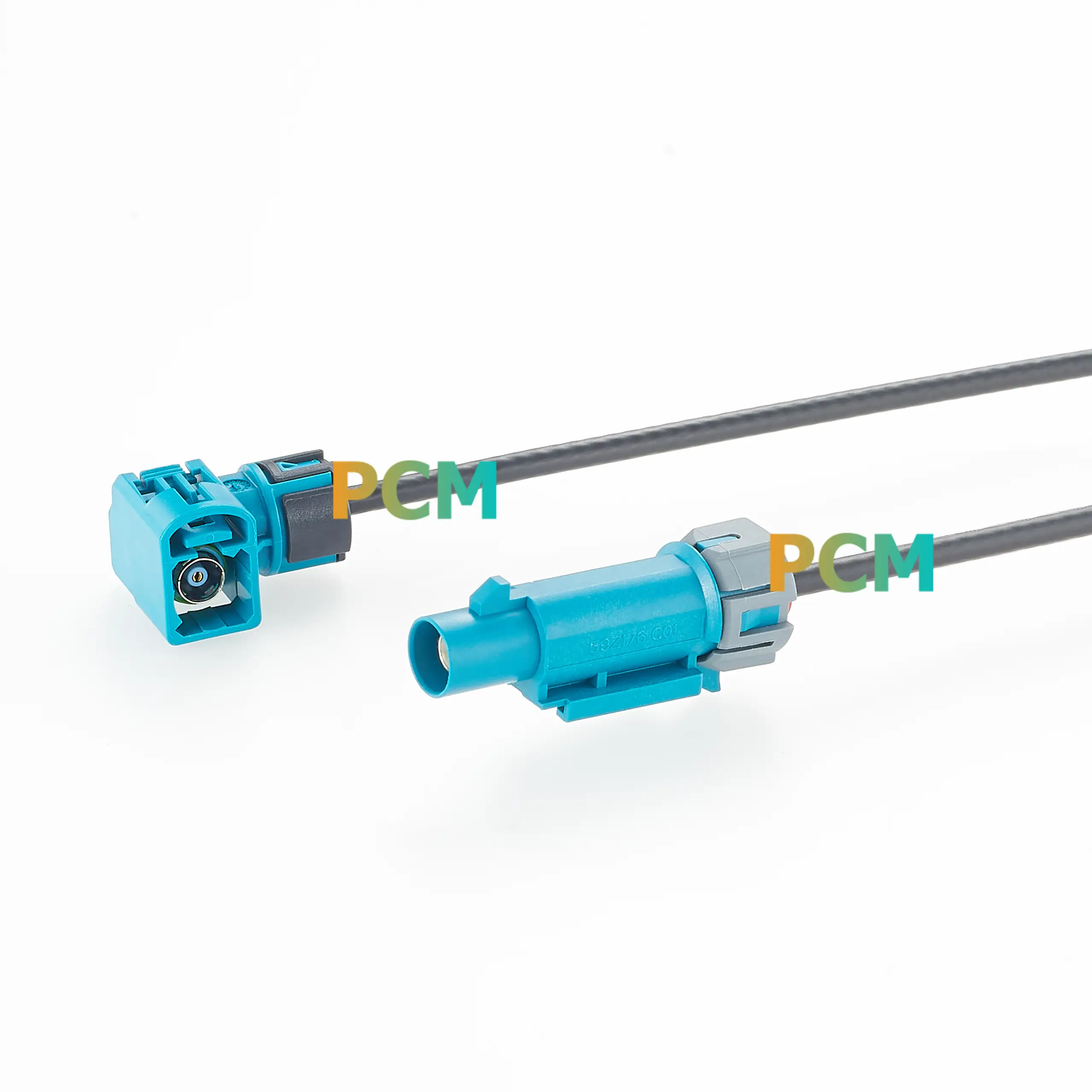
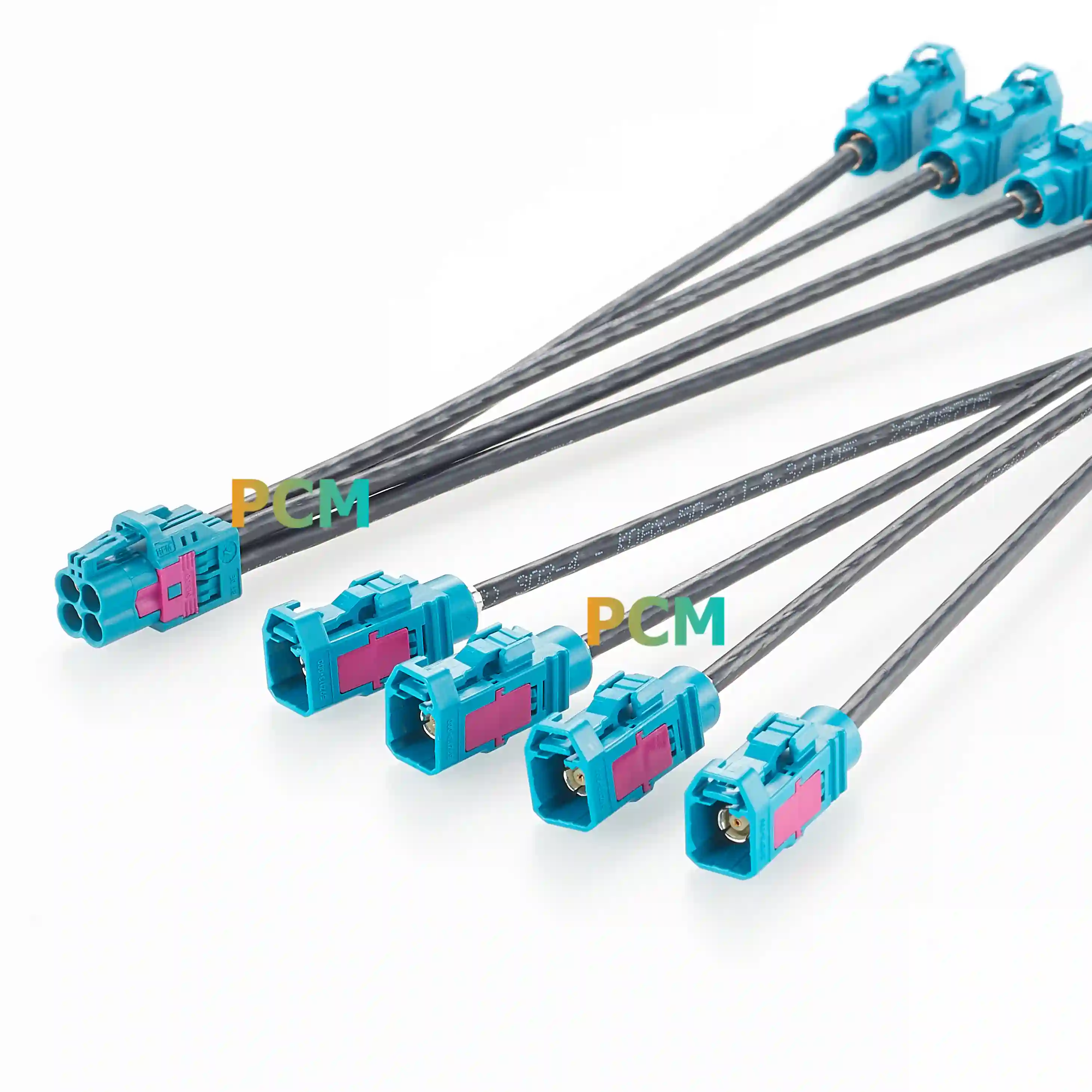
| FAKRA / Mini FAKRA / HFM | Automotive RF, antenna, GNSS, telematics and coaxial camera or SerDes links | These are coaxial interfaces; confirm the actual RF or video protocol instead of assuming single-pair Ethernet |
Important distinction: FAKRA, Mini FAKRA and HFM products are relevant to the broader vehicle high-speed connectivity category, but they should not automatically be described as interchangeable with 100BASE-T1 or 1000BASE-T1 twisted-pair Ethernet cables.
FAKRA Cable Assembly
A coded automotive coaxial interface commonly used for antennas, GNSS, telematics, RF and selected camera connections.
View FAKRA Cables →Mini FAKRA Cable Assembly
A compact automotive coaxial solution available in single- and multi-port configurations for high-density RF and camera interconnects.
View Mini FAKRA Cables →HFM Multi-Port Cable
A high-density multi-port coaxial interface often grouped with Mini FAKRA products for cameras, displays and other high-frequency vehicle connections.
5. Key Factors When Selecting an Automotive Ethernet Cable
5.1 Data Rate and Protocol Requirement
Define the actual protocol and target rate before choosing the connector or cable. "Automotive Ethernet" is not one universal specification, and "high-speed cable" is not a measurable performance requirement. Also confirm whether the connection is truly Ethernet or a different high-speed protocol such as LVDS, GMSL, FPD-Link, USB or A2B.
| Application / Network Need | Common Starting Point | Engineering Check |
|---|---|---|
| Sensor or ECU link with moderate data demand | 100BASE-T1 | Confirm actual payload, latency and future bandwidth margin |
| Gateway, camera or higher-traffic ECU connection | 1000BASE-T1 | Confirm PHY, connector, cable and channel compatibility |
| High-resolution sensor aggregation or backbone | Multi-Gig Ethernet | Specify the exact data rate and electrical performance target |
5.2 Cable Length and Routing
Cable length affects insertion loss, attenuation and signal quality. Routing also matters: tight bends, repeated flexing, nearby power cables, connector transitions and additional inline connections can change channel performance. Provide the required finished length and the installation path rather than selecting an unnecessarily long standard cable. For breakout harnesses, specify both the trunk length and each branch length.
5.3 Shielding and EMI Performance
Vehicles contain switching power electronics, motors, charging systems, wireless modules and many closely routed circuits. The required shielding design depends on the electromagnetic environment and the link performance target. Cable braid or foil is only part of the solution; shield termination and continuity through the connector and assembly are also important. Grounding strategy should be defined at the system level.
5.4 Environmental and Mechanical Requirements
A cable installed inside a protected cabin has different requirements from one routed near an engine compartment, exterior camera or battery system. Confirm operating temperature, vibration, abrasion, chemical exposure, moisture, sealing level, bend radius, connector retention and assembly access. A waterproof connector alone does not make the entire cable assembly waterproof; sealing must be evaluated across the complete mated system.
Before requesting a quotation: prepare the connector part numbers, protocol, target data rate, cable length, pinout, shielding requirement, orientation, application environment and estimated quantity. A drawing or sample can reduce interface uncertainty.
6. Automotive Ethernet Cable Applications
Application context helps define the link, but it should not replace the electrical specification. Two camera systems, for example, may use completely different protocols and connector families.
ADAS Systems
ADAS networks can connect cameras, radar, LiDAR, sensor-fusion ECUs and domain controllers. Selection depends on each device interface, the generated data volume and the architecture used to aggregate or process sensor information.
Vehicle Cameras
Surround-view, rear-view, driver-monitoring and ADAS cameras may use automotive Ethernet or coaxial SerDes video links. Confirm the camera output protocol before choosing between twisted-pair Ethernet and FAKRA, Mini FAKRA, HSD or another interface.
ECU Communication
Automotive Ethernet can link ECUs that require higher bandwidth for diagnostics, software updates, data exchange or domain-level coordination. The mating header, network speed and channel layout should be confirmed for both modules.
Vehicle Gateways and Zonal Controllers
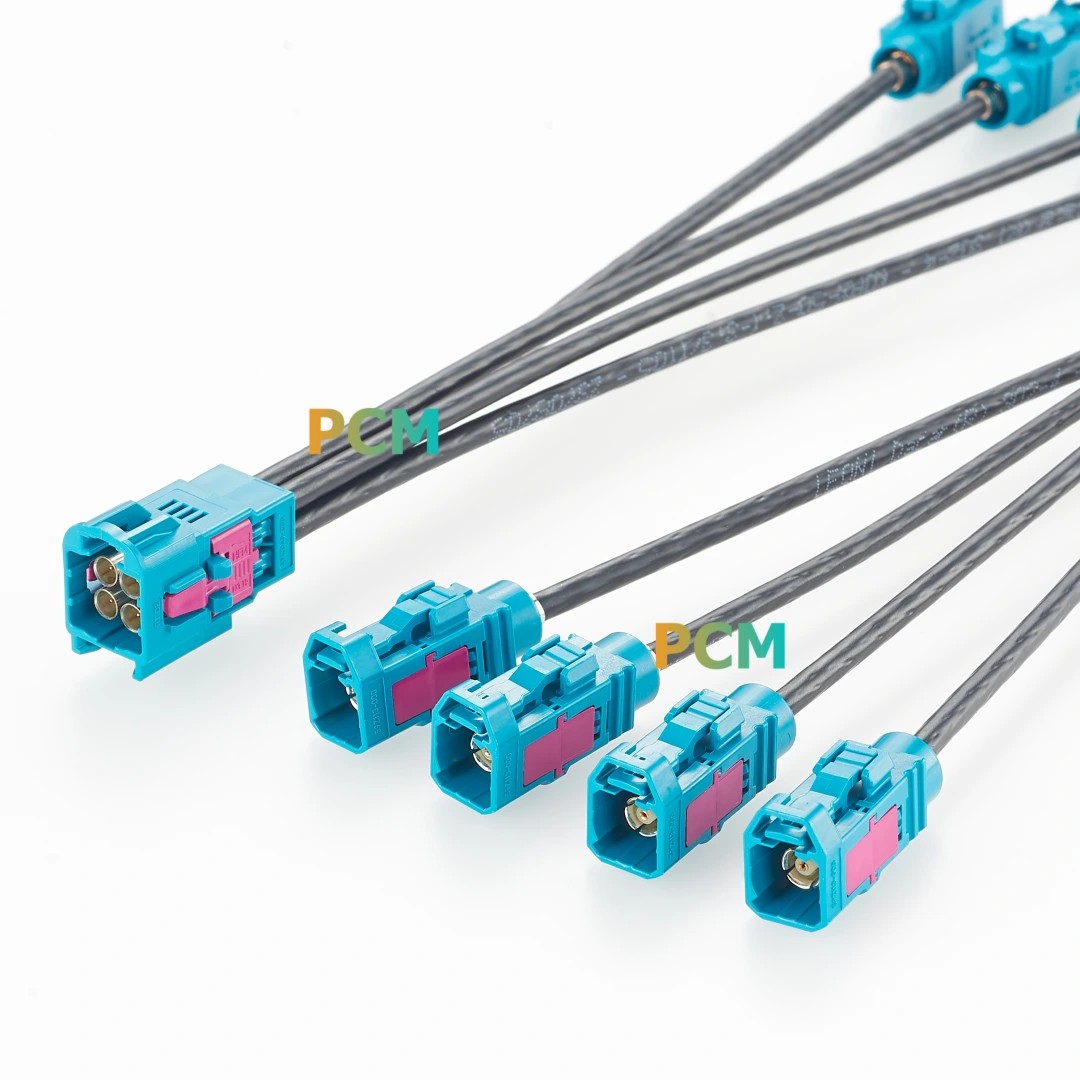
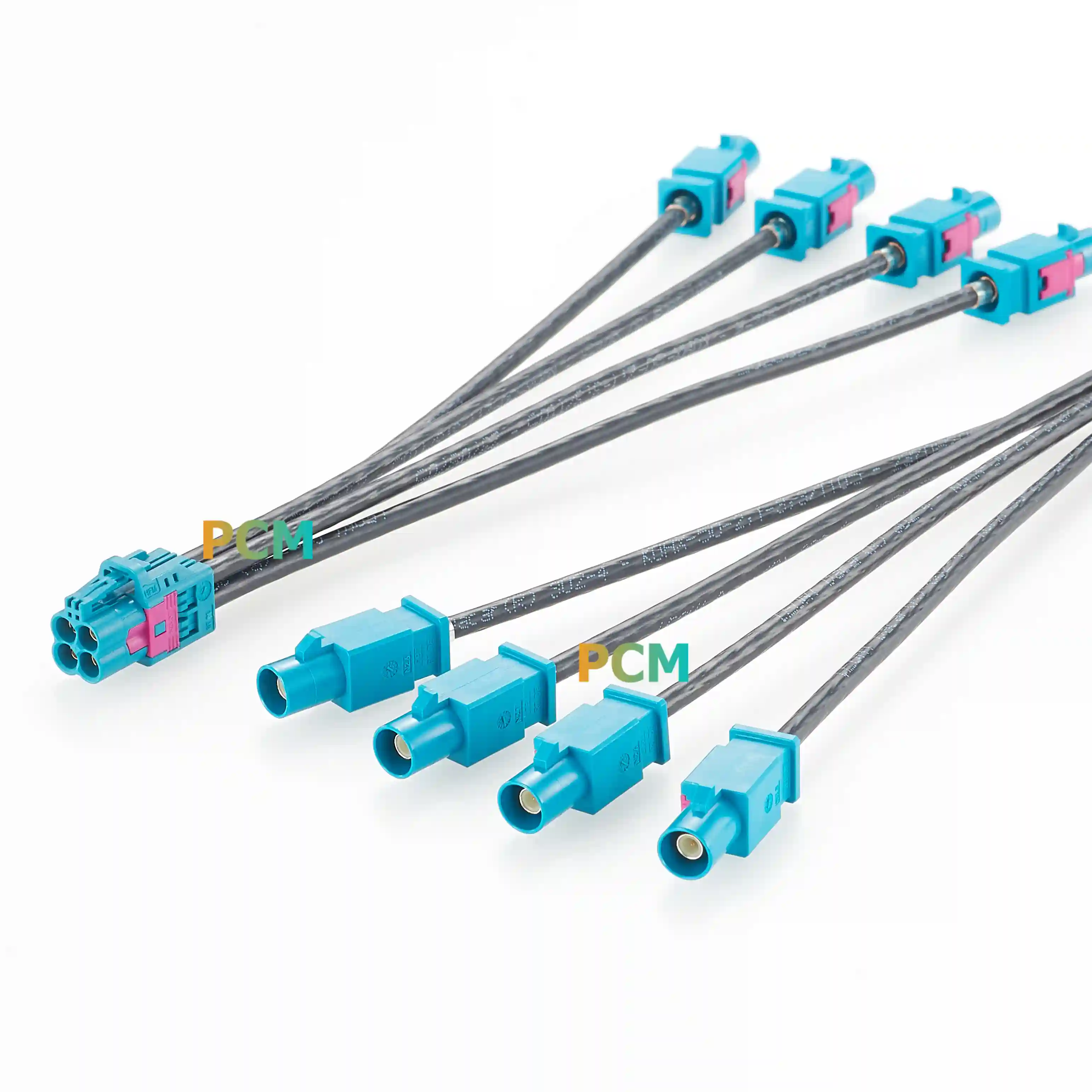
Gateways and zonal controllers aggregate traffic from multiple networks or vehicle zones. These links may need gigabit or multi-gig bandwidth, multi-port connectors, breakout harnesses or adapter cables for development and validation.
7. Custom Automotive Ethernet Cable Solutions
Standard cable assemblies are useful when the device interfaces and installation match an existing configuration. A custom automotive Ethernet cable assembly is more appropriate when a project requires a specific connector combination, cable length, pinout, routing layout, shielding design or environmental construction.
Premier Cable can evaluate connector-to-connector cables, extension cables, open-wire pigtails, adapter cables and multi-branch breakout harnesses based on the provided device and installation requirements.
Connector Selection
- Manufacturer or reference part number
- Coding, keying and contact type
- Straight or right-angle orientation
- Panel-mount or inline interface
Cable Construction
- Custom cable and branch lengths
- Shielding and jacket options
- Required impedance and data rate
- Overmolding, labels and protection
Harness Configuration
- Point-to-point and extension cables
- Open-wire pigtails and adapters
- Dual- or multi-port breakout harnesses
- OEM replacement evaluation
Recommended project information: send the connector models or equipment interfaces, protocol, target data rate, cable length, pinout, shielding requirement, orientation, application, quantity and any available drawing, photo or sample.
Frequently Asked Questions
What is an automotive Ethernet cable used for?
It is used to transmit Ethernet data between vehicle devices such as ECUs, cameras, sensors, gateways, zonal controllers and development equipment. The suitable cable depends on the required Ethernet standard, data rate, connector interface and installation environment.
What is the difference between 100BASE-T1 and 1000BASE-T1?
100BASE-T1 provides a 100 Mb/s single-pair Ethernet link, while 1000BASE-T1 provides 1 Gb/s. The required standard should be selected according to the device PHYs, system bandwidth and complete channel design; a connector or cable should not be assumed to support both automatically.
Which connector is used for automotive Ethernet?
H-MTD and MATEnet are two connector families used for automotive Ethernet links. Other interfaces may be used depending on the OEM, module and protocol. HSD and HSAutoLink support several types of high-speed vehicle connections, so the exact protocol and pinout must be confirmed.
Are FAKRA and Mini FAKRA automotive Ethernet connectors?
FAKRA and Mini FAKRA are automotive coaxial connector families commonly used for RF, antenna, telematics and camera or SerDes links. They belong to the broader automotive high-speed connectivity field but should not automatically be described as single-pair automotive Ethernet connectors.
Can automotive Ethernet cables be customized?
Yes. Connector configuration, cable length, shielding, pinout, orientation, breakout layout, labeling and environmental construction can be customized according to the protocol, equipment interfaces and installation requirements.
Need the Right Cable for Your Vehicle Network?
Need a custom automotive Ethernet cable assembly based on your connector, cable length or vehicle application? Premier Cable provides engineering support and customized harness solutions. Send the mating connector information, protocol, target data rate, length, pinout, shielding requirement and quantity for review.