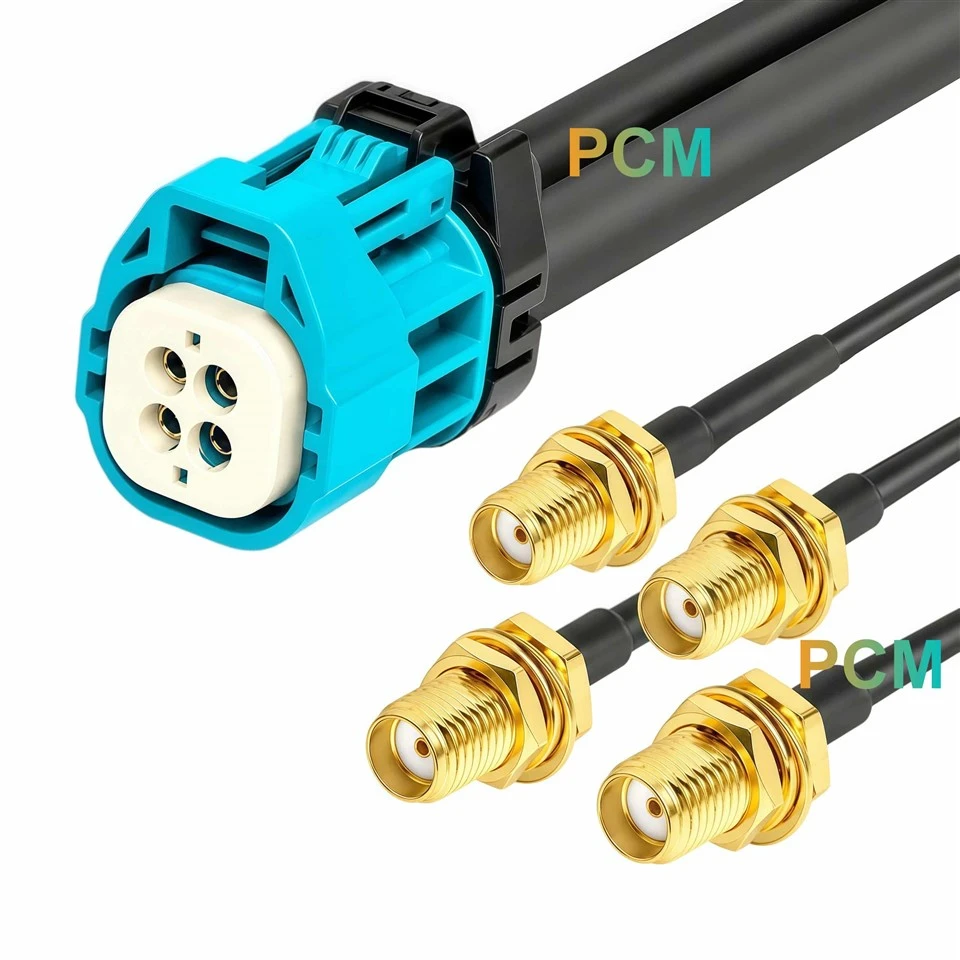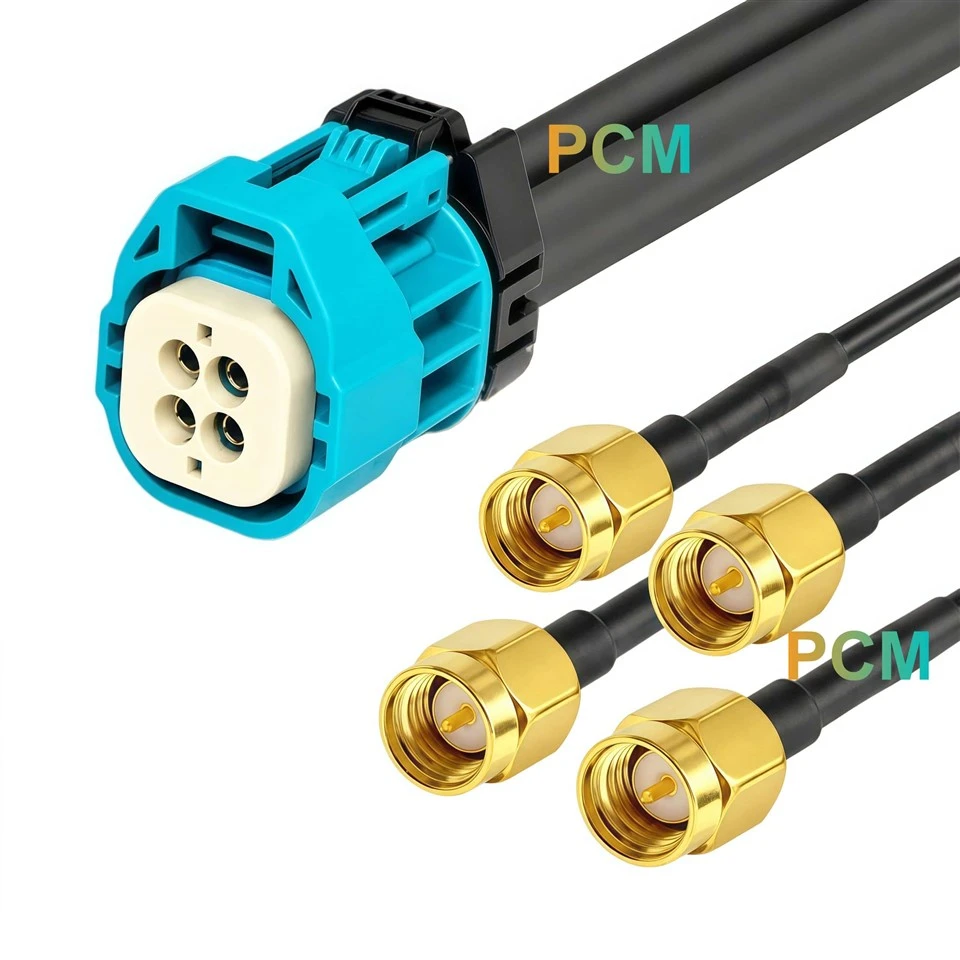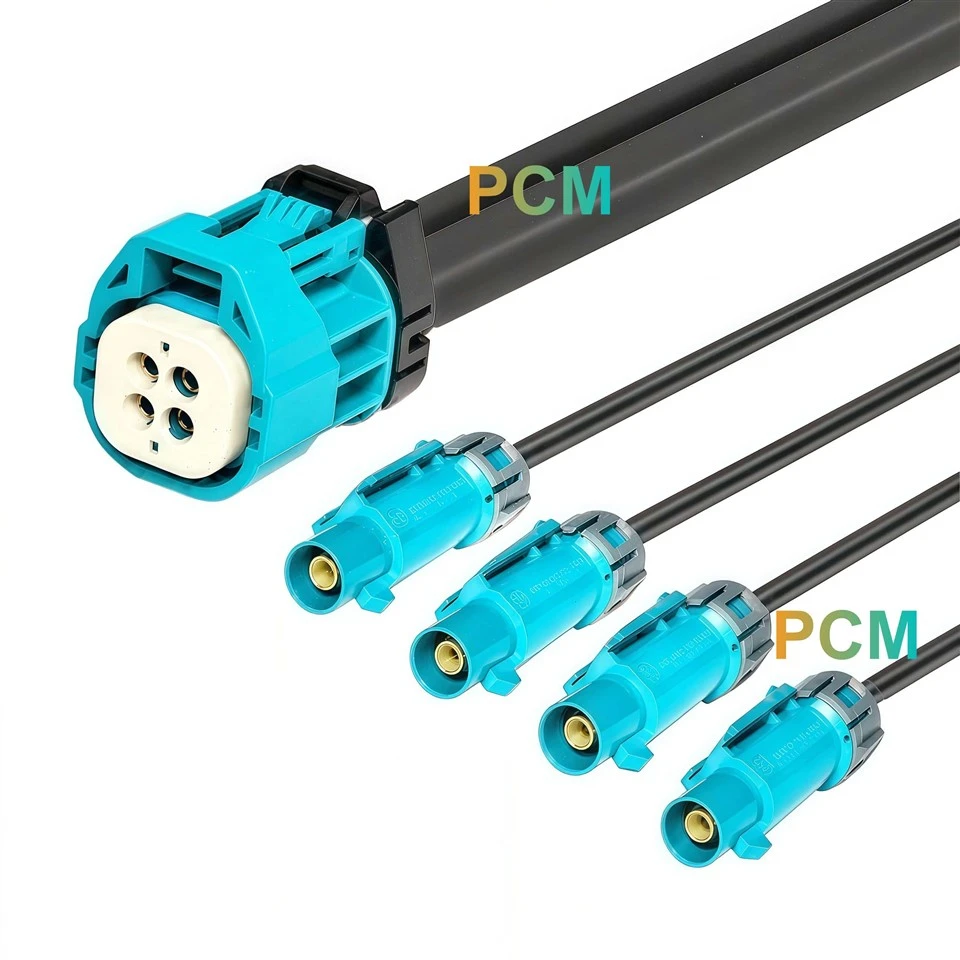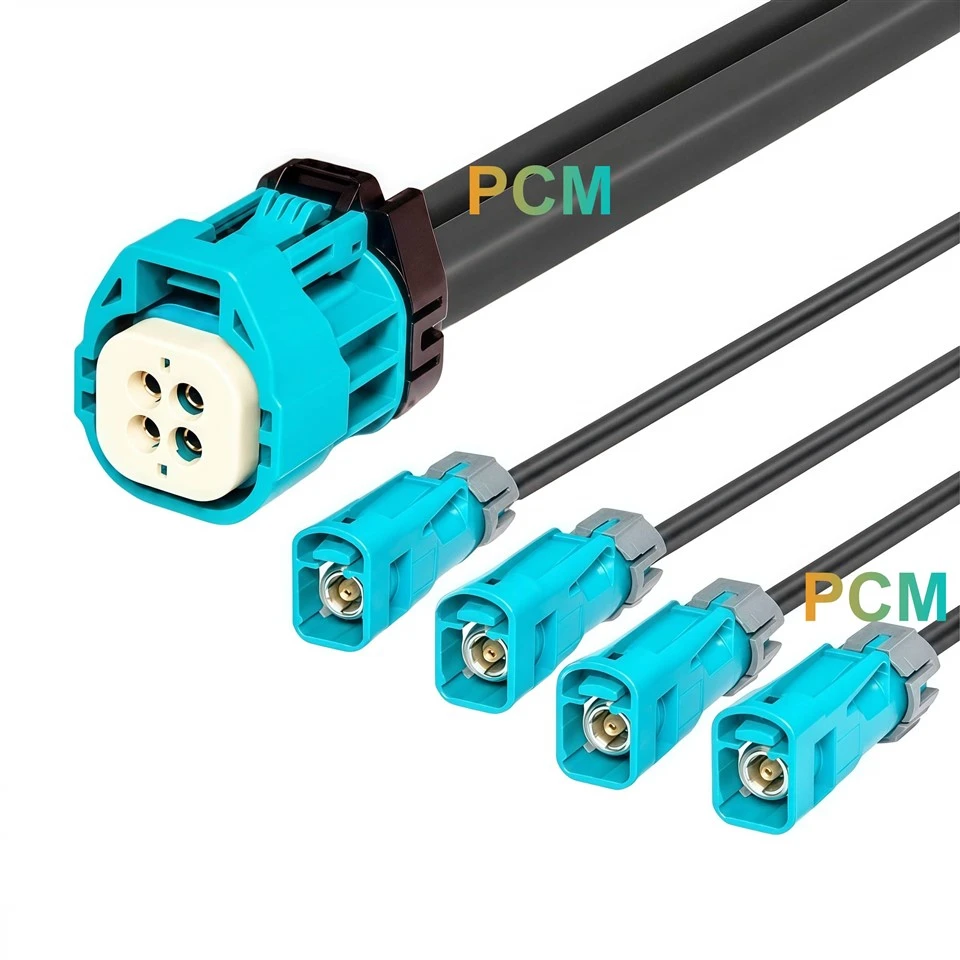
01
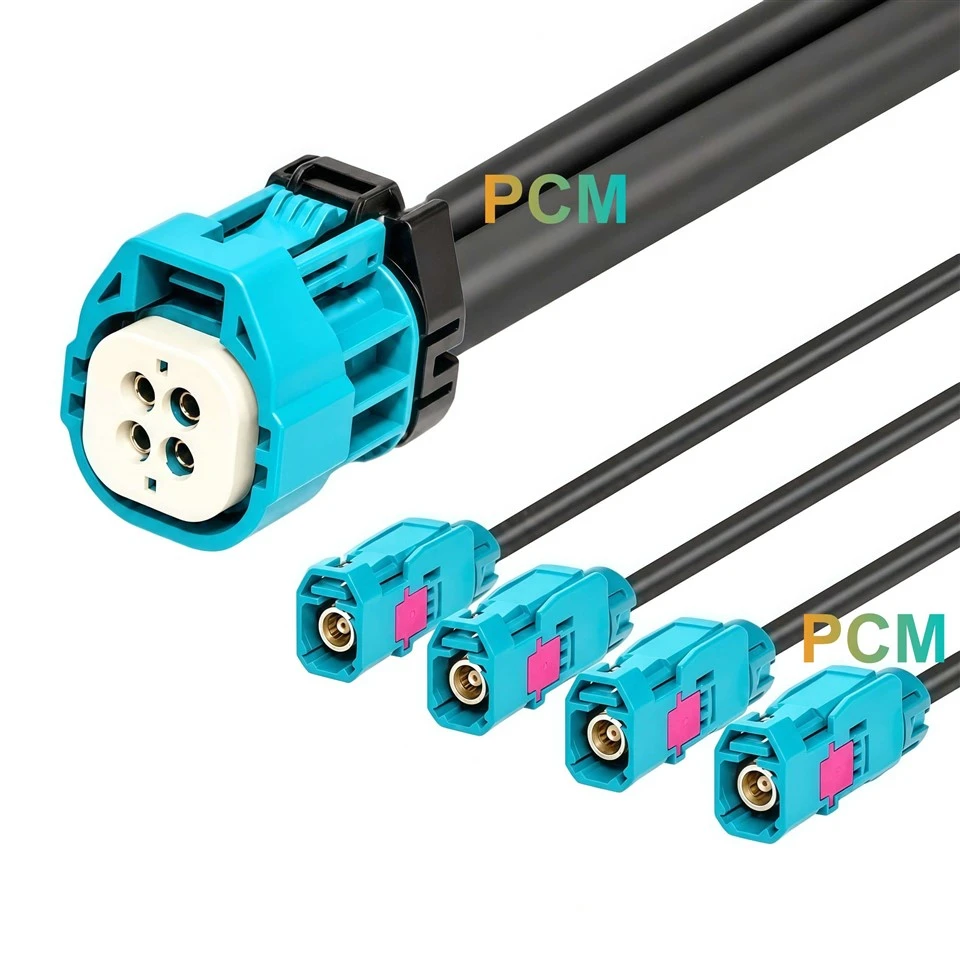
Product Display
|
|
|
|
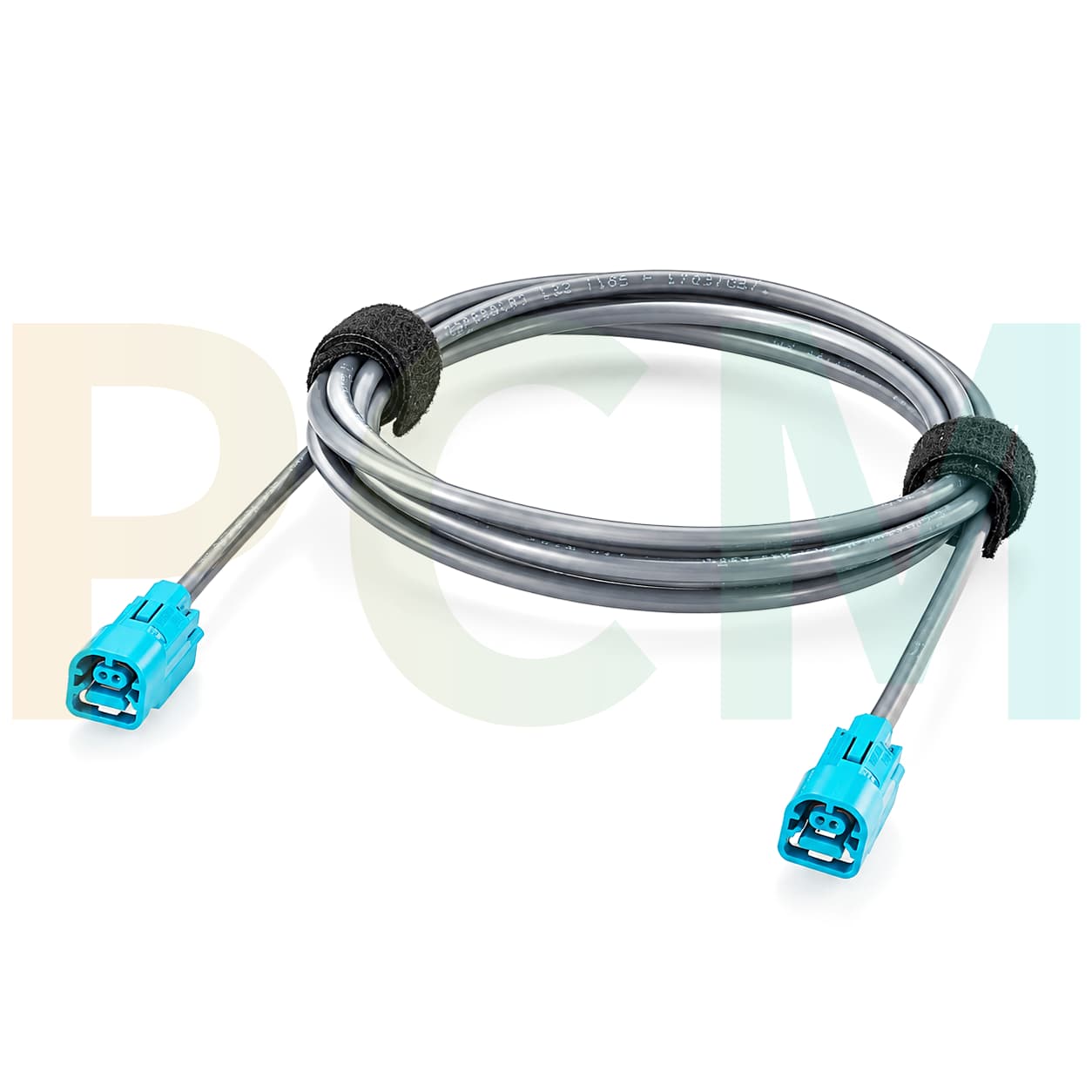

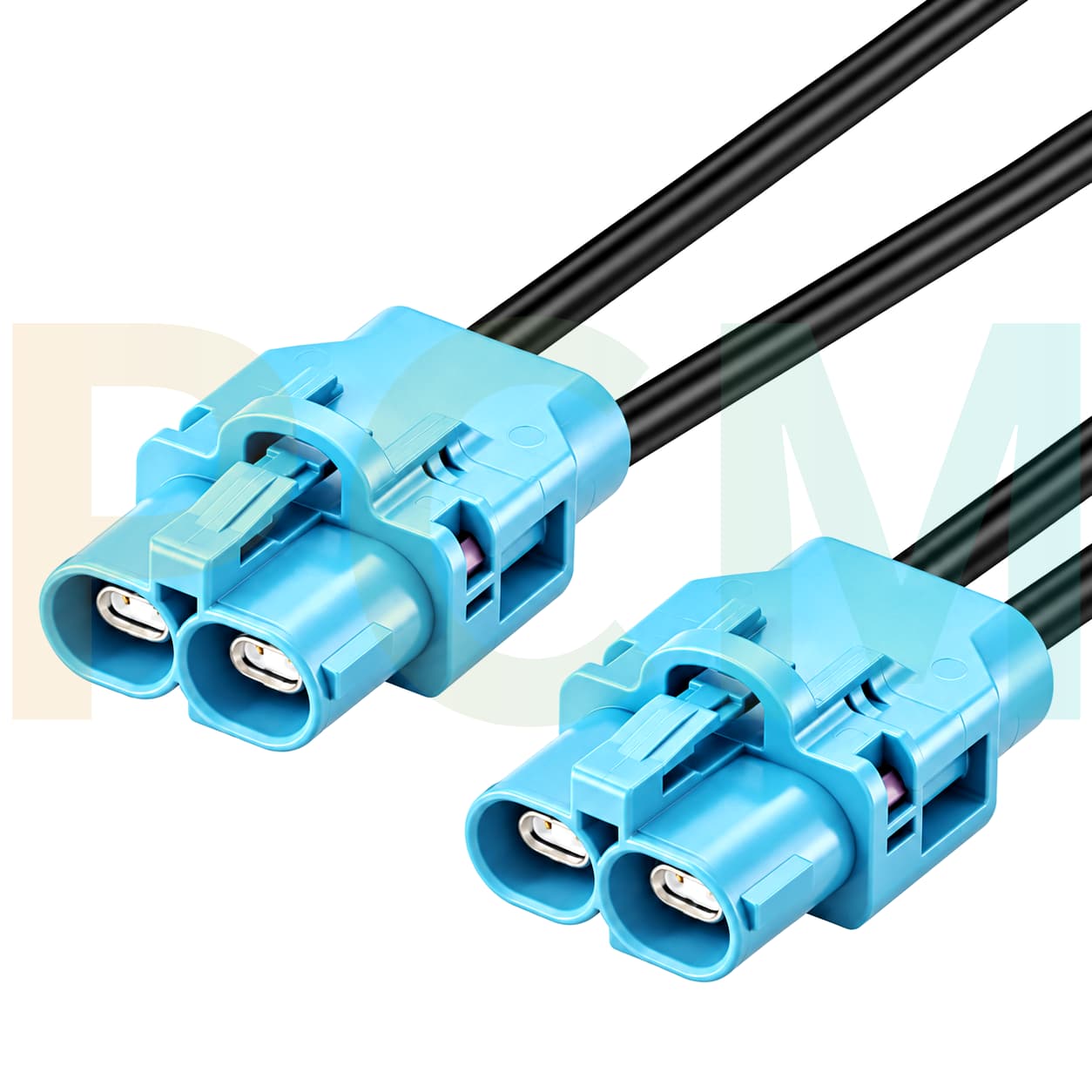
What Is Rosenberger MTD ?

MTD stands for Modular Twisted-Pair Data. It is an automotive data connector system developed by Rosenberger for vehicle Ethernet communication.
The MTD connection system is specifically designed for optimized jacketed twisted-pair cables. Its connector architecture incorporates impedance-controlled transitions between the cable and connector interface, helping maintain the electrical characteristics required for automotive data transmission.
With its compact dimensions, lightweight construction, and modular design, MTD helps automotive manufacturers optimize wiring layouts, reduce installation space, and establish reliable data connections between electronic components.
Key Technical Features of MTD
| Technical Parameter | MTD |
| Product Full Name | Modular Twisted-Pair Data |
| Brand | Rosenberger |
| Nominal Impedance | 100 Ω |
| Frequency Range | DC-1GHz |
| Main Data Rate | 100 Mbps /1 Gbps (Single Link) |
| Main Applications | 100BASE-T1/1000BASE-T1 |
| Connector Type | Wiring Connector, PCB Connector |
| Enclosure Type | Modular structures such as single, double, and five chambers |
One of the key characteristics of MTD is its impedance-controlled connector transition. This design helps reduce signal reflections and maintain signal integrity throughout the transmission channel.
Its honeycomb-style architecture also helps reduce crosstalk, improve differential signal symmetry, and support modular configurations with multiple connection positions.
What Is Rosenberger H-MTD ?
H-MTD stands for High-Speed Modular Twisted-Pair Data. It is a high-performance automotive differential connector system developed by Rosenberger for advanced vehicle data transmission.
Designed to address the increasing bandwidth requirements of modern automotive electronics, H-MTD provides a compact and modular connection solution for high-speed communication between cameras, sensors, displays, electronic control units, and other vehicle systems.
Compared with the MTD system, which primarily targets 100 Mbps and 1 Gbps automotive Ethernet applications, H-MTD offers a significantly higher frequency range and broader application flexibility.
Beyond Automotive Ethernet, H-MTD can also support various high-speed serial data technologies, including GMSL, FPD-Link, APIX, and MIPI A-PHY.

Key Technical Features of H-MTD
| Technical Parameter | H-MTD |
| Product Full Name | High-Speed Modular Twisted-Pair Data |
| Brand | Rosenberger |
| Nominal Impedance | 100Ω |
| Frequency Range | DC-20 GHz |
| Maximum Data Rate | Up to 56 Gbps |
| Connector Type | Connector, PCB End, Cable Assembly |
| Cable Compatibility | STP, UTP, SPP |
| Enclosure Type | Single cavity, double cavity, four cavity, six cavity |
| Other Structures | Waterproof version, CPA version, H-MTD + Powerpin |
One of the main advantages of H-MTD is its high-speed differential data transmission capability. Its compact automotive-grade construction combines electrical performance, mechanical robustness, and electromagnetic compatibility.
H-MTD supports multiple housing configurations, allowing engineers to select suitable connector arrangements according to the number of vehicle devices and available installation space. Selected versions also feature Connector Position Assurance (CPA) to improve connection security.
The H-MTD product family includes several variants:
- H-MTD: A connector system designed for high-speed differential data transmission.
- H-MTD+: Combines high-speed data connectivity with additional MQS power contacts for auxiliary power supply.
- H-MTD e: Designed for specific unshielded automotive Ethernet applications, including 0.35 mm² cable configurations, with data rates up to 1 Gbps.
What Is the Difference Between MTD and H-MTD ?
For engineers selecting automotive high-speed data cable assemblies, understanding the differences between MTD and H-MTD is essential.
First, both MTD and H-MTD are Rosenberger automotive high-speed data connector product series designed for data interconnection in modern vehicle electronic systems. However, they differ in connector construction, design objectives, electrical performance, and compatible cable configurations.
MTD focuses on compact connector designs for automotive applications where installation space is limited. H-MTD is designed for demanding high-speed data interconnection applications, with distinct characteristics in high-frequency performance, signal integrity, and system integration. Actual frequency ranges, transmission capabilities, and cable compatibility must be evaluated according to the specific connector model, cable specifications, and complete transmission channel. The two series should not be assumed to be directly interchangeable based on appearance alone.

Key Differences

-
Different Transmission Capabilities
MTD primarily targets 100 Mbps and 1 Gbps automotive Ethernet applications, making it suitable for conventional in-vehicle network communication.
H-MTD is designed for higher-bandwidth data transmission, supporting frequencies up to 20 GHz and data rates up to 56 Gbps. It provides greater flexibility for demanding automotive data interconnection applications.
MTD can be considered for conventional automotive Ethernet projects, while H-MTD is worth evaluating for high-resolution cameras, advanced sensors, and high-bandwidth data links.
-
Different Product Architecture and Configurations
MTD uses a modular connector architecture with different cavity configurations, including cable-side and PCB-side connectors, facilitating automotive Ethernet harness integration.
H-MTD provides a broader range of product configurations, including single, double, quadruple, and sextuple housings, as well as different coding, waterproof, and CPA options. H-MTD+ also incorporates additional MQS contacts for combined data and auxiliary power connections.
These configurations allow H-MTD to accommodate a wider range of complex automotive electronic interconnection requirements.

How to Choose Between MTD and H-MTD ?
When developing automotive wiring harnesses, the choice between MTD and H-MTD should not be based solely on connector appearance, brand, or theoretical maximum data rates. The following factors should be evaluated:
- Pin assignment: Pin definitions and signal mapping.
- Connection type: Straight, right-angle, male, or female.
- Cable construction: STP, UTP, SPP, and cable specifications.
- Installation environment: Standard or waterproof applications.
- Connector interface: The exact MTD or H-MTD series and part number.
- Data transmission requirements: 100 Mbps, 1 Gbps, or higher bandwidth.
- Connector coding: Specific coding configurations and mating requirements.
- Electrical performance: Impedance, insertion loss, return loss, and crosstalk.
Important: MTD and H-MTD should not be assumed to be mechanically interchangeable. Their connector interfaces, housing dimensions, coding, and terminal arrangements must be verified against the original manufacturer's specifications before selecting or designing a replacement cable assembly.
Product FAQ
What Is the Difference Between STP and UTP Cables ?
STP (Shielded Twisted Pair) cables incorporate a metallic shielding layer that provides additional electromagnetic interference protection for the internal signal conductors.
UTP (Unshielded Twisted Pair) cables do not have an overall metallic shielding layer. They generally feature a simpler construction, lower weight, and cost-efficient design.
Both cable types have their own application scenarios. STP is suitable for designs with specific EMC and shielding requirements, while UTP can be used in applications where the complete system has been validated to meet the required EMC performance.
Does a Higher Connector Data Rate Guarantee Faster Communication ?
Not necessarily.
A connector's maximum frequency or data rate represents the technical capability of its product family under specified conditions. It does not mean that every cable assembly using that connector can achieve the same performance.
Automotive data transmission depends on the complete transmission channel, including:
- Electrical performance of the connector.
- Cable length and construction.
- Impedance matching and termination design.
- Electromagnetic interference and shielding effectiveness.
- PCB routing and equipment-side interfaces.
- The actual communication protocol and signaling scheme.
Is H-MTD an upgraded version of MTD ?
H-MTD is a distinct high-speed connector system family rather than simply a renamed or redesigned MTD connector. It offers a higher frequency range and broader high-speed data application capabilities.
What is the difference between H-MTD and H-MTD+ ?
H-MTD+ adds MQS power contacts to the high-speed data connection system, making it suitable for applications requiring combined data and auxiliary power connections.